The BiblioSanctum has moved!

You will be automatically redirected to the new address in 5 seconds. If that does not occur, please visit
http://www.bibliosanctum.com
and update your bookmarks. See you at our new home!

Showing posts with label dark fantasy. Show all posts

Friday, May 30, 2014

Book Review: Prince of Fools by Mark Lawrence

Prince of Fools by Mark Lawrence

Genre: Fantasy

Series: Book 1 of The Red Queen's War

Publisher: Ace (June 3, 2014)

Author Information: Website | Twitter

Mogsy's Rating: 4.5 of 5 stars


I am glad we’ve not heard the last of Mark Lawrence’s Broken Empire, even if Jorg’s chapter of the saga has concluded. As far as endings go, that was a necessary and felicitous curtain call, even though I couldn’t be happier with the way things played out. But of course, that doesn’t mean I’ve had enough of this brilliant dark world.

Regarding his latest novel, Mark Lawrence has stated that what did not want to do was give us Jorg Ancrath again but in new clothes. Well, Mr. Lawrence, you can rest easy about that. I don’t think anyone can mistake that wicked, tortured young psychopath we first met in Prince of Thorns with his new protagonist in Prince of Fools.

Courage is overrated, as a character like the glib but glorious Prince Jalan can attest. A self-confessed liar, coward and cheat, our main character is also a bit of a rakish playboy, with an easy charm to him that makes him instantly endearing, for all his foibles. See? Nothing like Jorg. But the two of them are contemporaries, if you are wondering where The Red Queen’s War fits in relation to the original trilogy. As such, I don’t think fans of The Broken Empire will find much of a problem settling in. We even get to meet Jorg and his Brothers, albeit very briefly, in an unforgettable scene. Despite the mostly new faces though, Mark Lawrence has no trouble convincing me I am back in the haunted, post-apocalyptic milieu with which I first fell in love. As strange as it sounds, given the kind of place we're talking about, it was a bit like coming back home.

But while the writing style and setting may be instantly recognizable, we have a story here that is altogether very different. And yet, even the slippery Prince Jal can’t avoid running afoul of the dark sorcery that is rife in the Broken Empire. Finding his fate magically bound to that of an escaped slave named Snorri ver Snaggason, the two strike up a partnership in order to try to break the spell. We had an inkling of the Broken Empire’s vastness back in Jorg’s story arc, and here we are given the chance to explore even further as Jal and the Norseman’s journey takes them to the frigid and icebound north, towards Snorri’s homeland.

The two encounter many dangers along the way, including necromancy and other unseen malevolent forces. There is no escaping the Dead King, whose plans run far deeper than anyone can expect. Nightmarish beings called the Unborn are raised and fed by the stolen potential of lost infants, sent to carry out his bidding. Gruesome, disturbing elements such as these serve to push Prince of Fools into Horror territory.

And yet there is also a glimmer of optimism, a thread of light that I can easily pick out amidst the doom and gloom, making me feel that this book is actually “less grimdark” than the original trilogy. Prince Jalan, who assures us he has little ambition – beyond getting drunk, winning bets and seducing women – is really more of a hero than he gives himself credit for. I see a young man who wants to be more than just “that prince who is tenth in line for the throne”, even if he doesn’t care to admit that to himself.

The idea of the unlikely hero is not a new one, certainly, but the difference is Mark Lawrence actually makes me believe that Jalan has it in him. Jal’s growing friendship with Snorri also brings to light a hidden side of him, and vice versa; I think the two of them play off each other perfectly. The story displays the classic quest narrative, one that is very character driven. Forced to work together, the relationship dynamics between this pair of disparate and conflicting personalities is what makes this dark adventure shine.

There is no doubt this is a Mark Lawrence novel – pick it up and you will immediately see the hallmarks of his storytelling and writing style which made The Broken Empire trilogy such a incredibly addictive read, replete with his darkly droll humor and very quotable dialogue. Fans won’t be disappointed. But rest assured Prince of Fools is also a one-of-a-kind tale featuring a very different protagonist. Jal has immense potential, and if this is what Lawrence can achieve with his character in just one book, I can’t wait to see what’s next.


A review copy of this book was provided to me by the publisher in exchange for an honest review. My thanks to Ace Books!

Tuesday, May 27, 2014

Interview with Jeff Salyards, Author of the Bloodsounder's Arc

So, I found out that talking to Jeff Salyards is as awesome and fun as reading his books. Seriously, I don't recall the last time I cracked up this much while doing an interview! We're honored to have him join us for a Q&A today, and hope that you'll have a blast checking it out.

Jeff's Bloodsounder's Arc series began in 2012 with Scourge of the Betrayer, and its sequel Veil of the Deserters is available now! In case you missed it, here are the reviews for book one and book two. To learn more about this series, the author and his writing process, and why medieval flails are more than just damn cool, READ ON!

* * *

Mogsy: Hi and welcome to the BiblioSanctum, Jeff! Really excited to have you join us today, thank you for the interview.

Jeff Salyards: Thanks so much for inviting me!

Book One
M: To start off, how would you described The Bloodsounder’s Arc to the uninitiated who have not yet discovered the awesomeness of this series?

JS: Flattery will get you nowhere. OK, maybe everywhere. I’m glad you think it’s awesome. Bloodsounder’s Arc is the story of a young bookish scribe who accepts a commission to accompany a hardened group of foreign soldiers, thinking it will provide some adventure and a break from chronicling the dull exploits of middling merchants. Only he quickly discovers that he is in way over his head, as the company is involved in all kinds of political intrigue, and the captain of the company possesses a cursed flail that bombards him with the stolen memories of men he’s killed.

M: When were you bitten by the writing bug? Which authors or books have been your greatest influences?

JS: I’ve loved writing for as long as I can remember. That sounds like a canned answer that writers default to when they don’t have a grand epiphany about their fated purpose on this Earth, but it’s still true. I was always scribbling out stories, illustrating them, and imagining the next grand adventure.

As for influences, this question always throws me, as there have been countless books and authors that impacted me at various points in my life, so I inevitably end up selecting a few and feeling bad for the ones I neglected to mention. I could write a book about that topic. And no one would read it. Or at least finish it. “Seriously, page three hundred, and still talking about your damn influences?! You self-involved bastard. I hate you.”

But I’ll take a stab at it. Early on, I loved writers like Edgar Rice Burroughs, Robert Howard, Fritz Leiber, Tanith Lee, Ursula Le Guin, Roger Zelazny, Octavia Butler, Raymond Feist, Michael Moorcock. Later, I discovered Tad Williams, Joe Abercrombie, Janny Wurts, George R.R. Martin, KJ Parker, Richard Morgan. And there are plenty of authors in other genres I love: Cormac McCarthy, Bernard Cornwell, Tom Robbins, Don DeLillo. See, I could go on for days.

M: With most books, I usually have a clear favorite when it comes to characters. But with yours, it’s like, seriously, you’re going to make me choose just one? What’s your trick for bringing your characters to life and giving each and every one of them such unique and vivid personalities? Which character (or characters) was the most fun to write?

JS: I’ve always tried to take even minor characters and think of some ticks or traits that will distinguish them. Even if they are only in a few pages, might as well make them memorable or entertaining, right?

While sometimes you do this with physical descriptions or actions, I’ve found that dialogue is also a really great way to set one character off from another, make them pop. (Not revolutionary, I know.) When I took a playwriting course a lifetime ago, the instructor said one way to tell if you were doing it right was to cover or redact the character names and see if you could still quickly determine who was speaking. Whether elliptical or staccato, crude or erudite, garbled or precise, silly or weighty, prone to tangents and weird asides or straightforward and deliberate, the dialogue should be distinct. The trick of it is trying to define some qualities particular to each character, repeat them a few times to establish the baseline, and then riff on them enough so that it doesn’t get stale.

I’m really glad you felt that way about the characters, because that is something I worked really hard on.

As for the most fun to write, that depends on my mood, really. I love Braylar’s biting and sarcastic wit—he is at times slick and calculating, and other times, viciously pragmatic. Mulldoos is a hoot because he’s crude, rude, and predisposed to violence, which comes through in action and his obscene curses—he’s sort of like my id running loose in the world. Vendurro developed into one of my favorites in Veil. And of course, there’s our narrator. He is the trickiest in some ways, since everything funnels through him—I wanted him to grow the most throughout the series, but it’s always tough to make that feel natural and not too abrupt or author fiat—it had to be subtle shifts.

But really, having the characters collide, watching them interact, is the most fun for me.

M: I have to say, you played your cards pretty close to your chest in the first book Scourge of the Betrayer, with regards to the pace and amount of plot information you were willing to reveal about the story. Was that approach something you’d planned on doing from the start? How did you come to make that writing decision and did you have your reservations?

JS: Yeah, I know that strategy didn’t work for everyone in Book 1. Some readers got bored and ran off. Others got irritated and wrote nasty things in bathroom stalls about me. And if I have to be baldly honest (as opposed to just bald and possibly lying), I had some misgivings about how it worked out. The original version of the manuscript for Scourge was about 70,000 words longer, and had the present story you saw between the covers interspersed with Arki recording a lot of Braylar’s backstory. But between feedback I got from some agents about the pace and stuff I gleaned from books/sites/Magic Eight Balls, I got the feeling I needed to trim a lot of the book to make it fly.

Neverland's Library
anthology
So after much anguish, I ultimately lopped off the backstory. I don’t know if keeping that stuff in would have made a difference for readers who objected to being in the dark for so long (it sort of broke that up, so it was less obvious). Shoot, I don’t even know if I would have found an agent or gotten the thing published in that form. But it definitely made the read different. So I did have some reservations about cutting so much, because the story that remained was deliberately coy, as Arki had to earn his keep and the trust of the members of the company before he would be privy to a lot.

But some chunks of that backstory do appear in Veil, and will pop up in the rest of the series, and even appeared in Neverland’s Library as a standalone short story, so I feel like I managed to salvage a fair amount of it.

M: And now with Veil of the Deserters, it seems that all (well, at least most!) of the cards are on the table. How did it feel to write book two and to be finally able to let it all out and reveal what the story has been building towards all along?

JS: It felt really good to reveal a lot more this go around. Some readers didn’t mind the cards-to-chest thing in Scourge, but anytime someone did object to the story being revealed slowly in dribs and drabs, I really had to grit my teeth and stop myself from replying, “Don’t give up! Book 2 will knock all those doubts silly!” Because nobody likes Defensive Writer Guy/Gal. Seriously, like nobody. And I had made a choice to deliver the story in the first book that way, for good or ill, so there it was.

Veil is meatier in every respect—more pages, more storylines revealed, more backstory and character-driven moments, more worldbuilding with Syldoonian politics and Memoridon magic, more action. The key was having Arki prove himself enough to be granted access to more information, the inner sanctum (or at least not the outer one), and when he does in Veil, readers obviously get that access as well.

I’m really anxious to see how readers respond. I feel good about it. But I’m rarely a good judge of anything. The goal is to make each book better than the last, and I feel like I accomplished that. Now I just have to sit back and see if other folks tend to agree.

M: So, I have a thing for holy/magical weapons in fantasy. And in your books, Bloodsounder is actually the name of an unholy flail. I’ll understand if you’d need to give an unspoilery answer, but you wouldn’t believe how long this question has been eating away at me! Don’t think me weird but I’ve always wondered, why a flail? Was there a specific reason you chose that and not any other medieval weapon (or maybe just because they’re so damn cool?!)

JS: I knew early on Captain Killcoin was going to have a cursed weapon. And I thought long and hard about which kind to give him. I made charts and had pro and con columns for each choice, and really deliberated for an incredibly geeky amount of time. I wanted a weapon that was vicious looking, had some personality, and was absolutely NOT a sword, because everyone and their cousin has one of those in fantasy. I considered a lot of unusual weapons, and almost went with a Hussite flail, but nixed it because I ruled out polearms in general, as Braylar needed to be able to have this thing with him at all times and people tend to look at you funny when you march up to the bar with a falx on your shoulder. Plus the weapon needed to be somewhat concealable. So I limited my pick to unusual sidearms, and ultimately settled on one-handed flail. In part because it can be nearly as dangerous to the wielder as an opponent, and that perfectly matched the nature of the curse. And also because flails are damn cool. :)

M: Your work has been described as dark fantasy, sometimes military fantasy. Would you agree, and what do hope to bring to the genre?

JS: That’s probably as apt as anything. The books do involve soldiers, and there aren’t a lot of sun shower and rainbow farting unicorns, so it is kind of dark. I tried to lighten it a bit with humor, but of course most of the time the humor is black too, so, uh, yeah, it is a bit rough. I know “dark and gritty and grimdark” is all the rage these days, and kickstarts all kinds of heated arguments about whether recent fantasy offerings are too bleak, too violent, too nihilistic, etc. Some of that is specious and involves “we’ve lost the golden age” hand-wringing. Dark stories have been around forever—see Greek Tragedies, Grimm’s Fairy Tales, Shakespearean Revenge Tragedies, Buckaroo Bonzai. OK, not Buckaroo so much, but you know, this just isn’t the first time humans have written about morbid, difficult, gross, or terrifying topics.

Book Two
But whether you think “grimdark” means good fiction, bankrupt fiction, or is just grimdork and a terrible label, I didn’t look around the fantasy landscape and decide to try to one-up anything else out there, or to be more grisly, gruesome, or horrible than any other books on the shelves. I just told the story I wanted, which at its heart is about Arki, a bookish, nerdy scribe who has to contend with the violence and rough sensibilities of the company he’s joined, wrestling with his own moral compass, and trying to do the right thing while chronicling some pretty brutal pragmatism.

Some fantasy is happy to gloss right over the violence and the consequence of that violence, and while I didn’t want to wallow in it, glamorize it, or throw more buckets of blood into the mix for kicks, I did want to portray what it’s like when people with sharp pointy things go stabby stabby with each other—medieval-level battles were awful affairs—and more importantly, not to skip away from the consequences when I was done. There is fear, guilt, grief, and aftershocks. Grief, in particular, ripples throughout the books.

M: I see from your author bio that your childhood was filled geeky pastimes, much like my own. Getting some time in to indulge in hobbies is probably tougher now with balancing work, writing and fatherhood, but what do you like to do for fun or to relax when you can?

JS: Yeah, with three kids under the age of 7 in the house, my past time is usually changing diapers and crying in my beer. I kid. Tough guys don’t cry. (OK, we do. A lot.) I’m glad summer’s here, as we’ll be taking the kids to festivals (balloon fest on the Fourth of July, excursions to the Ren Faire (see an early one here: http://jeffsalyards.com/2013/08/as-i-wonder-lonely-as-a-cloud/ ), and just getting out of the house to reduce their crazies. Occasionally, my wife and I arrange to have date night, which also reduces our crazies.

On rare occasions I get out with some college buddies or work friends and socialize. But since I am not the smartest knife in the drawer, this often results in cautionary tales: http://jeffsalyards.com/2014/04/terminus/.

I love to read, but don’t do it nearly as much of it as I used to. And I find myself getting sucked into more TV shows than I’d like (Game of Thrones, The Blacklist, Walking Dead, The Bridge, Orange is the New Black, etc.)

I have great intentions about exercising.

M: Okay, I know you probably can’t give too much away, but I’ll take whatever I can get! I’m already so excited about the next Bloodsounder’s Arc book. Is there anything you can reveal about it at this early point or what it might have in store for us?

JS: I’m not very good at keeping surprises, so this question is fraught with danger for me. I feel the need to clamp both hands over my mouth. However, without getting too spoilerish, I will say that Captain Killcoin and company *might* find out what is on the other side of the Godveil. Or not. Maybe they will all die trying. You know, being GRIMDARK and all.

M: Wrapping up then, other than the third book are there any other exciting projects you’re working on currently or in the near future that you’d like to share, either writing or non-writing related?

JS: I did a couple of short stories that appeared in anthologies in the last year or so, but not sure if I will take time out to do that again this year. I really want to try to make the gap between Books 2 and 3 reasonable, so I’m trying to prioritize. Which I am incredibly bad at. Ask anyone.

In the immediate future, I’ll be doing some podcasts, other interviews, some guest blog posts to help promote Veil. Then I’d like to take a nap. And back to cranking away on Book 3.

M: Once again I’d like to thank you for dropping by! And for writing such great books!

JS: Thanks so much for having me! I’m thrilled you enjoyed them.

*** For more information about Jeff Salyards and his books, please visit his website at http://jeffsalyards.com! ***

Tuesday, May 13, 2014

Book Review: Veil of the Deserters by Jeff Salyards


Veil of the Deserters by Jeff Salyards

Genre: Fantasy

Series: Book 2 of Bloodsounder's Arc 

Publisher: Night Shade (May 19, 2014)

Author Information: Website | Twitter

Mogsy's Rating: 5 of 5 stars


I’m what you would call a book juggler, meaning at any given time you’ll find me with multiple books in my currently-reading list. From the moment I started Veil of the Deserters though, I ignored everything else on my plate, reading nothing but this book until I finished all 500ish pages of it in two and a half days. It was the only thing I wanted to read.

As a sequel, this was everything I wanted and more. If Scourge of the Betrayer was the delicious appetizer, then Veil of the Deserters is most definitely the main course. It’s always great to read an amazing book only to discover the second one is even better, because while the first book was the perfect tease, piquing my interest and whetting my appetite for more, here’s where we really get into the meat of it.

In my review of the first book, I talked about an air of mystery surrounding the direction of the plot. The main protagonist and narrator is a bookish scribe named Arkamondos, hired by the formidable Captain Killcoin to accompany his band of Syldoon warriors on their journey to complete a mission. We have very little idea of what the Syldoon are up to, since Arki himself is not made privy to the details of their quest. Why these rough and tough soldiers require a scribe or in what capacity Arki would be employed is also unknown. But in Veil of the Deserters, we get our answers. We get them in spades.

Not only that, the world building is much more substantial. The author fleshes out the world and the characters in this second installment, providing a lot more background information and history. Arki’s hunger for knowledge and his natural curiosity as a scribe is a great means to facilitate this; as he grows more comfortable around his traveling companions, they tell their stories and reveal their lives to him. We find out that the old veteran Hewspear is a grandfather, estranged from his daughter-in-law after the death of his son. We also learn that Killcoin has a sister, the Memoridon witch Soffjian who makes her first appearance in this novel. The relationship between the siblings is complicated, and we’re also in a position to find out why. This book humanizes the Syldoon, showing the reader another side to these men, letting us see that they are more than just brutal warriors.

I continue to enjoy these characters. They fascinated me in the first book, and here they are even more developed. What amazes me is Salyard’s talent for making each and every one of them unique. Not every author can do this. I love reading dark fantasy featuring raw, gritty badass characters – but sometimes a book can end up with a whole bunch of characters with practically indistinguishable personalities on account of how raw, how gritty, how very badass they all equally are. Thankfully, the Bloodsounder’s Arc novels avoid this pitfall. I liked each of the Syldoon for different reasons. Every one of them can stand on their own, displaying their individual quirks and qualities which can even extend to their behaviors and the way they speak, from Killcoin’s emphatic “yes?” to Mulldoos’ penchant for coming up with hilariously obscene insults. Now's also probably a good time to mention just how fantastic I think the dialogue is, well-written and sometimes injected with dark humor.

Arki himself is a delight to have as a narrator. He's come a long way since the beginning of the first book, evolving with every minute he spends with the Syldoon, every violent battle he witnesses. He gradually learns to shed his old life to adapt to the new one with Captain Killcoin and his men, and it’s interesting to see how the emotions war within him even as he grows more loyal to the Syldoon and makes friends among them. He's a stronger person in this book, both in the way he is written and in the manner he carries himself.

Seriously, why aren’t more people reading Jeff Salyards?! He's outdone himself with this one. The book all but throws open the doors to the world of the Bloodsounder’s Arc, giving us better insight into its history, politics, religion and magic. The sights and sounds get more magnificent. The battles are bigger and better. The story is far deeper now that all the cards are on the table, and Salyards isn’t holding back anymore. All around, this is an excellent book, exceeding all my expectations for a sequel.


A review copy of this book was provided to me by the publisher in exchange for an honest review. My thanks to the author and Night Shade Books/Skyhorse Publishing!

Friday, May 9, 2014

Book Review: The Barrow by Mark Smylie

The Barrow by Mark Smylie

Genre: Dark Fantasy

Related to: Artesia

Publisher: Pyr

Publication Date: March 2014

Author Info: www.swordandbarrow.com

Wendy's Rating: 4 of 5 stars -- a dark and unique gem within the fantasy genre. 

A treasure hunting expedition goes horribly wrong when Stjepan Black-Heart steals from the Nameless cults. Violence and horror befalls the group in one of the most thrilling prologues I've ever read. The survivors escape with an even bigger prize than they had ever expected: a map to the Barrow, wherein lies a priceless sword. The journey to the barrow is dangerous and the barrow itself is more so, but Black-Heart and his people are willing—only, the pesky map gets cursed and is lost in the process of trying to decipher it. But when it reappears in the most unexpected of places, things really start to get dark and crazy as the anti-heroes embark on their deadly adventure.

First of all, I love the Black-Heart. Well, I love all the characters, mainly because none of them are particularly likable and none of them are your typical fantasy heroes or even your typical fantasy anti-heroes. Let's just say that I will be inviting none of them over for dinner. Anyway, Black-Heart I am fond of because at first, he is introduced as the dark, emotionless badass that rarely cracks a smile, but soon enough, you learn that he is actually the well-educated royal cartographer who is known well by those above and below the law. I love that the story remains entirely centred on Black-Heart and this map, even as more and more fascinating tidbits are revealed about him.

Fans of Smylie’s Artesia might be disappointed that she does not make an appearance beyond fleeting images in dreams and memories. This is the Black-Heart’s story and Smylie tells it well, without having to rely on Stejpan's sister, and expanding on the world he's already built in the stunning Artesia graphic novels.

As mentioned, The Barrow is an adventure story, complete with a fellowship in search of treasure. But Smylie makes it clear that these people are not in the least bit interested in saving the world or being heroes. They are in this for the treasure and some of them just might stab a man in the back to get it.

The Barrow does suffer from an over indulgence of tell, rather than show and often feels like a historical tour of the Known Worlds as Black-Heart and his crew make their way toward their goal. While I appreciate the wealth of knowledge and have always loved Smylie’s world, having so much within the book itself can be overwhelming. However, being a fan of Artesia, I did enjoy the mentions of deities and magical events that I was already familiar with. Smylie’s mythology is immense, with rich stories that go well beyond myth, since magic is very real and does play a significant role in The Barrow.

Technically speaking, the long sentences and paragraphs are problematic, as well as the point of view changes that occur within each chapter. However, I am very impressed with Smylie’s transition from graphic novels, where images tell most of the story, to novel format where words have to paint those pictures. I think, with lessons learned from this book and background lore already given, Smylie will be able to tighten up the writing to focus more closely on the plot.

As others have already pointed out, this book does contain a lot of sexually explicit content. Personally speaking, I’m a big girl and in my maturity, I’ve grown more comfortable with dealing with sexuality in its many forms. As a society, we have a long way to go when it comes to sexual maturity and moving beyond the oppressive Victorian sensibilities that plague us. Anyway, The Barrow does contain a lot of sex, especially within the first hundred plus pages or so, and some of it is quite perverse. One might argue that it comes off as mere titillation and I would agree that perhaps it goes on too long—but no more so than the violence or any other aspect of the story that Smylie spells out in detail as he weaves us into his world. I consider it important to the lore and, considering Smylie’s vast mythology, am not really surprised by it as such debauchery is not unheard of within the actual mythologies of the real world. Shall we take a walk through one of my favourites, Greco-Roman mythology, and see how often rape (sometimes in animal form) is attributed to Zeus? And consider, in turn, the debauchery common to the Romans in their time.

Now, all that said, I was ultimately disappointed that the female characters were most often and unsurprisingly the victims of these acts and the only woman who comes out of the story reasonably unscathed, sexually, is Erim, who is disguised as a man.

I was quite fond of Erim though. Another intriguing and completely atypical character in a book that is a dark and unique gem within the fantasy genre.

Friday, April 11, 2014

Book Review: Scourge of the Betrayer by Jeff Salyards

Scourge of the Betrayer by Jeff Salyards

Genre: Fantasy

Series: Book 1 of Bloodsounder's Arc 

Publisher: Night Shade Books (May 1, 2012)

Author Information: Website | Twitter

Mogsy's Rating: 4.5 of 5 stars


If you want to see a cool way to tackle dark fantasy, look no further than this novel. It'd been sitting on my shelf for a while, and earlier this month I finally picked it up. It didn't take more than a few pages for me to realize I was looking at a very special book.

Jeff Salyards' approach to storytelling gave me a very unique experience. For one thing, I thought I had a pretty good bead on what I like in my fantasy -- you know, the things I enjoy and don't enjoy about the genre, etc. Well, that was before this book came along and turned everything upside down, making me rethink my own preferences.

Example the first: I'd always thought I preferred answers to any mysteries, but Scourge of the Betrayer was a book that provided scant detail about its story right from the start, leaving many questions open even once we were well past the midway point. But guess what? I found myself totally okay with this. More on this in a sec.

Example the second: Precious little words were wasted in the telling of this story, which didn't come as a surprise to me after taking in account the relatively modest page count. I usually assume this means the author won't be going into too much detail about the world or its characters. Of course, I was wrong with this one. What struck me was the fact that even though Jeff Salyards ever only gave just enough information for the reader to follow along, the world-building never suffered.

There was a good balance, plain and simple. What should have been a frustrating experience instead had me completely riveted. Not unexpectedly, the characters had a lot to do with drawing me in; after all, dark tales such as these tend to feature gritty, nasty personalities that nonetheless exude a certain charm. We have Arkamondos, a young scribe hired on to chronicle the exploits of a rough band of Syldoon warriors led by the formidable Captain Braylar Killcoin. Why Arki is there among this crew, or what the Syldoon are up to in the first place are questions that remain a mystery for quite a while, but the winning characters and the promise that I was going to get better acquainted with this crazy lot were reasons enough to stick around to find out more.

In a way, the players are more important than the plot. The story works well told from Arki's perspective in the first person, especially since Salyards doesn't hold anything back with his bold and unflinching style. We are privy to his protagonist's every thought and emotion, riding along in Arki's head as he experiences everything from his most awkwardly humiliating moments to the terror and disgust he feels towards the brutal violence of his Syldoon companions. The more ugliness this meek and bookish scribe gets exposed to, the more compelling his character becomes. Arki's personal growth takes center stage, and his relationships with Braylar and the inscrutible scout woman Lloi go a long way in also enhancing that journey.

The author took a huge gamble when he chose to approach the story this way, but it certainly paid off. The book is a refreshing change from the usual dark fantasy; it's fast-paced and energetic without sacrificing world building or character development. A lot of reviewers have compared it to The Black Company, and in truth I'd do the same except I honestly felt that Scourge of the Betrayer was a much better book. I liked Glen Cook's series, but didn't get into his characters or take to his writing the same way I took to Jeff Salyards'. Scourge hooked me right away, and even though the ending was somewhat abrupt, my overall feelings for the book are extremely positive. I'm glad the release of book two is just around the corner, because I can't wait to continue Arki's story.


Thursday, April 10, 2014

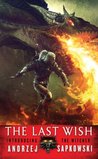
Book Review: The Last Wish by Andrzej Sapkowski

The Last Wish (The Witcher, prequel)The Last Wish by Andrzej Sapkowski

Original Polish Title: Ostatnie życzenie (translated by Danusia Stok)

Genre: Dark Fantasy, Gaming

Series: The Witcher

Publisher: Hachette Book Group

Original Publication Date: January 2007

Related: www.thewitcher.com

Author Info: www.sapkowski.pl

The Last Wish is a collection of short stories that introduces Geralt of Rivia, better known – particularly to gamers like me – as The Witcher. I’m just a few chapters into the first Witcher game, slowly preparing myself for the upcoming release of The Wyld Hunt, but through my limited play and my vicarious play through my friend, I have a pretty solid feel for the game in general, and for the character and his world, specifically.

A witcher is a man taken from childhood into the service of this group and forced to undergo all sorts of dangerous alchemical trials that leave the man not quite human. The result is a lethal, seemingly cold-blooded killer whose purpose is to hunt the monsters of the world. Only, there are not many monsters left now, leaving few options for a witcher to earn his keep, and resulting in a reputation as little more than a cold-hearted mercenary for hire.
Players will recognize the first story from the opening scene of the game, which features Geralt fighting off a deadly striga. The game has perfectly captured Geralt’s skill, his balletic grace, and his determination, as well as other elements such as his use of alchemy. But what the game misses is Geralt himself. Not that the game character is not interesting, but by the nature of the game system, where the player works with a Geralt who has lost his memories and must choose various options as the game progresses, the gamer misses out on the things that make Geralt a really, *really* interesting character. He is a man of few words – but only in certain situations where he deems the words unnecessary. He will deliver messages by the blade, but he is not a man without morals. In fact, his personal moral code is often called into question as he deals with lesser and greater evils – many of which are not actual monsters, but human beings.

It’s also very interesting to note that several stories are actually intriguingly re-imagined fairy tales. Sapkowski skillfully writes them to bare little similarity to their original or Disney versions at first, allowing the details to slowly fall into place for the reader. My absolute favourite was the Snow White retelling.

Some of my other favourite stories are the ones where Sapkowski simply allows Geralt to talk, which he tends to do only with people (or his trusty horse, Roach) who can’t respond. Sapkowski lets Geralt express doubt, to question himself, and to just vent. He also has many acquaintances, each of whom reveal a little something about a man who initially seems to be a loner. It becomes apparent through his actions and his relationships, that there is a significant amount of depth to the character.

One thing the game most certainly takes liberties on is sex. Geralt is able to sleep with just about any woman, with the added bonus of collecting trading cards for each bedding. This Pokemon approach to sex and romance is very far from the book’s Geralt. The witcher most certainly has a healthy appreciation for the female form, but any moments where he has relations with a woman are all tastefully (and even amusingly) done.

The book is translated from its original Polish, but I don't believed it suffered at all in the process.

Friday, March 14, 2014

Book Review: The Tower Broken by Mazarkis Williams

The Tower Broken by Mazarkis Williams

Genre: Fantasy

Series: Book 3 of Tower and Knife Trilogy

Publisher: Jo Fletcher (UK: November 21, 2014)

Author Information: Website | Twitter

Mogsy's Rating: 4 of 5 stars 

Finishing a series is always a little bittersweet, isn't it? I find this is absolutely the case with Mazarkis Williams' Tower and Knife trilogy. Of course, I'm thrilled to have finally reached the stunning conclusion to find out how it all ends, but I also know I'm going to miss this world and its characters.

It is also a wonderful thing to see an author's skills grow and evolve as time goes on. Though I think I'll always be a little in love with Williams' beautiful writing, I was admittedly much more taken with these last two books in the trilogy than I was with The Emperor's Knife. All three novels had their own individual strengths, but in general I found Knife Sworn and The Tower Broken to have much better flow and greater complexity than the first book.

In fact, I now find myself at a dilemma. The last two books have both been very strong, and I really can't decide which one I liked better. The Tower Broken, having a much darker plot and effectively raising the stakes, obviously appealed to me a lot. After the events of Knife Sworn, the fate of the world is teetering on the edge, threatened by a malignant force moving itself across the land and devouring everything it touches. The storm moves ever closer to the city of Cerana, and Emperor Sarmin finds he is powerless to do anything to stop its path of destruction. Things are definitely heating up in this one.

On the other hand, I LOVED the chapters about Grada, Nessaket, and Rushes from the last novel. Having the narratives of these three female characters was one of the best things about that book, but in this one they have once again faded back into the background, giving other characters the chance to step into the spotlight. Mesema and of course Sarmin both have their own chapters, but this time we also meet the fruit-seller-turned-mage Farid as well as Duke Didryk, whose point of view adds even more mystery to the already shadowy plot line.

While these new perspectives brought a heightened sense of intrigue and tension to the table, I still missed Grada, who has become the Emperor's royal assassin, and even found myself wondering after Nessaket, Sarmin's mercurial mother. But most of all, I missed following Rushes, the poor slave girl who has gone through such an ordeal in the course of these two books. I won't deny I was a little disappointed to see so little of the three of them in this novel, but fortunately I was able to get over it quickly, because Williams does such a good job making all her characters interesting. Much like the series, I felt that many of the protagonists especially Sarmin and Mesema have finally come into their own. The transformation of their relationship was the highlight for me in this one; by the end I could see where the author had wanted to go with the two of them all along.

I also think I would be remiss if I ended this review without making mention of the magic in the Tower and Knife world. The first book introduced us to the complex dynamic between mages and spirits, with the former harnessing their abilities by imprisoning the latter into their bodies, then sucking them dry of the energy required to power magic spells. We get to see a lot more of that here, as well as insight into the concept of "pattern magic" which is central to this entire trilogy. I think it's great how the last book ends with a much more detailed look into the mechanics of this system, because I'd always felt the story needed it.

So the the trilogy may be over, but I would read any future books by Mazarkis Williams in a heartbeat! Pulling off the final installment of a series is always a doozy, but it was done well here, even if everything wrapped up a little too neatly. I would still take a "complete" and satisfying ending like this over an open-ended one any day. Ultimately I think Williams made all the right calls, and at the end of the day served up an impressive conclusion.


A review copy of this book was provided to me by the publisher in exchange for an honest review. My thanks to Jo Fletcher Books!

Saturday, February 22, 2014

#MisLT Book Review: Miserere: An Autumn Tale by Teresa Frohock

Miserere: An Autumn Tale by Teresa Frohock

Genre: Dark fantasy

Publisher: Night Shade Books

Publication Date: June 2011

Author Info: www.teresafrohock.com

Wendy's Rating: 4 of 5 stars

Have you ever read a book and wished you could chat with the author to find out what they meant at a certain part? To learn what went into the crafting of a character or plot line? Well I've been chatting with Teresa Frohock a bit on Twitter for a while now, with the intent to read her book. Then I was struck with the idea of actually livetweeting my read the way I livetweet TV shows. Ms. Frohock loved the idea and as a result, I got to have the most wonderful reading experience with a great book and a fantastic author.


Misere is a tale of hope and redemption, of love and of faith. But it is not a tale involving pretty flowers (in fact, there is one not-so-pretty flower that would make an interesting Valentine's Day gift) nor is it a sweet love story. Frohock delves into the darkest emotions and desires with Miserere and, perhaps the only flaw I have with this book is that she could have gone even deeper.

From the first chapter, I was pleasantly overwhelmed by the subtext that teased out the relationship between Lucian, his twin sister Catarina and Rachael, the lover he betrayed. They are all older characters who have faced severe and even physically debilitating hardships. What they face in the story is just as likely to lead to their deaths as to their redemption, and the reader is often uncertain of which the character truly wants. This sets Miserere apart from many of the other books in the fantasy genre that feature naive young protagonists setting out on glorious adventure with the promise of a happy and heroic ending.

Actually, there is a young protagonist here - a girl named Lindsay who is pulled through the Veil from Earth into Woerld. She is drawn to Lucian and the exiled knight must choose whether or not to keep his promise, or open the Gates of Hell to save her. Lucian's dealings with her are touching and a little heartbreaking as, through Lindsay, you learn bits and pieces about his relationship with Catarina and the guilt he feels over her current sinister condition.

There is a lot of religious reference that could easily turn some readers off. I love religion, but due to my upbringing with an overbearing Christian mother, I have no interest in being preached at. Miserere does not shy away from the religious references, but it never proselytizes and there's no whining over why God might be punishing a particular character. It's quite clear that each character is responsible for their own predicament or that of others around them. They remain true to their faith and I really like that faith is the source of actual magic. I am curious as to how the same would work within the other religions - which is the other thing I like about this book. While you don't get to spend much time with the other sects, they are there and they all *gasp* get along.

Something else that pleases me about Miserere is Frohock’s treatment of female characters. As in, there is no difference between the women and the men. They are each considered capable in their various roles, and Frohock did not feel the need to justify or even point this fact out. Men and women are simply equals.

Imagine that. A fantasy book that actually frees itself from the prejudices of our reality.

As I mentioned, I really like the book's darkness. This is one of the few truly dark fantasy books I've read and it's definitely something I want more of. I enjoy the rainbows and dragons and happy endings as much as the next reader, but sometimes, I want to read books that aren't afraid to be just for adults.


Wednesday, February 19, 2014

Audiobook Review: Paladin of Souls by Lois McMaster Bujold

Paladin of Souls by Lois McMaster Bujold

Genre: Fantasy

Series: Chalion #2

Publisher: HarperTouch

Publication Date: April 2005

Narrator: Kate Reading

Author Info: dendarii.com

Wendy's Rating: 5 of 5 stars
"How fortunate for Us that We thirst for glorious souls rather than faultless ones, or We should be parched indeed and most lonely in Our perfect righteousness."
The Curse of Chalion taught me a number of things about this world and about Bujold. The first lesson is: do not make assumptions about where the story might be going. Bujold politely walks you down each path, letting you get comfortable with each captivating step until you are certain of what comes next, then gently tugs the carpet out from under you and keeps moving on before you have time to catch your breath.

Like Cazaril, this book begins with a broken, older protagonist. Royina Ista, dowager of Chalion, spent most of the previous book in a curse-ridden, god-touched fog that everyone but Cazaril wrote off as madness. Now free, though still heavy with the guilt of her dreadful crime, Ista sets off on a pilgrimage to visit the shrines of the Five Gods. In truth, after being trapped for so long within a life of royalty and sainthood, Ista simply wants to get away. There is irony in her deception, since Ista bares a grudge against gods for what they have done in her life. She spends much of her time cursing them, but the gods of Bujold's world accept all of this in stride.

Curse initially had me believe that the Five were merely figureheads, where prayer might result in something miraculous occurring, but such events could just as easily be explained by coincidence or parlour tricks. By the end, the guiding hands of the gods becomes shockingly clear. Now, Ista is unable to escape them as they haunt her dreams, guiding her to some unknown purpose. When her pilgrimage is interrupted by an enemy attack from which she is rescued by an unexpected hero, she begins to unravel the mystery as she attempts to decipher the cryptic messages from the Bastard god.

I adore the Bastard. He is not a typical trickster god, though he certainly takes his amusement whenever and where ever he pleases. He does not choose his saints randomly, and Ista's resistance seems to amuse him as much as her potential pleases him. Ista quickly became a favourite character for me as she does for him.

As I said of Ista and the other women in Curse, heroes come in many forms and one who is able to endure the kind of things Ista has must not be overlooked. She carries herself with such grace and dignity, but is not above humility - something else that struck me with Cazaril when we first meet him in Curse. Both he and Ista are easily recognizable as brilliant, brave and capable people, but neither of them abuse their intelligence or status and they respect everyone, both lowborn and high.

Finally, I have to praise Kate Reading's narration. I have listened to her before, usually reading the female-centric chapters of Brandon Sanderson and Robert Jordan's epic fantasies, but here she is on her own - and completely *owning* Ista. Reading captures all of Ista's subtext, every nuance, every emotion. She lets her be weak and flawed as easily as she is strong, commanding and determined. Reading truly embodies this incredible character and brings her perfectly to life.

Monday, February 17, 2014

Book Review and INTERNATIONAL GIVEAWAY: The Barrow by Mark Smylie

***Our GIVEAWAY for THE BARROW is now over. Thanks for all who entered!***


Genre: Fantasy

Series: Book 1

Publisher: Pyr (March 4, 2014)

Author Information: Website

Mogsy's Rating: 4.5 of 5 stars


Before we begin, I feel I should make it known that this book is not for the faint of heart. If you know you'll feel uncomfortable with things like brutal violence, ear-bendingly foul language, and extremely graphic sex, then you may wish to reconsider having a go at this ... especially when it comes to that last one. In general, I am not the kind to be bothered by lewd and explicit acts in books, and yet there were still certainly no shortages of eyebrow raises from me with this one! Anyway, it was enough that I feel I should say something. Fair warning!

And now with that out of the way, let's get down to the reasons why this book totally rocks. If you're the kind of person who likes the combination of a good adventure story with the dark and gritty aspects of fantasy (of course, keeping in mind the caveats mentioned above) then you'll love The Barrow! Incidentally, this is exactly the kind of mix I enjoy. The fact that it was even darker than I expected was a nice surprise, though I don't know if I would call it full-out grimdark. In an interview with The BiblioSanctum, Mark Smylie described the book as more of an "archetypal Dungeons & Dragons adventure as run through the filter of Lock, Stock and Two Smoking Barrels" ... and well, yes, actually I suppose that description would do nicely!

Furthermore, the book also takes place in the world of Mark Smylie's Artesia graphic novels. I won't deny that an emotional attachment to the setting was a factor for me, but if you are not familiar with the comics, do not fret! This is a brand new self-contained story, no previous knowledge of the world or characters required -- which is actually great for me too, since I'd only read the first volume and it was quite a while ago. However, you can still tell that writing a story within a setting that has already been established works well in the novel's favor; the world-building is phenomenally robust and very deep, with many layers to the descriptions of the people and places.

As the reader, I felt like I was transported right there -- and that is both a wonderful and terrifying experience, considering the type of world we're thrown into, one filled with dark magics, shady politics, and disreputable characters. Scoundrels and perverts lurk at every corner, and if you're really unlucky, you might even run afoul of demonic horrors and evil gods. The main plot is actually quite simple, deceptively so perhaps; on a routine tomb-robbing operation, Stjepan Black-Heart and his crew stumble upon an ancient map which details the final resting place of a long-dead wizard, who was said to have been buried with a priceless legendary sword.

Here's where the adventure narrative comes in. To find the sword, our protagonists must first gather their allies and go forth to locate this tomb. Of course, epic quests are never so easy or straightforward. But even when a curse placed on the map kills one of the essential members of the crew and ends up transcribing itself onto the skin of a young noblewoman, you think that would stop the Black-Heart? Nope! Whether it's wealth, fame, freedom, or absolution, everyone on this journey has a reason to find this fabled Barrow, which makes this story a riveting one filled with secrets and unexpected twists.

Among these colorful personalities, some of the characters are so disturbing it will make you sick to your stomach, while others are so crazy it will make you laugh; but there's definitely no accusing any of them for being boring. Out of everyone, I think I like Erim the best. A young woman masquerading as a man, Erim is Stjepan's protege, and despite her skill with the blade, in many ways she is as sheltered as her mentor is well-traveled. It's ironic that she doesn't find herself to be very interesting, because she was my favorite with her quiet introspection and fierce loyalty. That pretty much also makes her the most honorable of the lot; we're talking about some rather grim and nasty characters here, after all.

This is a book that pulls you in immediately, starting with an explosive intro that sets the tone and mood of the story quite nicely. It also contains possibly one of the most heart-pounding prologues that has ever graced the pages of a fantasy novel, and my head is still reeling from the events at the end of that chapter. However, the pacing of the novel is a bit uneven, which is probably the only quibble I have about this book. After the introduction comes a middle that slows down considerably as the characters travel towards their destination. There are frequent stops along the way, but the good news is that something interesting happens at every one of them. These encounters often added to the depth of the lore and setting, giving me more of a sense of the world's vastness. 

But while it took me several days to read the first three-quarters of this book, I think I devoured the last 150 or so pages in one exhilaratingly intense sitting. Everything that happens after they find the Barrow is pure insanity. Also, I just love twists and surprises! It's a climax and conclusion that goes beyond just being an ending, because more importantly it reveals how all the themes and undercurrents of the novel come together. It speaks much about Mark Smylie's skills as a storyteller. He marks his transition to full-length novels with this incredible debut, and I'm glad to hear we will be seeing more from him following The Barrow.


A review copy of this book was provided to me by the publisher in exchange for an honest review. My thanks to Pyr Books!

* * *
.
THE BARROW GIVEAWAY


And now here's what you all have been waiting for! Thanks to the kind folks at Pyr, we have two print copies of The Barrow up for grabs, and entering our giveaway is easy peasy! There are no geographic restrictions. That's right, international entries welcome! All you have to do is send an email to bibliosanctum@gmail.com with your Name and valid Mailing Address using the subject line "THE BARROW" by 11:59pm Eastern time on Monday, February 24th, 2014.

Only one entry per household, please! Two winners will be randomly selected when the giveaway ends and then be notified by email. So what are you waiting for? Enter to win a copy of this amazing book! Good luck!

Wednesday, January 29, 2014

Interview with Mercedes M. Yardley, Author of Nameless

So you've seen our reviews for the whimsically dark Nameless: The Darkness Comes and the deliciously twisted but powerful Apocalyptic Montessa and Nuclear Lulu, and if you're anything like me after reading these books, you're probably thinking right now: I simply must find out more about this author.

Well, you're in luck! The BiblioSanctum is honored and thrilled to feature Mercedes M. Yardley on the blog today. Mercedes has graciously agreed to an interview to talk to us about her work and give insight into herself and her writing process. 

* * *

Mogsy: Hello Mercedes, and welcome to the BiblioSanctum! This is so exciting, thank you so much for the interview!

Mercedes M. Yardley: Hi Mogsy! I’m so glad to be here. Thank you for having me.

Mogsy: Let’s dive right in! As a dark fantasy writer, you’ve written numerous stories for anthologies and magazines, a novella (speaking of which, I loved Apocalyptic Montessa and Nuclear Lulu) and now the newly released Nameless, your debut novel and the first book of a new trilogy. Tell us! What are new readers in for? How would you describe your work to them?
 
MMY: I’d say that I write dark fantasy and horror for people who don’t like horror. I love monsters in love. Finding the beauty and intricacies in characters that most might not find especially empathetic. I adore the magnificence of words. There’s quite a bit of wordplay in my books. They’re dark and hopeful.

Mogsy: What was it like to write Nameless, going from writing short fiction to a longer piece? Did it feel very different or daunting?

MMY: It wasn’t especially difficult. Most people don’t know this, but Nameless wasn’t the first novel that I wrote; it was only the first novel published. They don’t necessarily publish in the order that you write them. The stars aligned perfectly for Nameless to come out right now, and I’m very pleased with it. So really, it’s my…let me see…fifth or sixth novel that I actually wrote. So I had a decent hang of it by then.

But it is difficult transitioning from short pieces to novel-length ones. I’m especially fond of flash fiction, which is a thousand words or less, so when I’m looking at an 80,000 word novel, it can be a little bit daunting. But at the same time, it gives me room to play, and there’s a sense of relief to it. “Ah! I can finally explain everything! This is lovely.” With short fiction you need to imply so much without really saying anything at all. Longer works allow you to take the time that you need.

Mogsy: In the books of yours that I’ve read, there is a strong horror element but also, I was surprised to see, a powerful love story. People don’t usually associate the two, but these “strange loves” that are so terrifying and yet so intense is what I’ve come to love about your work. Ever since reading Apocalyptic Montessa, I’ve been dying to ask: where do you get your ideas or inspiration for these relationships?

MMY: My husband, of course. He is strange and terrifying.

Of course I’m kidding. I’m the strange and terrifying one in our relationship.

You know, I’ve always been drawn to that sort of thing. The concept of loving the unlovable. Again, it goes back to that “Monsters Who Love” theme. Maybe it came from reading too many Beauty and the Beast or Bearskin stories growing up. But I firmly believe in the goodness of humanity. I believe that each soul, no matter how corrupt, has beauty and a little seed of goodness inside of them. This is interesting because a friend and I were discussing this very thing the other day. People who are monsters and our relationships to them. I used to work in a very dark and scary environment. I worked at a home for sex offenders, and it changed my perspective dramatically. I saw the worst of the worst, the horrible things that people could do, and I was also allowed to see that despite these unfathomable things, they were still people with some beautiful thoughts. One day one of the clients held the door open for me, and it was a very big deal. He said he wanted to learn to do things for other people. That maybe the little good things could add up and he could be of worth some day. That simple act of holding a door open for me, when I was, in all reality, a potential rape victim for him…that changed me. Beauty in the horror. Love in the monsters. It’s there.

I love exploring that. Finding that worth in people and in my characters. It’s my diamond in the rough.

Mogsy: From Luna to Montessa, Lulu to Reed Taylor, I just have to say I love your character development. And of course, I’m also really intrigued by your unique take on Jack the Ripper in your story in the Tales of Jack the Ripper anthology. Is there a process for you when it comes to shaping such interesting and distinct characters? Do you have a good idea of them before you start, or do they sometimes surprise you as the writing progresses?

MMY: This is a great question! I’m constantly surprised in my writing process. I sit down with a vague idea and go from there. Last night, for example, I wrote a story where I opened my computer and thought, “Okay. I have a garden gnome named Boris and a character named Todd. Go.” Now I know that Boris talks and Todd is dead, but I didn’t know that when I sat down.

With “A Pretty for Polly”, the Jack the Ripper story, I knew I wanted to make him as sympathetic as possible. I also knew it would be difficult. Jack the Ripper is tough to garner any sympathy for. But I was smitten with the anthology and really wanted to do something unique with Saucy Jack.

Luna was snarky and terrified of being abandoned. (That’s why she never calls Reed Taylor by his first name only; it’s too intimate.) Montessa is special but weary. Lulu tries to keep his explosive, steamy anger under wraps. Reed Taylor has a good heart. These are the things I knew about the characters going in. They’re tiny little scraps of ideas, but I let them work themselves out until they wove together to create, what I hope, are fully fleshed characters.

Mogsy: Great answer, and thanks for satisfying my curiosity! As you know, when I interview an author, I like to find out more about their writing and their stories, but I also want to know more about them too. What is thing that readers might be surprised to learn about you that’s not in your author bio or anywhere else?

MMY: My mother had a lilac bush and purple irises growing in the backyard. There was an apple tree, too, and a weeping willow. I would climb in the willow and read. I had a certain branch that I liked to sit on. I’d write poems beneath the lilacs and play with my He-Man and She-Ra dolls there. And to this day purple irises are my favorite flowers. When I get particularly stressed and need to relax, I find that I still dream of the backyard set up like it used to be.

Mogsy: That sounds truly, truly wonderful. Speaking of reading, you also strike me as someone who would read some interesting books. What are you currently reading right now, or what are some good books that you’d recommend?

MMY: Oh, I’m reading everything! A little bit of everything at the same time. I’m reading a book on cleaning up crime scenes and blood spills. Another one about Elizabeth Short, who is better known as The Black Dahlia. I’m reading Bunnicula with my kids, and just finished a book that I read as a child called The Witches of Worm. And I also finished a book about auras that my sister-in-law lent me. Apparently my aura is magenta. I can blame it for all of my problems.

I’d suggest everybody read August Frost by Monique Roffey. It’s absolutely lovely. My favorite book that I read last year was probably a nonfiction book titled Talking to the Dead by Barbara Weisberg. It’s about the rise of spiritualism in the US and focuses on the Fox sisters. The whole concept of paranormal aspect aside, it was a fascinating look into the role of women at the time. For instance, it was improper to work outside of the home. But holding séances in your parlor? Oh, well, it’s in the house. That’s cool.

It’s just bizarre to me.

Mogsy: Well, I believe you've just made me add a couple more books to my to-read list. And Bunnicula! That's such an awesome book to read to kids. On that note, how do you balance writing with the other aspects of your life like family, etc? And are there any hobbies you like to escape to in order to unwind?

MMY: My friend and fellow author C. Michelle Jefferies and I were just having this conversation at lunch last month! Balance is so difficult. Almost too difficult. She decided that she’s going to use the term “alignment” instead of balance, and I like that. I’m going to align myself with my goals rather than worrying about balance all of the time. Because it’s impossible. I find that I can take care of the kids and write, or take care of the kids and clean the house, or do promo and clean and let the kids look like little Charles Dickens orphans. I can’t seem to do all of it. So if I shoot for my goals, and make sure I’m heading in the right direction, then I’ll consider that success. I’m exceptionally hard on myself. I always feel like I’m severely lacking. I think most of us expect too much out of ourselves. But if I’m aligned correctly, and heading in the right direction, maybe that will be enough to put my heart at ease.

Mogsy: Nameless is the first book of The Bone Angel trilogy, with two more books incoming, yay! So what’s next for Luna Masterson? At this early point, is there anything you can tell us about the sequel?

MMY: Bwahahaha! That’s what I can tell you.

We spent the first book getting to know Luna and realizing how loyal yet terrified she is. She’s had everybody she’s ever cared about taken from her at one time or another. I expect Book Two to be darker. I want to push her to the breaking point and see what happens. She thinks she’s tough, but Luna is exceptionally vulnerable. We’re going to explore that vulnerability a little bit.

Mogsy: I can't wait! Now I am excited for Luna but kind of fear for her at the same time. She was just such a delight. But now that we know about Luna, what else is next for Mercedes M. Yardley? Aside from The Bone Angel, are there any ideas for other stories? Any big projects you’re excited about currently or in the near future, either writing or non-writing related?

MMY: Oh my goodness, Mogsy. There are projects! Tons and tons of projects. Including the sequel to Nameless: The Darkness Comes, I’m currently working on four novels. Two are collaborations. My favorite thing that I ever, ever wrote is coming out from Ragnarok Publications this September, and I’m simply over the moon about it! And I’m also involved with two separate, very intricate shared-world projects. It’s an insanely busy but exciting year for me.

Mogsy: Whee I'm so happy to hear about more books from you this year! You've given me lots to look forward to now. 

Once again, thanks for being so awesome, Mercedes. And for writing such great stories! On behalf of all of us at BiblioSanctum, we appreciate you for dropping by. Wishing you the best for all your current and future endeavors!

MMY: Thank you so much! I appreciate you letting me stomp around your turf.

* * *
 For more information about Mercedes M. Yardley and her books, visit her website at abrokenlaptop.com!

Waiting on Wednesday 01/29/14

"Waiting On Wednesday" is a weekly meme hosted by Breaking the Spine that lets us feature upcoming releases that we can't wait to get our hands on!

Wendy's Pick 

It's 2014 and the countdown continues for Bioware's third installment of their Dragon Age video game series, Inquisition. The previous book, Asunder, set the stage for the mage/templar war, which is definitely going to have dire consequences within the world of Thedas, but Asunder also hinted at some significant problems for the Orlesian empress, Celene.

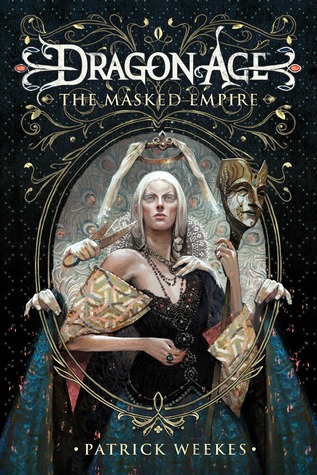
Dragon Age #4: The Masked Empire by Patrick Weekes - April 2014 (Tor Books)


Empress Celene of Orlais rose to the throne of the most powerful nation in Thedas through wisdom, wit, and ruthless manipulation. Now, the empire she has guided into an age of enlightenment is threatened from within by imminent war between the templars and the mages, even as rebellion stirs among the downtrodden elves To save Orlais, Celene must keep her hold on the throne by any means necessary.

Fighting with the legendary skill of the Orlesian Chevaliers , Grand Duke Gaspard has won countless battles for the empire and the empress But has he fought in vain? As the Circle fails and chaos looms, Gaspard begins to doubt that Celene’s diplomatic approach to the mage problem or the elven uprisings will keep the empire safe. Perhaps it is time for a new leader, one who lives by the tenets of the Chevalier’s Code, to make Orlais strong again.

Briala has been Celene’s handmaid since the two of them were children, subtly using her position to help improve the lives of elves across Orlais. She is Celene’s confidante, spymaster, and lover, but when politics force the empress to choose between the rights of Briala’s people and the Orlesian throne, Briala must in turn decide where her true loyalties lie.

Alliances are forged and promises broken as Celene and Gaspard battle for the throne of Orlais But in the end, the elves who hide in the forests or starve in the alienages may decide the fate of the masked empire.

Mogsy's Pick

Traitor's Blade by Sebastien de Castell - March 6, 2014 (Jo Fletcher Books)
 
"Falcio is the first Cantor of the Greatcoats. Trained in the fighting arts and the laws of Tristia, the Greatcoats are travelling Magisters upholding King’s Law. They are heroes. Or at least they were, until they stood aside while the Dukes took the kingdom, and impaled their King’s head on a spike.

Now Tristia is on the verge of collapse and the barbarians are sniffing at the borders. The Dukes bring chaos to the land, while the Greatcoats are scattered far and wide, reviled as traitors, their legendary coats in tatters.

All they have left are the promises they made to King Paelis, to carry out one final mission. But if they have any hope of fulfilling the King’s dream, the divided Greatcoats must reunite, or they will also have to stand aside as they watch their world burn…"