

A BOOK BLOG FOR SPECULATIVE FICTION AND GRAPHIC NOVEL REVIEWS...AND MORE
Sunday, June 30, 2013

Audiobook Review: Path of Beasts by Lian Tanner

We return to the adventures of Goldie and Toadspit in this final installment of the series, which picks up right where we left them in City of Lies. The children return to Jewel after their harrowing escape from the kidnappers in Spoke to find that their enemy the Fugleman has taken over the city with his Blessed Guardians and an army of mercenaries.
It's showdown time now, and the Keepers will have to devise a plan to protect the Museum of Dunt and the people of Jewel. The Fugleman, however, has brought in a giant cannon, and is bent on taking over the city and destroying everything Goldie holds dear. To make things worse, Goldie had not escaped from Spoke entirely unscathed; after the effects of "The Big Lie", she holds in her head the personality and thoughts of a long-dead warrior princess. Day by day, Princess Frisia's presence grows stronger, threatening to take over Goldie's life.
And so, my journey with the Keepers Trilogy draws to a close, and with it, probably my last opportunity to enjoy Claudia Black's wonderful narrating work for a while. Looks like she's got a handful of other audiobooks under her belt, but I also hope she'll do more in the future; with her voice and talent, I think she would be perfect for urban fantasy.
As for the book itself, it hurts me a little to say this, but I wasn't as happy with it as I'd expected. It wasn't that the story was bad or that it didn't provide us with a satisfying ending to the trilogy. I just find myself viewing this book with an almost frustrating ambivalence, because I even now I'm trying to think of something--anything, good or bad, it doesn't matter--to say about this book and I'm struggling.
It almost makes no sense for me to feel this way; after all, the story was great -- the heroes overcome their trials and tribulations, honor prevails, everyone comes together in the end to save the city, and the bad guy is defeated while the good triumph, all that good stuff. It's a children's series after all, you know you'll get a happy ending and nothing's gonna come out of left field at you.
And maybe that's what it is. Not that I have an issue with books for youngsters having happy endings, but the fact I pretty much knew everything was going to work out in the end. Which is perfectly fine; like I said, it's how things should be, but I personally prefer more a little more uncertainty in my plot lines which is likely the main reason why I don't usually pick up books targeted for middle-grade.
But on the whole, these have been really great books. I probably enjoyed them even more because I listened to them all on audio, but I certainly don't regret my time with this trilogy one bit.
Feel free to also check out my reviews for other titles in this series:
Book 1: Museum of Thieves
Book 2: City of Lies
Final verdict:

3.5 of 5 stars
Saturday, June 29, 2013
Book Review: The Curse of the Wendigo by Rick Yancey

I loved Rick Yancy's The Monstrumologist so much (my review here) that I quickly picked up this one, the second book of the series. Now that I've finished it, I'd probably hesitate to say that it was as strong as its predecessor, but nevertheless I wasn't disappointed. This sequel had all the horror elements in it that made the first book great; its only fault was that I found it just slightly less suspenseful.
The Monstrumologist first introduced us to the series' young narrator Will Henry and his work assisting the eccentric Dr. Warthrop in the grisly business of the study of monsters. We're thrown back into the late 1800s as Will documents in his journal their trek through the heart of the brutal Canadian wilderness, in order find traces of a missing friend who is believed to have been taken by a creature known as the Wendigo. Warthrop, however, does not believe the Wendigo actually exists, but takes the mission anyway as a favor to the woman who was his former fiancee, and to her husband who happens to be the missing victim.
Anyone who's ever gone to summer camp and sat around a campfire telling scary stories at night should know about the Wendigo, a demonic creature appearing in the legends of the Algonquin peoples of the northern United States and Canada. Once again, I found it really neat the way Rick Yancey was able to work a well-known myth into the story, along with the documented yet controversial condition called Wendigo Psychosis, whose symptoms include an intense craving for human flesh.
 |
| Image from matthewstarbuck.com |
I also loved, loved, LOVED the character development. Strange as he is, I find myself a big fan of Dr. Pellinore Warthrop's character, just from what I got reading The Monstrumologist. This book carries that on further, going a little deeper into his past history and personality. He's such a complex and subtle figure, with so many layers to his personality that go unsaid, yet they come through so clearly in Rick Yancey's writing and storytelling. Will Henry's relationship with the doctor is a veritable quagmire of volatile emotion and dynamics, and to me it's an incredible achievement on the author's part in the "Show, don't tell" department.
Anyway, the same caveats I provided for the first book also apply for this one; some of the scenes in here are absolutely not appropriate for the faint of heart or younger readers, despite its YA designation. Older teens will probably find it okay, but keep in mind it's still pretty gross stuff. It's true that I didn't find this book as suspenseful as the first one, mostly because I felt it had a slower start, but its overall story and the atmosphere are no less unsettling. Like I said, I eat this kinda creepy stuff up, so I'm definitely looking forward to starting the third book in this series.
Final verdict:

4 of 5 stars
Cover Lover: Dag and Fawn

Opinions of Lois McMaster Bujold's The Sharing Knife series has always been a bit mixed. "Hey, what's this romance doing in my fantasy?" is a comment I see a lot when I read reviews of Beguilement and Legacy, and I suppose that's fair enough (though in my opinion, the books are still much more romance-fantasy than fantasy-romance -- there's a difference!)

The first two books are really meant to be read together; they are two parts of one whole, just like the lovers Fawn and Dag. They're two people from two very different worlds, and yet they fit perfectly together. And that's why I love these original book cover images, because I think they reflect this so well.
Friday, June 28, 2013
Comic Review Bites: The Great Comixology Raid
I hopped on Comixology to pick up this month's read for my ladies comic book club and ended up finding a few other gems.
 LAZARUS: Greg Rucka’s creator-owned title is being heavily pumped by Image and for good reason. Well, Rucka is good enough reason for me, actually.
Money is power and those without it are Waste. The Families are the ones with power and Forever Carlyle is a Lazarus, a Family member trained and augmented to serve and protect the family’s needs. As the codename implies, there is a lot of death involved in her life, but we quickly learn that, because of how much she understands physical death, there are a lot of unresolved emotions connected to killing that Forever should not be having. For now, she does her job to protect the Family, but her increasing empathy is probably going to be problematic.
The cold-hearted killer with a warming heart is not an unusual, nor is the powerful few lording over the poor. But I’m confident that Rucka will bring in the heavy emotional content that will make everything worthwhile.
 PETER PANZERFAUST: This is a unique retelling of the Peter Pan legend that transposes the story into World War II. Peter is an American soldier who seems to just appear to a bunch of French orphans one day and drags them along on his quest to find the missing and mysterious Belle. Peter is the same confident boy we know, but without the magic – only, the story and art does a great job of making you wonder if there is a bit of magic going on, or is it really just Peter’s exuberance and utter belief that he can and will achieve anything he sets out to do?
 X-MEN #2: I am collecting this on the principal that comic companies need to have more females and PoCs front and centre and this book truly fills that need.
Unfortunately, the story is falling flat. It’s a typical bigger bad than the last time story, with the twist being that she’s stolen the body of a former teammate who may or may not be dead. There’s no issue with the characters because I know and love them all and love seeing them. Last issue had them interacting more and it was a great insight into their personalities and friendships, but this issue, they really aren’t doing anything.
There are some very small moments of intrigue, such as the continued existence of the mysterious baby. But otherwise, I’m not blown away yet.
 CYBERFORCE: I read the original Cyberforce during Image Comics’ Shiny Age and have been very curious about this reboot, available free thanks to a Kickstarter. This is a much grittier story where the heroes aren’t as obvious, nor is their fate. The “team” is still comprised of genetically altered former Cyber Data shock troopers, but I really like the emphasis on the different models of augmentations. Some are weaker, obsolete models and all require Serum to prevent their bodies from rejecting the technological grafts.
There is a big political plot going on involving Carin Taylor, whose parents are both political powers and are hunting her down after she runs away. She has learned of the great big apocalypse plot that also fuels the story and requires the aid of the missing and presumed dead Morgan Stryker.
Other than a few cringe moments of dialogue trying a bit too hard to be trendy and/or crude, I definitely approve of the new, more mature Cyberforce.
 BATMAN & SUPERMAN: I’m a big fan of Jae Lee’s art. I love the sharp edges he uses and I love the way those edges are muted and the colours flow like they are being brushed by the wind in this particular book. I also like Greg Pak, after reading his Phoenix: Endsong that finally let Jean Grey rest in peace. But this book is about, obviously, Batman and Superman. Their relationship has always been an interesting blend of loyalty and contempt for each other because of their completely differing views and upbringings, but ultimately similar goals. I don’t much care for Superman as a character, and I think I would have written him off completely if not for having a counterpoint in Batman and Lex Luthor. Here, the story quickly grabbed me during the opening scene where Clark and Bruce first meet. Their personalities and the conflicts of their relationship are spelled out in pithy perfection through their reactions to a brawl between some kids, and again when they meet as Batman and Superman.
I’m not entirely certain about the plot, though. Or rather, the time difference aspect of it. I’m fine with the strange creature possession, but I got a bit lost when first-time-meeting Superman and Batman suddenly turned into well-established-relationship Batman and Superman. I guess that just means I’ll have to read on to find out more!
 GIRLS: The first issue of this was free and the covers for the series caught my eye and the mystery within has definitely gotten my interest. The main character, a young man in a small town, ends up meeting and eventually calling out and offending every possible female stereotype that appears in the book – from brow beating wife to cocktease.
Then this naked girl from the cover shows up in front of him on the road…
 DEMETER: This is the third and final book in a trilogy by Becky Cloonan. A self-published labour of love that depicts three different stories that share the similar themes of love and loss.
Black and white comics can be so haunting and Cloonan uses the art and minimal words well to shape her stories. I can see the influence of familiar fairy tales woven into each tale, but the stories are still unique, emotional, beautiful, painful and memorable all on their own.

Money is power and those without it are Waste. The Families are the ones with power and Forever Carlyle is a Lazarus, a Family member trained and augmented to serve and protect the family’s needs. As the codename implies, there is a lot of death involved in her life, but we quickly learn that, because of how much she understands physical death, there are a lot of unresolved emotions connected to killing that Forever should not be having. For now, she does her job to protect the Family, but her increasing empathy is probably going to be problematic.
The cold-hearted killer with a warming heart is not an unusual, nor is the powerful few lording over the poor. But I’m confident that Rucka will bring in the heavy emotional content that will make everything worthwhile.
Unfortunately, the story is falling flat. It’s a typical bigger bad than the last time story, with the twist being that she’s stolen the body of a former teammate who may or may not be dead. There’s no issue with the characters because I know and love them all and love seeing them. Last issue had them interacting more and it was a great insight into their personalities and friendships, but this issue, they really aren’t doing anything.
There are some very small moments of intrigue, such as the continued existence of the mysterious baby. But otherwise, I’m not blown away yet.
There is a big political plot going on involving Carin Taylor, whose parents are both political powers and are hunting her down after she runs away. She has learned of the great big apocalypse plot that also fuels the story and requires the aid of the missing and presumed dead Morgan Stryker.
Other than a few cringe moments of dialogue trying a bit too hard to be trendy and/or crude, I definitely approve of the new, more mature Cyberforce.
I’m not entirely certain about the plot, though. Or rather, the time difference aspect of it. I’m fine with the strange creature possession, but I got a bit lost when first-time-meeting Superman and Batman suddenly turned into well-established-relationship Batman and Superman. I guess that just means I’ll have to read on to find out more!
Then this naked girl from the cover shows up in front of him on the road…
Black and white comics can be so haunting and Cloonan uses the art and minimal words well to shape her stories. I can see the influence of familiar fairy tales woven into each tale, but the stories are still unique, emotional, beautiful, painful and memorable all on their own.
Comic Review: Astonishing X-Men: Xenogenesis by Warren Ellis

While staying at the X-Bunker located in San Francisco with the team, Ororo receives a message from T’Challa about disturbing events taking place in a small village in Africa. There’s been a rise in the number of pregnancies occurring there, and many of these babies are being born with extraordinary powers and mutations. There are also reports of explosions being caused by these babies and a “devil” living in the bush.
Even though I am a Marvel fangirl (with the X-Men comics being my favorites), I’ve somewhat strayed from them in recent years and have started reading more comics from other companies. I’ve also started reading manga, so I’m being exposed to a whole new world of stories.
This is the first full arc that I’ve read in a while from Marvel. Was I impressed with what I read? No, but I wasn’t disappointed either.
This started out as a really interesting story, but soon became too easy to anticipate. A predictable story isn’t always bad, but the premise of this story held so much potential in my opinion. And even with it’s predictability, the story was solid. The writing was tight, moving. Despite the somewhat dark tone of the story, Ellis knows just when to bring a joke in without making it seem like it was too much.
The end was a bit too whipped up for my taste, but it was nice to see Emma get to shine a little bit. I’m an Emma fan, but she came off more air-headed than usual in this arc as if she were the butt (or should I say “the breasts”?) of some joke that everyone got but her. She just seemed really useless at first, but she made up for it. However, poor Hisako didn’t seem to get much play at all in the comics. She was just there.
Overall, this was a good story. No, it’s not memorable, but it isn’t horrible. And sometimes, given the state of comics now days, I think getting a solid story is a damn good thing.
Final Verdict:

3 of 5 stars
Thursday, June 27, 2013
Audiobook Review: Turn Coat by Jim Butcher

I seem to have developed a habit of reading the first book in a series then skipping a whole bunch to read from the series again. It worked well for me with Star Wars: A New Jedi Order and I can’t complain about my recent run with The Dresden Files.
So now, ten books after Storm Front, Harry has gained an apprentice, werewolf friends, a vampire brother, a warden girlfriend, fae connections, a pizza lordship and subsequent army and a promotion to the White Council. But Harry is still good old snarky, sarcastic, self-deprecating Harry and the man you can turn to and count on when you are in desperate need of help and can’t trust anyone else. Which is exactly what Morgan does when he’s framed for murdering a White Council Wizard. Harry agrees to help him, but doesn’t count on Morgan being trailed by a very powerful, very deadly skinwalker.
I’ve definitely missed a lot – White Court Vampire wars, teenagers becoming werewolves, a big fairy battle – but Butcher does a great job of filling me in on just enough details to make sure I wasn’t completely in the dark, without overloading me or giving away too much. I’d like to think that the balance works well for readers who have been with Harry all the way through. No one wants a full recap of the “previously on” every time they read a new book in the series.
One of the changes that definitely stuck out for me was the increased sexuality. Blame it on the damn vampires, who can’t seem to exist in an urban fantasy setting without bringing all their kink with them. Harry is a male with standard male urges, but they weren’t as prominent in the first book as they are now. At least Harry is a gentleman and apparently so is Butcher. There is a lot of look and appreciate, but no touchie touchie in the sexual interactions. As in, the sex doesn’t take over the plot as it does with certain unnamed urban fantasy writers who shall not be named and shall remain nameless.
It was fun meeting all the new characters and seeing how they interacted. Shout outs go to Mouse, Harry’s dog, who really held his own in all the scenes he appeared in. Man’s best friend brings me to the overall theme of relationships and especially loyalty that runs through this book (and perhaps the series?). Harry’s loyalty to those he cares about and those who put their trust in him remains stellar. Mouse and some of his other companions, like the stalwart Murphy, are unquestionable friends, but the loyalty of others – to Harry, to their respective ruling bodies, to each other is all over the place. At the heart is Morgan’s apparent betrayal and the fact that many of the Council members don’t believe he’s guilty, but are willing to let the steadfast warden take the fall for the greater good unless Harry can find the traitor in the ranks.
Since I’m unfamiliar with the players and the political machinations of the various councils and courts, nothing was overly predictable for me. It was nice to just sit back and enjoy the show. Credit also must go to James Marsters, the narrator of the audiobook, who really nailed Harry’s nonchalant attitude.

4 of 5 stars
Wendy: Favourite Title

I just stumbled on this in my daily Goodreads update review.
The title made me smile (and sing) and the blurb made me curious.
To-read pile updated!
For my Listening Pleasure: Part 2
 |
| This post may or may not have just been an excuse to post a picture of Claudia Black on our blog. Image by Morhain-stef |
It's been a few months since I stepped into this wonderful world of audiobooks and I continue to love it. Several narrators have quickly become favourites and, while my library is fairly good at keeping me supplied with audiobooks, an audible.com subscription is very, very tempting. I want to say that I can't quite justify the cost, but these narrators are really, really good. In honour of Audiobook Month, here are some of my favourites :
SIMON VANCE: Tiara recently listened to Medicus, read by Simon Vance and sang his praises. I hunted down his resume on Audible and found that he’s basically narrated all the things! At least, he’s narrated a LOT of the books I’ve got on my to-read pile and I am strongly considering that Audible account *just* for him since my library’s selection is so limited. I did listen to You Only Live Twice, though and can firmly second Tiara’s opinion. Early in my listening, she asked what I thought of him and I told her that there was no more Simon Vance. There was only James Bond and Tiger Tanaka. Here is a video of Vance discussing the best book he’s ever narrated, Interview with the Vampire. I’ve read the Anne Rice books he speaks of, but would definitely be interested in hearing them retold by Vance. It always increases the enjoyment of a product when you know the person delivering it enjoys it as much as you do.
HUMPHREY BOWER: Here's what I had to say about Bower's work on Shantaram: Bower almost literally brought every one of these characters to life. Slipping from Lin's native Australian to a myriad of different Indian accents, European, Palestinian, Afghani and more - it was dizzying to imagine how Bower could possibly keep track! Yet he did, making each each character perfectly unique and memorable, bringing out all the beauty and flaws that Lin loved about each one of them
JOHN LEE: I have actually not gotten beyond a few chapters of the China Mieville books narrated by Lee, but that does not mean he is unworthy of praise. In fact, it may be that he is just too good that stopped me from being able to listen to the books. Normally, I listen to books at work. I’m a multitasker and it feels wrong for me to be listening to a book without doing something else. But I found Perdido Street Station and Kraken just too engrossing to concentrate on both my work and listening to Lee. I definitely want to listen to more by him, but for the moment, I plan to read Mieville’s books myself.
JAMES MARSTERS: Like Claudia Black, I was a fan of the actor first. In this case, I knew Marsters from Buffy the Vampire Slayer and admit to squeeing like a fangirl just a little bit when he slipped into a dirty cockney accent for one of the characters in Jim Butcher’s Turn Coat. Marsters made an excellent Harry Dresden, catching all the sarcasm, wit and self-deprecation perfectly.
Book Review: Ecstasy by Irvine Welsh

This book contains three stories that revolve around romance and ecstasy among other things.
Lorraine Goes to Livingston is the first story. It was titled a "Rave and Regency" romance. Famed regency romance novel writer Rebecca Navarro (who writes stories such as Lucy Goes to Liverpool and Yasmin Goes to Yeovil) has a stroke, which jolts her out of her dreamworld. When she actually takes a look at reality, she realizes that her husband is a prick who's using her for her money, and he uses her money for all forms of debauchery. She, along with the help of a nurse -- Lorraine, plan revenge on her dear husband.
This was my favorite story in the whole book. The next two stories are powerful, especially the one following this one, but this one held the most value to me. When you first meet Rebecca, you don't really like her much, but you feel empathy for her. And Lorraine is one of those characters that you can relate to. She's a single woman who has questions about her sexuality and wishes that everyone would stop trying to force love down her throat. Then, of course with this being your typical Irvine story, you have drug abuse, raves, and some bizarre, disgusting sex practices (bestiality and necrophilia for this particular story).
Fortune's Always Hiding is the second story and is subtitled "A Corporate Drug Romance". The story revolves around a woman, who was the unfortunate victim of a drug marketed in the 60's, and a man, who's obsessed with soccer (or fitba, as they commonly say ;Þ). The woman is hell-bent on revenge and the man is in love and would do anything for her.
Another powerful story revolving around revenge, but this time it's against a big corporation who refuses to take responsibility for destroying people's lives. They've given money, but they aren't truly remorseful about their actions. I loved how Welsh jumped back and forth giving us tiny portions of what happened to the woman, Samantha. This one is my second favorite story in the book as well.
The Undefeated, an Acid House Romance, is about a jobless, drug dealer-slash-raver named Lloyd, and a unhappy, sexually frustrated housewife named Heather.
There's not a lot that I can say for this story. Most of the story is spent following their everyday struggles and few pages are actually dedicated to their meeting up. Lloyd's side of things didn't interest me all that much. It was interesting at times, but most times, I found his commentary lacking. Heather's side of things was quite fascinating though. It was just something about reading about her going from "good" Heather to "bad" Heather that really kept me reading her chapters.
It seems like I liked the stories in the order they were written. I loved the first and was only partially impressed by the last, even though, I did really love the hopeful ending we get at the end of the last story. Yeah, I'll admit the characters aren't all that drawn out, but this is only a 275 page book. What do you expect? Shrek's analysis? A wonderful addition for people who collect Welsh's off-beat works.
Final Verdict:
3 of 5 stars
Wednesday, June 26, 2013
Mogsy: A Book That Makes You Sad

Can I take "Book that made me sad" to also mean "Book that made me bawl my friggin' eyes out so hard that I couldn't even see well enough to finish the last page"?
If so, this would be it. 11/22/63 isn't really that sad per se, but the ending is gut-wrenchingly bittersweet. I found myself at the kitchen table the morning I finished this book sobbing so loudly my husband rushed in from the back of the house to ask me if anything was wrong.
"Uh, yeah," I said. "Stephen King actually made me cry!"
Yup. Stephen King. Made me cry. I doubt he'd be the first one to come to mind when naming authors adept at pulling heartstrings, and in fact, I believe King has been criticized in the past for his awkward handling of scenes that involve any deep emotion or feeling. For example, you wouldn't think romance would be his forte.
11/22/63 would prove that wrong. Obviously, the book isn't a tearjerker romance (Note: it's not horror either; personally I would say Thriller/Suspense). Still, I can't deny those emotional factors made it even stronger, and ultimately it's the love story in the end that stayed with me.
But the book is about so much more! Basically, it's one giant "what if" scenario involving John F. Kennedy and his assassination by Lee Harvey Oswald that fateful day in 1963. It's got aspects of time travel, alternate history, historical fiction, thrills and chills -- honestly, it's great. But I'd say the less you know about the story going in, the better the experience is going to be. It's just one of those books!
Tuesday, June 25, 2013
Book Review: Seraphina by Rachel Hartman

Know how I've always marveled and pondered the many ways authors handle the subject of dragons? Well, in Seraphina, they are intelligent, possess advanced technology, and have a magical ability that lets them take human form. The book takes place in a world where humans and dragonkind exist in a constant state of mistrust. After warring with the humans for time eternal, the leaders of the two races had finally come together to agree upon a peace treaty.
Now forty years have passed, and while dragons walk amongst humans at court and in their cities as scholars and ambassadors, bitter feelings still exist between the two sides. The tension reaches a fever pitch in the days before the dragonkind leader arrives to commemorate the treaty's anniversary, and a human prince of Goredd is found dead, his head missing--presumably eaten by a dragon.
These events hold terrible implications for our protagonist Seraphina Dombegh, a half-dragon hybrid who has struggled to hide her secret for most of her life. Circumstances draw her into the murder investigation, and she finds herself working with handsome Prince Lucian, Captain of the Queen's Guard, despite her position as the court musician's assistant. With the day of the anniversary celebrations fast approaching, they have limited time to tease apart a dangerous conspiracy plot.
The world-building in this book is phenomenal; as in, a lot of thought seems to have been put into every aspect of the setting. For example, its rich history adds a lot to the story, and to a certain extent, the reader has to understand the significance of past events to fully appreciate the impact they have on the present. Then there is the complex religion, which encompasses a fair number of saints to which the people of Goredd look to guide them. The religious aspect certainly isn't central to the book, but at the same time, it adds a layer of context to the story and characters, making them feel more refined.
Then there are the dragonkind and their culture. Let's just say when it comes to emotional suppression and denial of their feelings, the dragons in Seraphina make the Vulcans on Star Trek look like cuddly puppies. The idea that they can look like humans is also very interesting, if not wholly original, but what I found amusing are the dragons' general impressions on having to take human shape; I just wished there were more details on the magic involved during the actual changing process.
And speaking of magic, on the whole, the concept of it in this book is quite abstract. Seraphina, for instance, has to regularly "tend a garden" in her mind in order to control the debilitating visions that overtake her, thanks to the powers she inherited from her unusual parentage. If you're anything like me, it'll take some time to wrap your head around this bizarre idea, which really is more a part of Seraphina's abilities than a metaphor, which I know it sounds like.
So why am I not absolutely crazy for this book, like I should be? Unfortunately, some books that by all rights I should adore are diminished in my eyes by the characteristics of the main protagonist, and this was the case for Seraphina. Try as I might, I just couldn't connect with the eponymous heroine as I'm usually not a fan of the "wallflower-type" character. Granted, Seraphina has all the reasons in the world to be the way she is, but she's still a bit too far on the meek side of things for my tastes. It's true she displays moments of strength and determination, but then also wallowed in her self-pity one too many times for me to truly engage with her narrative.
Don't get me wrong, this book was a wonderful read and I'm glad I picked it up, but being able to like the main character is a biggie for me, and it was that one thing that prevented me from giving it a higher rating. Overall, however, Seraphina is an impressive debut featuring excellent world-building and very imaginative elements. It's classified as Young Adult, but a wider audience could definitely appreciate this.
Final verdict:

3 of 5 stars
Monday, June 24, 2013
Wendy's Book Haul (aka Book Lootz!)
I told Mogsy that my latest BookCloseOuts order had arrived and she demanded visual evidence. So here it is!


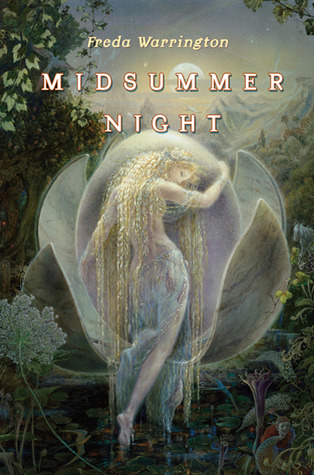


Book Review: A Natural History of Dragons by Marie Brennan

Wow, I really liked this book -- everything from the story and the characters and the writing down to its stark yet elegant cover which first drew my eye to its spot sitting on a store bookshelf. I blame my background in the biological sciences, since it seems I can't help but be intrigued by anything that looks like it has anatomical drawings on it.
As indicated by its title, the novel is told in the form of a memoir from the venerable Lady Trent, leading research and expert on the matter of dragons. But in the time her story takes place, she was known simply as Isabella Camherst, a newly married 19-year-old lady of Scirland in a society where women were still mostly restricted from taking up the scholarly pursuits. This book is an account of how her love for dragons and science manifested at a very young age, and how a serendipitous opportunity to join an expedition to study dragons changed her life.
How interesting could this book be, I initially thought to myself. Is this whole thing going to be about some fictional old lady waxing nostalgic about her life researching dragons? I think a part of me expected nothing but a collection of anecdotes. I also might have had it in my head that this was going to read like a fantasy version of something like Jane Goodall's Through a Window, except with dragons instead of chimpanzees.
In the end, none of what I thought came even close, because there actually was a plot, and a pretty good one at that. I was surprised to see there was a thread of mystery woven into the story: something strange is afoot in the host village Isabella and her companions are staying in, and on top of that, the native species of rock-wyrm has become prone to attack humans, which isn't their usual behavior. These are the questions that Isabella has to answer while their expedition is in the Vystrani Mountains.
Of course, there ended up being the anecdotes I'd been expecting too, but they mostly came near the beginning. I didn't like these as much as I liked the main story about the expedition, but they did give pretty good insight into Isabella's character and personality. I didn't care much for some of her childhood experiences because often she came across as too much of a brat, but I did love the story of how she met her husband Jacob. It was such a sweet, awkwardly romantic scene that I swear my eyes practically started watering up along with Isabella's when she burst into tears of happiness.
My favorite thing about the book, however, was its overall concept. I didn't think I was going to take to the writing style, what with the stuffy narration from the get-go, but it actually came across in a very natural way that was nowhere near as distracting as I'd expected. What struck me is that you could also easily contrast the young, impetuous and excitable Isabella in the memoir to the older, more mellow and experienced Lady Trent who is "writing", and still get the sense she retained all that determination and humor in her personality. I thought it was a cool way of presenting the novel, and Marie Brennan pulled it off perfectly.
Also, I've seen fantasy deal with the subject of dragons in many ways; sometimes they're the monsters for the heroes to kill, sometimes they're intelligent and have the ability to speak, forming partnerships with humans or even taking human shape, etc. However, I personally liked how this book tackled the matter by painting dragons as simply another kind of wild animal species, as well as the main character's biologist/naturalist perspective to want to observe and study them. Like I said, perhaps it's due to my own educational history and interest, but this aspect of the book really appealed to me.
This was just a great read all around, the experience made even better for me because it was such an unexpectedly pleasant surprise. To summarize: A very good book featuring an interesting concept, engrossing plot, and a refreshingly strong female protagonist.
Final verdict:

4.5 of 5 stars
Sunday, June 23, 2013
Wendy: Favourite Female Character

“Everything I tell you is a lie."
Comic Review Bites

A sexy couple with the means and the motivation to solve some of the more unusual crimes are recruiting members for their new Mystery Society. Conveniently, a ghoul named Secret Skull and Jules Verne's brain encased in a quirky robot body apply for the job. Add the atomic twins that Nick Mystery rescues from Area 51 and we have the makings of a really fun team.
Unfortunately, in spite of Fiona Staples' fantastic artwork, this great concept falls flat with sub-par plotting, sub-par subplotting, a lack of mystery, an annoying antagonist and rather lame attempts at wit and humour. This comment is very negative, but I'd like to think that it's a negative with a lean to the positive. As in, I can see a lot of potential for good old fashioned tongue-in cheek mystery wagon fun with this book, if it can stop trying so hard and just relax and enjoy itself.

2.5 of 5 stars
 We3 by Grant Morrison and Frank Quitely
Three lost pets are turned into war machines but as prototypes, their phase of the test program is complete and WE3 are set for termination. Their chief handler disapproves of this and gives them the means to escape their fate. Out in the world, they deal with their hunters with brutal precision that reflects their individual natures but in their hearts and minds is a single word: "home."
I think a true animal lover will find this book even more gut-wrenching than I did, but I can definitely appreciate the emotions attached to it, especially with the lost pet posters that begin each chapter.
This was recommended to me when I asked for a good Grant Morrison story. The story idea was really good and I liked that there was not a lot of dialogue and exposition. Morrison truly allowed the art to speak and Quitely delivered admirably. I loved the way the visuals begin from a pet's eye view and I loved the unique splash pages, particularly the one that separated the page into a mosaic of frightening violence.

3.5 of 5 stars
 X-Men: Magneto Testament by Greg Pak and Carmine Di Giandomenico
The best thing about this series is that it is not about a superhero/villain or mutant, but about a very human boy forced to become a man during the Holocaust. We've always known about Magneto's past, but we've never seen it. Not like this. I kept wondering if and when his powers would manifest, as we've seen in various other incarnations of his story, but the harsh reality is ... painful.. and educational.
4 of 5 stars
Book Review: The Spirit Thief by Rachel Aaron
 The Spirit Thief by
Rachel Aaron
Rachel Aaron's The Legend of Eli Monpress is a series that has repeatedly popped up on my recommendations lists in the past; I swear every few weeks I'll be browsing through suggestions on my online book stores or Goodreads pages as usual and this blue cover will show up, with the man's face on it flashing his sly little smile at me. It's like he's saying, "READ ME! Come on, you know you wanna!"
Obviously, my curiosity gotten the better of me, or more accurately, World Without End's Women of Genre Fiction Reading Challenge gave me the perfect excuse and motivation to finally pick this book up and read it. And I'm happy to report, I wasn't disappointed.
The book begins with a kidnapping. Eli Monpress, the greatest thief of his age and also a talented wizard, has decided to pull off the greatest theft the world has ever seen, and what greater theft is there than the stealing away of a nation's king? His plans to increase his notoriety fall through, however, when he unwittingly brings about political turmoil that could threaten the kingdom and even the spirits of the land. Miranda Lyonette, the spiritualist tasked to hunt Eli, ends up joining forces with him and his friends to put a stop to the evil forces before they can destroy everything.
I've noticed that in recent years, the genre of fantasy has evolved towards being darker and grittier, and on the whole I feel it's a good trend. Still, every once in a while it's still nice to see something like The Spirit Thief that's fun, down-to-earth and makes you feel good after reading it. There's a lighthearted feel to the story, but there's also enough suspense in it to hook you. I for one found it very engrossing from the get-go.
I also found the magic system intriguing. The wizards in this world don't perform magic directly per se; instead they make requests or set up arrangements with the spirits that exist in everything from mundane objects like doors to the natural elements like the air, lava, or even full bodies of water. Miranda the spiritualist, for example, maintains symbiotic relationships with multiple spirits who serve her, and in return she provides them safe places to reside and lets them feed off her magic.
My only issue is a minor one. It has to do with the characters and a feeling that they haven't met their full potential. For one thing, the series' eponymous character feels merely like a side character, and while Eli is described as roguish and charming, I can't help but think of him as more cocky and annoyingly obnoxious. Maybe it has to do with how much he's constantly described as "grinning", and all I can picture in my head is that cover image every single time. The same goes for his companions Josef the swordsman and Nico the demonseed; both are very interesting, but don't seem to feature prominently enough for me to truly care about what happens to them.
My feelings for the characters not withstanding, this was a good start to what looks to be a series I definitely want to keep reading. If the rest of the books are as entertaining and fun as this first one, I think I'll enjoy it quite a bit.
Final verdict:
4 of 5 stars
Saturday, June 22, 2013
Book Review: World War Z by Max Brooks

The thing that sets this zombie story apart from the others I've experienced is right there in the title: WORLD War Z. So many other zombie stories are America-centric and work on the vague notion that the epidemic is occurring elsewhere in the world, but there is no interaction with anyone but the small pocket of main characters within the United States. Isolation is a huge part of those stories, which ups the tension and emotion, but it always bothers me that a global apocalypse seems to immediately reduce the world to a handful of people right from the start.
In this case, it starts with a handful of people in China, a small village identified as ground zero, the source of the epidemic, then moves throughout the world as the author interviews various survivors of the horrific events. Brooks has already compiled enough information for an official report on the events, but because of all the information he learned doing so, he is compelled to write a more human report. This is another difference about the book that appeals to me: few of the survivor stories are coming from the "regular" people. A lot of the stories come from people responsible for some of the major decisions and events that took place in the war. It is interesting to note how many interviews take place within various types of institutions, or comment on the breakdowns of the people in power after they are forced to make decisions that amount to the sacrifice of thousands of innocent human lives to contain and ultimately destroy the undead.
The nature of the recounts does not allow for a lot of emotional attachment to any of the characters and the emotions of the characters themselves has to be extrapolated by the reader based on the stories they tell. Ironically, my favourite story was the one of Paul Redeker. An apparently emotionless man who turned the tides of the epidemic in Africa through the implementation of a controversial plan.
I also really liked that this wasn't just about fighting the zombies. It was a surprisingly in depth look at the various government and military institutions around the world. Their reactions to the event are very realistic and remained so throughout. And in the end, no one country could claim any kind of victory. There is also a lot of emphasis on the guilt that comes with "just following orders."
Because the book occurs after the events, there is no sense of immediate danger. This might not work for some readers, and evidently, it doesn't work for the upcoming movie, which clearly pits Brad Pitt against the zombies. I also notice that the zombies are more like freaky carpenter ants in the trailer, speedily climbing over each other to swarm their targets. There is a small moment in the book that describes the zombies as a "swarm," which I suspect is what inspired the movie interpretation of their movement habits, but otherwise, the book maintains the shambling corpse that is zombie flick standard.
4 of 5 stars
Cover Lover: Revolution
Welcome to Cover Lover, a feature on this blog dedicated to book covers! For a long time, I'd wanted a place where I can share some of my favorite covers, or talk about any that might have caught my eye. So when I came across this idea on fellow gamer/book lover Angelya's site The Oaken Bookcase, I jumped at the opportunity to adopt it as well. The "meme" was originally created by another friend of mine, Jaedia, on her book blog Once Upon A Time, so be sure to check out both their sites and take a look at some of the covers they have featured.
If you haven't read Promise of Blood by Brian McClellan yet, you're missing out. It's got all the good stuff, its story encompassing an epic scope of events unfolding before a backdrop of war, politics and revolution. Not to mention the really cool magic system! Readers of adult contemporary fantasy should feel right at home in this world of Powder Mages and Privileged. You can read my full review here.
As you can imagine, I'm eagerly awaiting the release of the sequel The Crimson Campaign, which probably wouldn't happen until early next year. For now, I'll just have to settle for drooling over its cover image.
One word: sexy.

Friday, June 21, 2013
Comic Review: Dejah Thoris vol.4 by Robert Place Napton

My husband and I saw the John Carter movie and thought it was reasonably good. I didn’t expect the movie to hold true to the book, but I didn’t expect to dislike the book quite so much. Pulp fiction clearly doesn’t work for me, but apparently I’m as much a sucker for Dejah Thoris’ lovely face and jewel-covered pretty bits as John Carter and every male in her universe.
In fairness, the cover art for this series is really beautiful. Unfortunately, it stops at the cover. If you’re going to have a buxom woman run around in nothing but some carefully placed pieces of metal held up by hope and a smile, I’d have liked the artwork to help me overlook the ridiculous outfit. If I can’t have that, then at least give me an interesting character and story.
Eventually, I resigned myself to ignoring the attire, since no one else in the book noticed that she was almost naked. Even Dejah herself comments on how glad she is to have furry boots and a cape to keep her warm while she traipses through the ice and snow. The only person bothered by her almost nudity is me. The men and women (uh wait a minute… there weren’t any other women except for the three bloodslaves) of the story see beyond her T and A to the strong-willed, brave and noble woman behind them. Even the vampire who falls in love with her is in love with the passion and strength he tasted in her blood. Unlike John Carter in A Princess of Mars, he didn’t merely fall in love with her the moment he saw her boobies.
As the story goes, the Princess of Barsoom is on a self-imposed exile after being forced to commit murder under mind control. The guilt of her sins is mentioned initially, but eventually forgotten when she is kidnapped to Saturn by a race of vampires. At least she was able to get out of the snow. Edgar Rice Burroughs intricate political plotting and world building is sorely missing from this comic. The vampires are just evil creatures who subjugate the race of purple people and put Dejah in chains.
I suppose I was hoping that, in spite of the (lack of) clothing, the comics would take influence from the movie and make Dejah Thoris slightly more than just a trophy princess. Maybe a little more Red Sonja, perhaps. Dejah does get to be a self-rescuing princess, at least, freeing herself from chains that make her pose awkwardly not once, but twice (or was it three times?) in the story. But in the end, when the vampires threaten her kingdom of Helium on Mars, she is forced to unleash her ultimate power:selling herself to a man to save her kingdom.
1 of 5 stars
Mogsy's Super-Duper Ginormous Summer Reading List
Today is Summer Solstice, marking the longest day of the year and the beginning of summer for the northern hemisphere. I figure what better time, then, to throw together a list of books I plan on reading for the next three months?
Now, I'm not insane -- I don't actually expect I'll be able to hit every single title on this list, but when the number of books in your TBR pile is in the triple digits it sure helps to prioritize. It's always better to have more than to have not enough, that's my motto. This should help organize my reading a little.
So, without further ado, away we go:


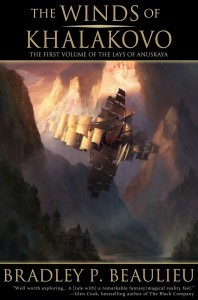


The bread and butter -- those titles I have on hand with me that are sitting at the top of my list of books I'm itching to read. A lot of them, like The Coldest War, Mockingbird, The Isle of Blood, The Blinding Knife, etc. are later installments of series I've really liked and am hoping to finish up or catch up a bit on this summer. Other highlights are Odd Thomas, a book that has been recommended to me by a ton of my friends, and American Gods because it's seriously time to finally lose my Neil Gaiman virginity and read one of his novels. I'm also really hoping I can make time for The Winds of Khalakovo, which came with my pledge tier reward when I supported Bradley P. Beaulieu's Kickstarter for the third book in the trilogy, The Flames of Shadam Khoreh.


The Drowning Girl is Levar's Rainbow Book Club's read for July and I'm really looking forward to it. This means there will be another added to this list when August rolls around, and between all the great choices up for voting I'm already having a tough choice deciding what I want to read for that month. Glamour in Glass, Songs of the Earth, and Of Blood and Honey will be the books towards my Worlds Without End Women of Genre Fiction reading challenge. And finally, I'm really looking forward to The Masque of the Red Death, which I'll be reading later on in the spirit of Clockwork Summer, a feature my fellow blogger Hannah is planning, so keep an eye out for that. I'm not even sure that book is truly Steampunk, but that's how a lot of people have categorized it and I'm just going to go with that.

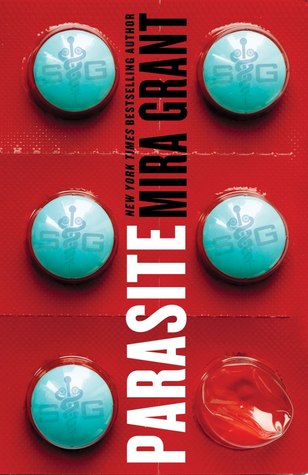




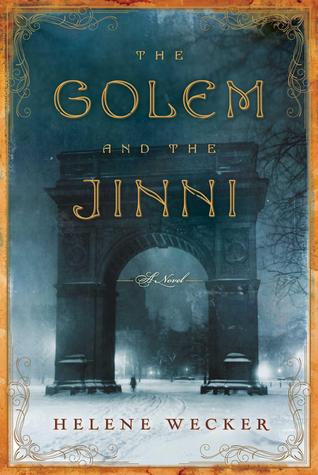
A couple books have found their way into my mailbox in the last few weeks, and of course there's also the growing NetGalley backlog which I really want to chisel down before I'm tempted to request any more.


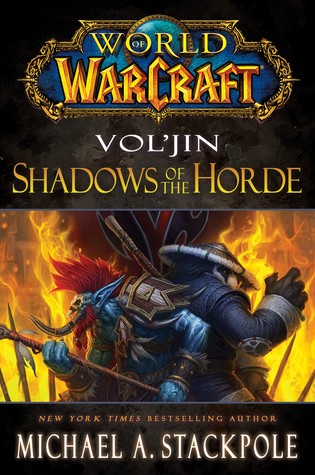

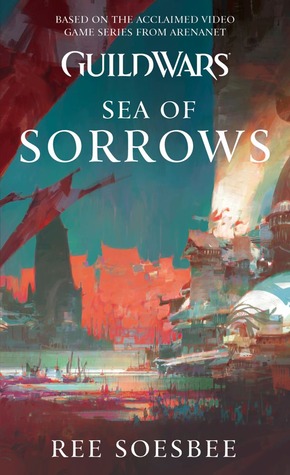


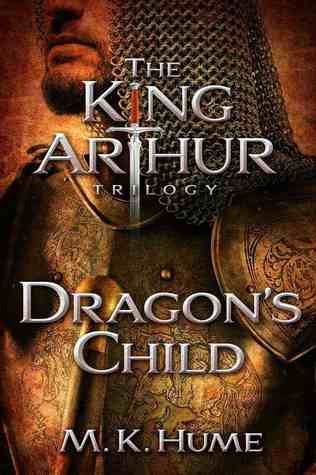
These are the highly anticipated books coming out between now and the beginning of September. Let's just say August is going to be great month -- or a bad month if you're my wallet or bank account. Lots of great books are going to come out then, and two that I'm most definitely going to be snatching up on Day One are The Crown Tower and Emperor of Thorns, both expected to come out on August 6th. Seriously, I need those books in my life. August 6th is coincidentally also when Codex Born comes out. I swear, that one single day is going to utterly destroy my book buying budget.
Broken Homes is another book I really want to get my hand on on release day, but unfortunately it probably won't be published in North America until early 2014. If the news about the audiobook is accurate though, I may be able to snag it from Audible.
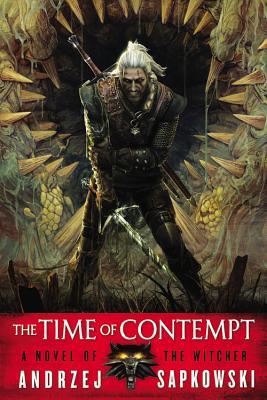
Blood and Beauty is my one concession to Historical Fiction, because I have a thing for the Borgias. And then come the video game tie-in novels, which are my guilty pleasure. While The Time of Contempt is not technically a game novel, the books and the character are of course what inspired The Witcher games.
Gonna be a summer of great books!
Now, I'm not insane -- I don't actually expect I'll be able to hit every single title on this list, but when the number of books in your TBR pile is in the triple digits it sure helps to prioritize. It's always better to have more than to have not enough, that's my motto. This should help organize my reading a little.
So, without further ado, away we go:
Audiobooks, Hardcovers, eBooks, Library Loans
The bread and butter -- those titles I have on hand with me that are sitting at the top of my list of books I'm itching to read. A lot of them, like The Coldest War, Mockingbird, The Isle of Blood, The Blinding Knife, etc. are later installments of series I've really liked and am hoping to finish up or catch up a bit on this summer. Other highlights are Odd Thomas, a book that has been recommended to me by a ton of my friends, and American Gods because it's seriously time to finally lose my Neil Gaiman virginity and read one of his novels. I'm also really hoping I can make time for The Winds of Khalakovo, which came with my pledge tier reward when I supported Bradley P. Beaulieu's Kickstarter for the third book in the trilogy, The Flames of Shadam Khoreh.
Book Club, Events, Reading Challenges
The Drowning Girl is Levar's Rainbow Book Club's read for July and I'm really looking forward to it. This means there will be another added to this list when August rolls around, and between all the great choices up for voting I'm already having a tough choice deciding what I want to read for that month. Glamour in Glass, Songs of the Earth, and Of Blood and Honey will be the books towards my Worlds Without End Women of Genre Fiction reading challenge. And finally, I'm really looking forward to The Masque of the Red Death, which I'll be reading later on in the spirit of Clockwork Summer, a feature my fellow blogger Hannah is planning, so keep an eye out for that. I'm not even sure that book is truly Steampunk, but that's how a lot of people have categorized it and I'm just going to go with that.
Review Editions, Pre-release eARCs and Hard Copies
A couple books have found their way into my mailbox in the last few weeks, and of course there's also the growing NetGalley backlog which I really want to chisel down before I'm tempted to request any more.
Can't Wait Upcoming Releases
These are the highly anticipated books coming out between now and the beginning of September. Let's just say August is going to be great month -- or a bad month if you're my wallet or bank account. Lots of great books are going to come out then, and two that I'm most definitely going to be snatching up on Day One are The Crown Tower and Emperor of Thorns, both expected to come out on August 6th. Seriously, I need those books in my life. August 6th is coincidentally also when Codex Born comes out. I swear, that one single day is going to utterly destroy my book buying budget.
Broken Homes is another book I really want to get my hand on on release day, but unfortunately it probably won't be published in North America until early 2014. If the news about the audiobook is accurate though, I may be able to snag it from Audible.
Blood and Beauty is my one concession to Historical Fiction, because I have a thing for the Borgias. And then come the video game tie-in novels, which are my guilty pleasure. While The Time of Contempt is not technically a game novel, the books and the character are of course what inspired The Witcher games.
Gonna be a summer of great books!
Subscribe to:
Posts
(
Atom
)