The BiblioSanctum has moved!

You will be automatically redirected to the new address in 5 seconds. If that does not occur, please visit
http://www.bibliosanctum.com
and update your bookmarks. See you at our new home!

Tuesday, April 30, 2013

Audiobook Review: Warm Bodies by Isaac Marion

Warm Bodies by


In a way, the style and writing reminds me books I've read in the past where the story is told in the point-of-view of a dog or any other kind of animal. In each case the author has to find a convincing way to explain to the reader why their narrator is obviously intelligent and eloquent enough to tell a story, but can't express that outwardly. R, for example, can think and wax philosophical with the best of them in his head, but can't manage to put together more than a couple words or a handful of syllables when he tries to speak.

A persistent need to expound upon this dissonance is very characteristic of these types of books, so the first step on the path to enjoying myself was being able to accept anything and everything the story throws at me. However, a process like that generally takes time, and the fact this book is so short and proceeds at such a break-neck pace probably wasn't the most ideal for me personally, but I could just be a stickler for the details.


Monday, April 29, 2013

Cover Lover: A little bit of blue

I updated my Currently Reading list at Goodreads yesterday and was amused to see this coincidence. Despite being vastly different books, I inadvertently ended up with three predominantly blue book covers, each with a circular image as its focus.

The Elves of Cintra (Genesis of Shannara #2) by Terry Brooks
Across the ruined landscape that is America–hopelessly poisoned, plague-ridden, burned, and besieged by demon armies bent on exterminating all mortal life–two pilgrims have been summoned to serve the embattled cause of good. Logan Tom has journeyed to desolate Seattle to protect a ragged band of street urchins and the being known as “the gypsy morph,” who is both mortal and magical, and destined to save mankind unless he is destroyed. Likewise, Angel Perez has her own quest, one that will take her from the wreckage of Los Angeles to a distant, secret place untouched by the horrors of the nationwide blight–a place where the race of Elves has dwelled since before man existed. But close behind these lone Knights of the Word swarm the ravening forces of the Void. 


25 Perfect Days by Mark Tullius
A totalitarian state doesn’t just happen overnight. It’s a slow, dangerous slide. 25 Perfect Days chronicles the path into a hellish future of food shortages, contaminated water, sweeping incarceration, an ultra-radical religion, and the extreme measures taken to reduce the population.

A Confusion of Princes by Garth Nix
A grand adventure that spans galaxies and lifetimes, A Confusion of Princes is a page-turning thriller, a tender romance, and a powerful exploration of what it means to be human.


Book Review: Moon Over Soho by Ben Aaronovitch

Moon Over Soho by


Sunday, April 28, 2013

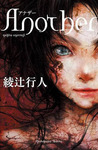
Book Review: Another vol. 1 by Yukito Ayatsuji

AnotherAnother by Yukito Ayatsuji

I grabbed this galley because I was really intrigued by the cover image. I later learned that this was a novel based on a manga, which in turn spawned an anime. I was very curious about the concept, wondering how such a visual format could be translated into a novel. I'm a very visual reader and also a fan of anime and manga, so I was easily able to visualize the characters and setting. Unfortunately, that wasn't good enough to make this book interesting to me. Lost in translation is an apt way to describe the experience - though I don't merely mean the translation from Japanese to English. There are elements of culture and events that the non-Japanese person or anime fan will miss unless they spend a bit of time googling, but I didn't find this enough of an issue to deter me. I did, however, feel like the book dragged considerably and I grew increasingly frustrated with the main character, Koichi Sakakibara's attempt to unravel the mystery of Mei Misaki and the strange curse of Class 3 at North Yomi school.

With a mother dead shortly after birth and a father away on business in India, Sakakibara has moved away from Tokyo to the little village of Yomiyama to stay with his mother's family. He is unable to start his third year at his new school due to a genetic lung illness that forces him to miss the first few weeks. When he starts a few days into the month of May, he meets a mysterious girl name Mei Misaki and he is warned about the "North Yomi Fundamentals" - superstitions that apparently exist to prevent the occurrence of untimely accidents. Students at the school are friendly enough, but when Sakakibara tries to broach the subject of Misaki, everyone does their best to dance around the question and Sakakibara's subsequent questions about the curse of Class 3. Then people start dying.... (finally).

Around the time that the first death occurred, I was as frustrated as Sakakibara with the way everyone was avoiding his questions, but more frustrated with the amount of time it was taking for him to figure out the truth of his existence on his own. I admit, I was wrong in my assumption of the obvious, but I was still long bored by the amount of time it took to get to that point. There was a lot of repetition as Sakakibara went over his own circular thoughts and the events and at times, I actually thought I was reading the same page again. Given the length of the book, I could find no reason for it to have taken that long to get to the point and move on to solving the mystery, which I assume happens in volume two.

Believing this was a book based on a manga, it felt very much like descriptions were glossed over in favour of a lot of text, mostly in the form of Sakakibara's tedious thoughts. It failed to give me any sense of mystery and, when the curse started to take effect, it wasn't very shocking. However, upon completion I learned that I was incorrect in my assumption. The bunkobon came first and inspired the manga, followed by the anime and a live-action movie. So while I did not enjoy this book very much, I can see how it could translate into a very interesting story when powerful visuals and music can be used to create the right mood. The idea behind the curse of Class 3 and the way everyone decided to try to fight it was interesting, once we finally got to know what it was all about. But I think I'd much rather learn more in the manga or anime, than by reading the second volume of the original novel.
2 of 5 stars


Friday, April 26, 2013

Book Mini-Review: Fireblood by Jeff Wheeler

Fireblood by

Annon and Hettie are twins separated at birth. Annon grew up to become an accomplished Druidecht; he has learned to live in harmony with nature and to commune with the spirits from the realm of Mirrowen. Hettie, on the other hand, was stolen away by the Romani as a child, and has only known a life of servitude. Finding someone to purchase her now is her only chance of freedom.

Brother and sister were unaware that the other even existed, until they are brought together by their estranged uncle Tyrus. Along with the help of Paedrin, a warrior-monk of the Bhikhu order, they are tasked to journey on a quest to seek a priceless hidden treasure. Unbeknownst to them, however, Tyrus harbors a secret agenda of his own. Not knowing whom they can trust, along with being hunted by the ruthless Arch-Rike, the trio must learn to work together before their enemies get the upper hand.

The Good

The sources of inspiration the author drew upon for this book. It's obvious Jeff Wheeler is a fan of ancient history, world cultures, as well as the medieval era. I recognized a lot of this in the places, cultures, and lore as I was reading, such as the parallels between the Druidecht and the Celtic druids of old. Having interest in some of these subjects myself, I took an immediate liking to the world of Fireblood. It is rich and populated with a fascinating diversity of races, classes, and religions.

Also, loved the first chapter, which really would have been better served labeled as a prologue. As cheesy as it sounds, the book did hook me straight from the start because of it. It was filled with urgency, danger, just the right amount of bombastic, and came to a close with enough mystery to make me want to turn the page and find out just what the hell happened.

The So-So

The characters. Sadly, this was the biggie that prevented me from enjoying the book more and giving it a higher rating. Annon, Hettie, Paedrin, Tyrus, and some of the other supporting characters thrown in were presented with their own unique background and histories, but none really stood out. Each felt like they were missing something crucial in their personalities to make them memorable or help me make a connection. It was hard to immerse myself 100% in the story when I struggled to truly care about the characters.

The Not-So-Good 

It almost hurts to write this, because like I said, I very much enjoyed the world of Fireblood. But it all just felt so dang small. Maybe it's the pacing of the story, because despite the richness of the setting, I felt it lacked an epic scope, especially when the more important and grander nature of our characters' quest is put in context. No doubt their world is a much bigger place, but I couldn't help but imagine Annon, Hettie and Paedrin zipping around from zone to zone in an area not much bigger than the size of a theme park.

Nonetheless, this was a great introduction to what I suspect will be a much bigger story. Readers who are used to having more "epic-ness" in their fantasy might yearn for a little more character development and world-building, but fans of adventure fantasy and heroic journeys should enjoy this.

Final verdict:
 3 of 5 stars

Review Bites

I love writing reviews. I love discussing what I did and didn't like about a book, but sometimes, I may not want to write out a full review on some of the books I've read. I may have a few thoughts I want to share on something all the same, but I may not feel like it's worth posting every individual one considering the short length. I figured that a post compiling short reviews/thoughts of what I've recently read but don't feel like doing a full review could work just as well. They're fun sized.


The Crow: Death and Rebirth by John Shirley

Jamie, an American student in Japan, searches for his girlfriend when she turns up missing. He finds her, but she's different somehow. After she tells her father and Jamie that she never wants to see them again, Jamie begins investigating and starts to uncover some startling information. For his efforts, he's killed, but comes back to avenge himself and his girlfriend. This wasn't as bad as it could've been, but it wasn't that great (to me) either. I enjoyed some of the new elements Shirley added to the Crow mythos, and I really liked some of the dialogue. But then parts of it started feeling really kitschy, and there's one scene where I almost just closed the book and walked away because no one can be that utterly stupid.

Comics for the The Crow are usually hit or miss (mostly miss) for me. I've enjoyed many of the novels and, of course, the movie, but the comics and I often don't get along. I can only give this a 2.5 at best because it just wasn't really my cuppa, but it gets an A for not turning into the mess I feared it would be.

Final Verdict
2.5 of 5 stars


Polarity #1 by Max Bemis

One day, Artist Timothy Woods wanders into the streets naked from the waist down and raving like a lunatic. The next day, he's admitted to the psych ward and put on meds. Once he's better and released from the hospital, the art he's created during his period of madness reaches critical success. However, because he's "stable," he also finds that he can't create as he used to. Clarity also makes him numbingly aware of hipster hypocrisy and just how mundane things are around him. He doesn't like the mild-mannered man he's become on his medicine. He felt he was bold, provocative, and inspired before medication. The medicine only deflates him. He wonders if losing that part of himself is worth the "sanity." He decides it isn't and stops taking his medication. But not only did the medicine suppress what he felt was his true self, it also inhibited his latent super powers. Now, there are evils lurking, but what's a real danger and what's just a product of his illness?

I loved this book so much, and given the premise dealing with Timothy's mental issue, it can make you a little afraid that this book will derail itself because the writer will either try too hard or they won't try hard enough because this can be such a touchy, controversial topic. However, I think Bemis did a fair job, but I can only speak as someone who's never dealt with a mental illness. I don't feel like he overplayed or underplayed Timothy's illness. He didn't villanize him for making the decision to go off his meds. He did show how this is detrimental to Timothy's stability and the relationships he maintains, but it wasn't tsk-ing him. It also didn't make him seem like he was weak for making the decision either which is another thing people who write about mental illness are typically guilty of. It'll be interesting to see how Timothy navigates through the world and his own mind. I do hope in the end there's some middle ground that allows him to be the person he's meant to be while giving him peace of mind.

Final Verdict:


Julio's Day by Gilbert Hernandez

This is a slice of life comic that opens up with the birth wails of Julio and ends with his death rattle 100 years later in the same house and in the same bed. Even though there are many iconic things that happen from 1900 to 2000, the comic kept the impact of such events insular, choosing to focus on the small scale impact of these events and how they did or didn't affect Julio's family. Things like the stock market crash happened and the family acknowledges it, but what does it mean to a family that's already poor? What does it mean to a family already used to just getting by? This book also focuses on the people in their communities and how they impacted Julio and his family's life, as well.

This story was filled with dark family secrets, loneliness, betrayal, mental health issues, racism, turning sexual tides, and many other things. While that seems so much for one graphic novel, the pains and joys in this story are told with such simplicity, often times without words or with only dialogue that says so much without the characters ever going into full details such as Julio's sister telling him, "I don't feel so sad when somebody dies, Julio, because they fly away to explore the stars and planets. When it's our turn we join them in exploring the universe." The art, the pacing, everything was just right for this story.

Final Verdict:


Revival, Volume One: You're Among Friends by Tim Seeley

A one day "miracle" of sorts happens in a small Wisconsin town. The dead come back to life. No, they're not plucky zombies who want your brains, and some of them are in better physical shape after coming back to life than before they'd died. However, not all of them are quite right, and the town has been quarantined until it can be decided if really was a miracle, a hoax, or some biological process that needs to be understood and tested because what would something like that mean for humanity. Then, a murder occurs, and everyone becomes a suspect--both the living and the revived. Dana Cypress, an officer in town, finds herself on the case.

Even though this is not a zombie story, it was refreshing to see a take on the dead, perfectly normal human beings that died, coming back to life without being ambling, shambling zombie or a lot of magic and dimensions and alternate realities somehow altering the course of life. I'm exaggerating, but you know what I mean. They're just as confused as everyone else about what happened, and some of them aren't quite sane anymore and feel cheated that they were robbed of death and can't do anything that will end their own lives... almost... And one among them does seem to be a bit more special than the others and seems to have a purpose that hasn't been revealed yet. And maybe that's true of all of them. I just know at this point the story is dark-ish, complete with bible verses being quoted in creepy ways.

I didn't rate this higher because I wasn't really feeling all the scenes where some of the characters would break out with the hip slang/terms or AAVE. Reading characters saying things like "baby mama" and "playa-playa" was dumb. The only exception to this might be when the professor quoted Martin Lawrence. That was paced well and kind of funny. Other than that, it felt so out of place in the general context of the story. I'm not against humor in stories like these, but it has to be done just right. And this hip talk broke up my reading experience and made me shake my head. And I swear on all that is holy, if anyone in this comic says anything close to, "You got me straight trippin', boo," I will rage quit this comic and not look back. Marvel did this to me one time. I refuse to read anything else with anything similar.

Final Verdict:
3 of 5 stars

Thursday, April 25, 2013

Audiobook Review: Shantaram by Gregory David Roberts

Shantaram by Gregory David Roberts

Lin, later named "Shantaram" (man of peace), is an escaped Australian convict whose exile finds him in Bombay, India. Certain events and descriptions seem to mirror Roberts' own life, but how much of the book is heavily based on fact and how much is fiction is unknown. Not that it matters. Lin's story - his experiences, his relationships, his emotions and his views feel real enough for me.

My brother-in-law listened to this book twice and could not stop singing its praises. "It's one of those books that have kinda changed me," he says. "I love his perspective. He's not just perceptive, he has a really wonderful spin on the way he looks at things. Really refreshing. And I want to be able to see things in a similar perspective." My BIL tracked my progress while I was listening to it, concerned that I wouldn't enjoy it as he did, but he needed have worried.

This is a love story. Not one about two people falling in love with each other - not that there isn't a romance involved (and, though really annoying at times, the romance at least ended up in a place that I was pleased with). This is a story about love and all its manifestations. It becomes clear early on, how much the author is in love with India, and he wants desperately to share that love with the reader. For me, he succeeded. Almost immediately, I fell in love with Roberts' descriptive prose (though he does sometimes go overboard, particularly when Lin is in an emotional situation). I fell in love with Humphrey Bower's powerful narration. And I fell in love with India and its people.

The painting of the people and the city – even the slums, is absolutely beautiful. Roberts finds beauty in the things the average person might overlook, or even scoff at. Lulled into this comfort and beauty, I was just as shocked as Lin, the main character, when the brutality of the culture is suddenly revealed in reaction to the violent disruption of the city’s daily functions. Lin could only use the word “magic” to explain how even the lowest, most illiterate of people could so conduct business to perfection to keep business flowing smoothly. And when that "balance of necessity" is disrupted, the reaction is violent and even deadly. Even that violent reaction is an example of the culture’s efficient functioning and sense of community. And their capacity for forgiveness when it is deserved is remarkable.

This is one of many lessons Lin learns and on of many quotes that I have committed to my collection (the rest are below). There were so many thought-provoking little nuggets, as well as much greater philosophical concepts for me to appreciate. If I had a hard copy of this book (which will happen soon), assume that it would be full of dog-ears and highlights on every other page!

This book is also about honour, courage, fate and forgiveness. From each person and experience, Lin learns more and moves further away from the darkness he suffered when he was being tortured in prison. Lin meets many people in the span of this book and each one, even the ones who earn his ire, can be considered his teachers and they all earn a special place in his heart - and in mine. Many of the characters are not native Indians - exiles in their own way - but they too have come to love India and express that in so many ways. Robert's also, through these characters, Again, if these people are just Roberts' fictional characters, they are the most realistic people I have ever had the pleasure of meeting. On top of his incredible descriptive skills that encompass both appearance and demeanor, Roberts also gives us the heart and soul of each character such that when they are not 'on screen,' I miss them and when they return, I want to greet them as fondly as Lin does. And when they are lost, I feel the pain of it.

I loved how much attention was given to the intellectual gangster, Khader Khan, who becomes a father figure to Lin. Khader frequently shares his wisdom, which he in turn learns from and shares with others. How often do you read mob stories featuring regular sit down sessions to discuss philosophy and science? Khader is, in spite of his role as mob boss, a man of honour. He refuses to deal in human trafficking or drugs and takes good care of the people in the slums that he governs. In one of my favourite scenes, two youths - best friends - got into a fight about religion. Part of their punishment as handed down by Khader Khan and decided by the people and the religious leaders of the slums, was to learn a prayer from the religion of the other. "Justice is both fair and forgiving. It is not only about punishing those who do wrong, but about trying to save them."

And I can't forget to speak about Prabaker, whom I first met as Lin's guide in Bombay, and quickly fell in love with his infectious smile.

I have to sing the praises of Humphrey Bower, the narrator. This book is amazing on its own merits, but it felt like Bower literally brought every one of these characters to life. Slipping from Lin's native Australian to a myriad of different Indian accents, European, Palestinian, Afghani and more - it was dizzying to imagine how Bower could possibly keep track! Yet he did, making each character perfectly unique and memorable, bringing out all the beauty and flaws that Lin loved about each one of them.

This book is not without its flaws and perhaps, had I been reading a physical copy, I might have determined that it went on a lot longer than it should have. There were events, such as the trek into the Afghani/Russian war, that extended the story considerably, but considering how those events affected Lin and what I learned from it, I think they are important.
4.5 of 5 stars

New Author Spotlight: B.J. Keeton

B.J. Keeton is a writer, blogger, gamer, teacher, and a lover of all things sci-fi. He is the author of Birthright, the first book of the Technomage Archive which I recently read and enjoyed (you can see the review here!), as well as co-author of Nimbus, described as a serial steampunk novel for people who don't know they like steampunk, as well as being steampunk for those who already love steampunk! Today, we are happy and excited to feature B.J. for our New Author Spotlight!

What made you want to become a writer?

I wanted to become a writer because I've always loved stories. I loved it when I was a kid and my parents told me stories before bed. I'd make them read and re-read my favorite ones over and over again, and I'd just laugh at the same jokes over and over again because I just loved them so much. As soon as I could hold a pencil, I was marking up old, blank journals lying around the house with squiggly lines and saying I was writing Spider-man short stories, and then I'd read those to my parents (they were different each time, of course). That love of hearing people's stories and telling my own never really left, so I guess that's why I wanted to become a writer. I really do just love stories.

What are your favorite books and how have they influenced your writing?

I love fluff. I think I'm breaking some kind of English teacher rule by saying that, but I love fluff way more than I love the classics. I've always loved fun, silly, and pulpy books--media tie-ins were the best. Dragonlance novels, Star Wars books, even graphic novel adaptations and movie novelizations. I just couldn't get enough. So with my writing, I look at it very much the same way. I don't purposefully add in tons of subtext or literary themes. If they're there, great. If readers find something to latch onto, awesome. But I'm a fun story and fluff guy, and I think it came from reading so much of that when I was younger.

Which authors have inspired you?

Oh, man. All of them? Maybe? I guess if I had to boil it down to a few authors, Stephen King would be at the top of the list because reading him really helped me understand the economy of language. Same goes for Hemingway. Teaching Hemingway to my students has honestly helped me as a writer because he says only what is necessary and nothing more. Like everyone else in my genres, I'm probably somehow contractually obligated to say I was inspired by Tolkien's worldbuilding. Reading Tobias Buckell's Nascence gave me the kick I needed to get my first pro-rate short story sale (and to actually go ahead with the Kickstarter for Birthright after seeing his leap of faith regarding The Apocalypse Ocean). And probably most recently, Brandon Sanderson. The man's a machine, and if I can one day be half the writer and worldbuilder he is, then I'll be doing okay.

Describe your writing process. Where do you get your ideas?

I give myself a daily/weekly quota, and I meet it. No questions asked. I try for 2,000 words a day, or 10,000 words a week when I'm in the middle of a project. If I'm planning or editing, I make goals for that--I get X chapters planned out or edited by the end of the week. By having concrete goals and deadlines, I have something to hold myself accountable to.

As far as getting ideas, where don't I? I don't know the answer to that, really. I see something that reminds me of something else, and I think "That'd make a fun story." Most people say they have to wait for inspiration to strike, while my problem is exactly the opposite. I have a hard time focusing enough on a single project or idea to actually finish it. I tend to have so many ooh, shiny moments that I'm always in the process of coming up with an idea that would probably be workable if I ever have the time to sit down with it.

Do you ever get writer’s block? What other challenges have you come across?


No, never. I don't actually believe in writer's block (plus, like I said above, I think I have Idea ADD). I'm a big proponent of the butt-in-chair writing style, where you put your butt in a chair until you write something. If you're having trouble, you just write through the hard parts and go back and fix what needs fixing later. Honestly, I also think it helps me that I see writing as craft more than art. The more you do it, the better you get at it, and the less mysterious it becomes. To me, the idea of writer's block mystifies everything too much, like there's something out of your control that's staunching your productivity. Some days are harder than others, but as far as major blocks, nah. Pound out the words, I say.

What are your future writing plans?

Well, I'd love to make this my day job. So as far as long-term plans go, that's what I'm working toward. But given that's just a tiny bit uncontrollable, I figure I ought to keep myself busy. First off, I intend to finish out The Technomage Archive with two more books (Lineage and Legacy). Austin and I have toyed around with Nimbus sequel ideas, but we don't have anything concrete planned out. I've got a couple of ideas for novellas I want to work on (maybe even between the last two Technomage books), and a hard SF literary novel called Where Angels Fear To Tread that I've started doing research for. I'd also love to do a superhero/detective series about a character with a name I can make puns on. I've always wanted to be that guy, you know?

So future writing plans? I guess it boils down to just "I plan to write." A lot. As much as I can stand and as much as people will read, honestly!

Wednesday, April 24, 2013

Book Review: Promise of Blood by Brian McClellan

Promise of Blood by


Tiara's Weekly Comic Stack - 04.24.13

Another short list because I'm all wrapped up in The Boys right now and plan to have it finished by next week. It's fully managed to thwart all attempts to read Waid's Irredeemable and Incorruptible because between the two I think I prefer Ennis' take on "Superheroes Behaving Badly" than Waid's. I enjoyed the first volume of Irredeemable, and I'll have a review up of the first volume of Incorruptible soon, as well. Reviews from graphic novels I read the week before should start trickling in soon, too. Anyhow...This week picks.


Morning Glories Vol 1: For a Better Future by Nick Spencer

Morning Glory Academy is one of the most prestigious prep schools in the country, but behind it's hallowed doors something sinister and deadly lurks. When six brilliant but troubled new students arrive, they find themselves trapped and desperately seeking answers in a place where nothing is what it seems to be! 


  X-Men Noir by Fred Van Lente

 A pair of detectives named Dukes and Magnus investigate a gruesome murder. The scene is devoid of clues, save for one: the victim's curious X tattoo. Next stop for the detectives: Charles Xavier's reform school upstate...

I think the new X-Men comic comes out today as well, which I'll be picking up if it does.

Audiobook Review: Overkill by Robert Buettner


I originally bought the book as an impulse buy from Audible because they kept taunting me with a deal on certain books. This was one of those books whose description was written in a way to capture the reader's attention while still managing to be vaguely suspicious. I wasn't sure if I liked the cover (recovering cover snob that I am), but I decided to give this a try, even if my brain did try to tell me that this was probably going to be Space Rambo. However, since this was my science fiction month and I wanted to round out my selection and adding to the fact that the reviews were mostly favorable, I decided to give it a chance. Surprisingly, it was an interesting listen.

Twenty three year old Jazen Parker agrees to go to a planet known colloquially as "Dead End" with a rich tycoon to hunt one of the deadliest animals in the universe. The payout from this job will help Parker to get a new identity and start his life anew without the threat of the former mercenary group he worked for since he was a teen or the bounty hunters who want to take him back to his home planet to answer for his "crime." He was born illegally on his home planet, and even though that wasn't his fault, he can still be punished for his parents' crime.

It's really hard to talk about this book without spoiling most of it. You think you're going into the book just getting a straightforward sci-fi military story with lots of action, and you do get that. However, you also get a well crafted sci-fi story that won't allow itself to be shoehorned into just another shoot-em-up story. This story explores human nature and the similarities and differences that could exist between two intelligent races by giving us chapters from the alien's point of view. He finds much of human behavior complex and needless. His own race is at an apex where they are absolutely on top of the food chain on their home planet and don't need many of the behaviors that humans possess. The longer he travels with his human companions the more he learns about things such as empathy and sacrifice, notions he doesn't have in his own culture because individuals in his race live solitary lives. They're firm believers in allowing an individual to meet his destiny alone.

We also learn more about this other race in the process. We learn about their loose society structure and how they've managed to thwart genocide by humans by pretending to be dumb creatures. As stated in the book: "Overall the human species tolerated dangers in nature. What they did not tolerate were rivals." Even though they know they are more intelligent and capable than humans. Humans possess knowledge and skills that make them very dangerous, especially to a territorial, solitary species like his where teamwork is downright disrespectful because it means encroaching on each other’s boundaries. However solitary they are, there is a thread of unity between them, a way they exchange knowledge, history, and ideas among themselves. They're stubborn about their worldview being the only view and humans are obviously delusional in their opinion until circumstances causes one of them to embark on a pivotal journey.

Humans in this book have conquered most of the known galaxy, becoming so numerous on some planets that it's a crime to reproduce without consent. (And I don't really understand why Parkers parent traveled to a planet where it's a criminal offense to have Parker, but maybe they had no other choice.) It's even mentioned that they have destroyed other intelligent species after being given resources they needed and have turned back to warring against each other, but with more dire consequences (such as slavery, even though it's supposedly humane, is a fate for the conquered). Humans are detached from earth, most having never seen earth and know little of its history.

Humans not knowing about their history, even if they've never laid eyes on earth, pains me. Parker will sometimes gripe about how trueborns think earth is the cultural apex of the universe and how names like George Washington mean nothing to him. While I can understand the sentiment, there are no other cultures present since it seems that humans have wiped out any other intelligent species, and the culture Parker complains about is the same culture who opened up the universe to humans. Just as Parker’s home world should be just as important to trueborns because it the collective history of humanity. Why wouldn't the history of earth and humans be some kind of required reading? I'm over thinking this thing.

I didn't know if I was going to enjoy the narrator at first, but he did very well and I think his characterization of Parker is what really stood out to me. He really made him feel distinct and alive for me. He managed to capture the youth and battle weary aspects of Parker's personality. Parker is young and naive about many things outside of battle like women, but he's seen so much war and death as a legionnaire. And MacCleod Andrews did a great job of capturing that.

This was an excellent story. There were a few parts that seemed kind of mystifying (Parker's parents' decision on where to have him) and parts that seemed to be quickly cobbled to the story as it neared its end. However, Buettner is knowledgeable about military and made it work in a way that isn't overwhelming for readers. He also knows how to make characters engaging, and I thought more than once he'd probably be a great writer for the Mass Effect series. I'll be moving on to book two in this series soon, hopeful that some mysteries remaining are solved.

Final Verdict
4 of 5 stars

Tuesday, April 23, 2013

Book Review: The Cloud Roads by Martha Wells

The Cloud Roads (Books of the Raksura, #1)The Cloud Roads by Martha Wells

Moon has spent his life working to fit into the other societies, but when he finds his own, he has difficulty. I appreciated the way Wells balanced Moon's need for acceptance with his suspicion and discomfort without making him come across as petulant or annoying. Actually, there a few characters whose disagreeable personalities initially seem like they will just be annoying and troublesome, but all the significant characters have purpose and reason and are able to change and grow with the situations presented.

Orphaned at a young age when his mother and siblings were killed by predators, Moon has moved from groundling village to groundling village trying to fit in. Unfortunately, his inconvenient secret always comes back to haunt him: Moon is not a groundling. He can take their form, but he can also shift into an armoured, winged, clawed, spined being that looks far too much like the Fell, the intelligent predatory species that feed on everything else in the Three Worlds. Moon knows he's not a Fell, but has no idea what he is until he meets another shifter and agrees to go to his home to learn about his own species, the Raksura.

Moon is, unsurprisingly, very hesitant to get comfortable with what are apparently his own people, especially when he discovers that he has a very specific status among them that instinctually causes conflict. Add the ever present stench (literally) of the Fell. And we're in for obvious trouble!

Don't worry. The story is not quite as predictable as it might seem. Moon's discovery of his people happens almost right at the beginning and we quickly move into the politics of his people, which we learn along with him, and deal with the Fell, who refuse to leave anyone alone and worse, seem to have even deadlier plans up their sleeve.

The plot moves along at a comfortable pace, but what really made me love this book was the incredible world that Wells has weaved, complete with very unique races of people. Moon's travels have introduced him to several villages of groundlings and the Raksura turn to him for advice dealing with them. Many of the groundlings look somewhat similar or are accepting of outsiders, hence Moon's ability to find places to live. They also have very unique cultures and Wells intricately describes them all through their appearances, their native language, foods and food preparation, building structures and living arrangements and even naming conventions. As the main species of the story, we learn most about the Raksura and the Fell, but I found myself wishing that Wells would publish a great big codex containing information and images on all the species we learn about within the book.

I loved the transition Moon makes. He begins the story living in a groundling village where we can easily relate to their human-like activities, if not their lizard-like skin and colours. Moon has spent almost his entire life doing his best to fit in within these groundling societies. But when he gets to the Raksuran court where he no longer has to hide his other form, instinct kicks in and watching him react and the others react to him was absolutely fascinating. Wells smoothly transitions us from the human-ness we understand, to a more animalistic society. Violence and dominance through violence or intimidation is not uncommon, but it is not purely bestial. The intricacies of the Raksuran society and how it differs from our own are truly a highlight of the book as they unravel through Moon's interactions and relationships.

I particularly enjoyed the Raksuran male/female roles. It is a matriarchal society with significant power granted to the male consort, but while dominance battles do occur, they are never about gender issues. It was refreshing to read a book that did not require males or females to prove themselves worthy of their gender. In fact, I loved the way Moon, who by our standards represents an alpha male, could give himself over to the comfort of his mate when he needed it, without any implication that he was "less of a man" for doing so. Everyone in the society had their roles and could perform equal duties regardless of gender.

Wells does not skimp on the details of their physicality, either. Particularly in their winged Raksuran form where she skillfully describes the full range of their movements, even in flight and in battle where it could have been easy to skim over such detail.

I have already obtained the other two books in the series, as well as several other books by Wells. You can take that as indication of how I feel about The Cloud Roads!
4.5 of 5 stars

Book Review: Seduction by M.J. Rose

Seduction by M.J. Rose

Much appreciation and thanks to NetGalley and the publisher for providing me with an ARC copy of Seduction, which is probably one of the most haunting and evocative books I've ever read. The expected publication date for this title is May 7, 2013.

As a big fan of the fantasy and historical fiction genres, I have to say I love it whenever I come across authors who experiment with ways to incorporate elements from both in their stories. Seduction definitely fits the bill. The book is not your typical historical novel in that much of it actually takes place in the present. Its plot also contains a pretty hefty paranormal component.

Events in the book unfold through a couple different storylines. In the present day, mythologist Jac L'Etoile arrives on the Isle of Jersey--where famed novelist Victor Hugo once lived for several years during his time as a political exile--in the hopes of studying the island's Celtic history with her old friend Theo Gaspard. Interspersed through her story are chapters from Hugo's secret diary in which he chronicles his grief at the death of his daughter in a drowning accident, as well as his subsequent obsession with contacting her spirit by participating in hundreds of séances. These separate narratives are interwoven to form an intricate tale of mystery and suspense, linking together these characters and perspectives separated by more than a century and a half.

What I love best about this novel is its unique and unusual blend of aspects from so many genres. Seduction is the latest in a series of books called The Reincarnationist, which centers around topics related to paranormal phenomena as well as spiritual themes like past lives and the idea of an immortal soul. At its heart, the book can be considered a mystery novel, with the aforementioned historical fiction and fantasy elements. But it also has a bit of horror in it too. Quite a few scenes unsettled me and sent chills down my spine, especially the ones involving Victor Hugo's séances and his encounters with a malevolent spirit implied to be the devil himself, called the Shadow of the Sepulcher. There's a spooky vibe throughout the whole book for sure, which are enhanced by the rich details the author gives of the old architecture and the ethereal beauty of the sea and caves on Jersey.

So much seems to be going on in this novel. Maybe too much. Granted, it all comes together in the end, but the book started slow while it attempted to establish all the characters and the setting. It also made for a rather scattered reading experience trying to keep track of what's going on in the present as well as in the past, and things only get even more muddied with Jac's visions and the addition of a third side storyline partway through the novel.  

Not to mention, Jac's character has a pretty complicated history to think about as well. The book touches upon her psychological disorders and troubles with hallucinations, which is what led her to befriend Theo when they were teenagers being treated at a Swiss clinic together, but there is also so much about her past that doesn't seem to be explored much. To be fair, my guess is that a lot of this was probably covered in The Book of Lost Fragrances, the book that came before this one, in which Jac is also the main character. However, I did have to wonder if we really needed so much about her pining for her past lover. All the references to him and what they shared, heartbreaking as they were, felt a bit superfluous, since none of that had to do with the story at all. 

In any case, despite all that, Seduction can definitely be read as a standalone. If you're like me, you might even be tempted to pick up the previous book, to find out more about Jac L'Etoile who makes her living as a TV mythologist, but actually comes from a long line of famous French perfumers. In fact, her character's experience with making perfumes and identifying scents is what probably gave me a whole other level of appreciation for this book. 

Like I said, M.J. Rose is fantastic with the details she puts into describing the setting, but truly it's her description of scents and odors as a main storytelling device that really struck me. I've never thought much about smells in the books I read, until this one came along. It's very effective when used here, too. Since olfactory triggers can often make the mind conjure up very clear imagery and activate vivid memories, this makes it perfect for Seduction which deals so much with remembering and reliving past lives. Overall, I felt this novel was very cleverly written and put together, and that's just one of many reasons.

Final verdict:
4 of 5 stars

Monday, April 22, 2013

Graphic Novel Review: Irredeemable, Vol. 1 by Mark Waid

Irredeemable, Vol. 1 by Mark Waid
You tell a man he's a god enough times, and he'll start to be believe it. You strip away his humanity by worshipping him, and eventually he'll think it's his right to lord over you. Continuously mention that his powers are the only reason the planet still turns, and one day that virtue that compels him to save you will turn into the vice that causes him to decimate whole cities without remorse.

However, despite that recipe for disaster, there's still one more key ingredient. The inner struggle that a person like this would face. Someone who struggles with difficult decisions everyday in regard to the safety of others. Out of millions of people, who do you save and who do you let die? How do you deal with humanity's capacity for ingratitude when you don't save them in the manner they wish to be saved? How do you deal with people who try to marginalize your feats by calling you a "pervert in underwear?"

The answer is simple in the case of Plutonian. You've ignored that he is human (or humanoid) and has human weaknesses and emotions. You've rejected his attempts to be normal, to give him something that anchors him to his human side. There's no longer any need for him to act like a mere human. You've made him a god, and now, he becomes a god. He has every right to judge anyone--hero, villain, and civilian--because he's your god, a monster of human creation.

I know I'm still in the early stages of this series, but the above is what I gathered from the first volume. These opinions may change as I continue to read this series, and I'll acknowledge that when the time comes. Once Plutonian turns, he doesn't discern between friend and foe--taking some lives, leaving others alive to suffer his carnage. Making a hero, a hero who questioned Plutonian before his heel turn about how it felt to be responsible for so many lives, choose ten people out of millions to save and then killing the rest before that same hero's eyes while telling him: "This is what it felt like."

While Plutonian is inarguably the greatest super-powered being on earth (I know Max Damage from Incorruptible is pretty strong himself and can, at the very least, withstand Plutonian's abuse, but I'm not sure yet if he could actually beat Plutonian at this point), this story for me isn't just about the greatest superhero on earth becoming the greatest supervillain. It's a story about a man who wasn't allowed to be human, so he became a god instead.

Waid has also taken some traditional superhero tropes and turned them on their ear such as what if a hero did confess his identity to someone one close to him, expecting their inexplicable acceptance of who he is and forgiveness for hiding his identity all this time to protect them. Yeah, this ain't Superman, honey. What if a hero didn't get all the acceptance and support he needed from the people around him? What does he do then? Waid is addressing things that I've questioned in comic stories.

And I really love this about the story.

However (you knew a HOWEVER was coming), I'm not as drawn into the story as I'd like to be even though I do like the foundation of it. And maybe this partly by my own design because instead of focusing on this series first I read the first volume of The Boys which I really, really enjoyed. When I love something and I start moving on to other similar media/genres, I expect them to keep my enjoyment buzz going. That isn't this comics fault, and as I said, it's not a bad comic. I probably should've waited a few more days when I wasn't thinking about The Boys anymore. I have a tendency to ponder things long after I've read them.

Another problem I'm having is with Volt who is an African-American superhero with electricity powers. Most of his panels include switching into AAVE (African-American Vernacular English) to prove how racist the white people are and how little they expect of him, which was true in a couple of panels. Other times, it just seems kind of random and unnecessary. He also enjoyed pointing out a black superhero with electricity powers is a cliche when nobody said anything about it, but what can he do about it? The only thing he really said that spoke to me, something that I’ve spoken about with other comic book fans of color, is the need to add BLACK to the beginning of some black or ambiguously brown heroes’ names. He’s Volt, guys. Not Black Bolt. Just Volt. PREACH, Volt!

I’m hoping Waid does better than this with Volt because as it stands he feels silly, forced, and unnatural at times as if Volt is incapable of being a normal person while facing issues that concern his race. It seems he can only be one or the other, but not both at the same time. So far, instead of pointing out why such behavior is problematic, Volt would rather sarcastically respond to their micro-aggression by slipping into jive talk and leave them to their “accidental” racist tendencies. And while I think Waid is an exceptional writer when it comes to showing the moral standings of heroes, I’m not sure if I think he is capable of providing an adequate portrayal of how an African-American superhero deals with racism as a person and as a hero because this can be a tough issue for anyone to grasp.

This was an interesting beginning, though, and I'll move on to the next volume, but only time will tell whether Waid handles the complex issues he's setting up expertly or not.

Final Verdict
3 of 5 stars