The BiblioSanctum has moved!

You will be automatically redirected to the new address in 5 seconds. If that does not occur, please visit
http://www.bibliosanctum.com
and update your bookmarks. See you at our new home!

Showing posts with label dystopian future. Show all posts

Friday, March 21, 2014

Book Review: The Detainee by Peter Liney

The Detainee by Peter Liney

Genre: Science Fiction

Series: Book 1 of The Detainee

Publisher: Jo Fletcher Books (UK: July 4, 2013/US: March 11, 2014)

Author Information: Website | Twitter

Mogsy's Rating: 4 of 5 stars 

Dystopian fiction seems to be all the rage these days, but if you're hankering for a book that sets itself apart and that is not a Young Adult novel, then boy do I have a gem for you.

The Detainee is set the distant future, where society as we know it has essentially collapsed, the economy and infrastructure in tatters. The population is kept in line by security satellites in the sky, constantly watching. Do something against the rules and -- ZAP! -- you're either disabled, dying or dead, depending on the severity of your crime. But if you're a troublemaker, the authorities would sooner just throw you away than deal with you. Anyone who represents a burden is unwanted, dumped onto The Island like the rest of the Mainland's garbage.

But what makes this book stand out is the main character Clancy, also known as "Big Guy" on account of his huge size as a youth, a trait that gave him such an edge as a former mafia goon. He is also sixty-three years old. Now, with people living longer and longer these days, I don't know if I would really call that old ... but the point is, Clancy certainly identifies himself as elderly. So, that's a bit different. I don't often come across stories told from the point of view of someone "aged" (for the entire duration of the book) and I thought Clancy's position offers a very unique perspective, as someone who has watched the "good old days" turn gradually into the hell they live in now -- piece by piece and slippery slope by slippery slope.

Because of his age, Clancy is also an involuntary resident of the Island, because those who are past their prime are seen as nothing more than takers and freeloaders. Elders in this society are not revered but instead treated like scapegoats for the system's collapse -- along with the sick, the poor, and even children. There are many young people at the Island too, many of whom ended up there because their parents chose abandoning them over being cast off themselves. These kids are rounded up and manipulated by the island's Wastelords who use a regime of drugs and abuse to create a brutal child army, which they use to set against the old people who live in the village.

Like I said, this is not your teenager's YA dystopian. In an ironic twist, the youth are the enemy, the face of death to Clancy and his friends. Their village becomes a bloody battlefield whenever the fog rolls in, because that's when the kids come raiding, knowing full well their activities are obscured from the gazes of the uncompromising satellites.

Powerful and provocative, you can practically feel the weight in Peter Liney's writing. The Detainee paints a hollow, painful existence for everyone living on the Island, for while the book is told in first person from Clancy's point of view, we find out later on that things are just as bad (if not worse) for the young people at the Camps. Instead of focusing on a single age group, the author has taken things further to explore the unpleasant effects of a dystopian society across multiple generations. But the novel is also hopeful and inspiring; even in a world of misery, the protagonist Clancy forges several unlikely relationships that give him reason to carry on. In time he learns when it comes to love and suffering, age is just a number, and that everyone longs for freedom the same way.

What you'll find here is a compelling story about adaptability, compassion and courage. Clancy is a very interesting narrator, with the experience of his years behind his character, and who ultimately discovers you are never too old to surprise yourself. I could be wrong, but I think The Detainee is a stand alone novel (EDIT: seems that I am wrong, I'm told there is a book 2 in the works YAY!) It reads perfectly fine as one, in any case. I would have liked to see more from the story about its world's history and background, but I found the book thoroughly enjoyable. Perfect for fans of dystopian fiction who are looking for an exceptional novel to dive into.


A review copy of this book was provided to me by the publisher in exchange for an honest review. My thanks to Jo Fletcher Books!

Thursday, November 7, 2013

Book Review: Arena Mode by Blake Northcott

Arena ModeArena Mode by Blake Northcott

Genre: Comic Books, Superheroes, Science Fiction, Dystopian Future
Series: Arena Mode #1
Publisher: Noösphere Publishing
Publication Date: June 2013
Author Info: www.blakenorthcott.com

Wendy's Rating: 3.5 of 5 stars - I’m a very visual reader. Arena Mode’s unique style lends itself perfectly to my creative mind. 

What if superhumans were real? What if they came out of the closet to reveal themselves to the world? And what if, some of them were the 1% and accepted billionaire Cameron Frost’s opportunity to pit their superhuman powers against each other in a death match for a chance at a whole lotta money?

Matthew Moxon lives in this dystopian future and is thrilled to see his love of comic books turned into fantasy. Unfortunately, a brain tumour puts a downer on his life, leaving the Arena Mode tournament as his only option for a treatment that costs millions. The problem? Mox, as his friends call him, isn’t a superhuman. But he does have a valuable comic collection, as well as a best friend with questionable connections and that’s enough for Mox to buy his way into deceiving Cameron Frost into believing that he really is a superhuman.

Arena Mode is basically a comic book written in novel format and it’s a fun read for any comic book fan. Northcott is a card-carrying geek and obviously a huge fan of the comic industry herself. Her opinions on important topics like the prequels that shall not be named or Marvel’s misunderstanding of how death works sneak into the story in the form of Matthew’s own thoughts. (I’m perfectly fine with these opinionated moments since I share the same opinion).

"Sledge"
I’m a very visual reader, easily able to picture just about anything in my head. Arena Mode’s unique style lends itself perfectly to my creative mind. But Northcott also has connections within the comic industry, giving the book its added punch in the form of full character illustrations and bios at the back of the book. Lucky Kickstarter supporters also received full colour character cards and other goodies to accompany their reading.

Each of the superhumans Matthew meets has a unique power set, though their abilities will be recognizable to comic fans. The key to making these characters unique is the way Northcott makes them more than just their abilities.

The Arena Mode battle itself was very interesting and tense, especially with Matthew having no powers, however I felt some of the battles, particularly the ones meant to be truly epic, were brushed over a bit too liberally. Again, I could picture these battles in my head, but in novel form, the details fell short.

The big reveal became evident about half way through the book, but it didn’t deter my enjoyment. Everything still flowed smoothly and interestingly, culminating in an ending that opens the door for some very intriguing events in the future.

Arena Mode is the product of a very successful Kickstarter. Its sequel, Assault or Attrition, continues with Northcott's Kickstarter success. Want to know how she did it? Check out our interview!


Friday, October 11, 2013

Graphic Novel Review: Lazarus vol.1 Family by Greg Rucka and Michael Lark

Lazarus, Vol. 1: FamilyLazarus, Vol. 1: Family by Greg Rucka and Michael Lark

Genre: Dystopian Future, Science Fiction
Series: Collecting Lazarus #1-4 and the Preview
Publisher: Image Comics
Expected Publication Date: October 22, 2013
Author Info: gregrucka.com
Artist Info:  Goodreads Profile

...a gritty, tantalizing story, brought to life by the dark, confident lines of Michael Lark.
4 of 5 stars

In Greg Rucka's dystopian future, money is power and those without it are Waste. The Families are the ones with power and Forever Carlyle is a Lazarus, a Family member trained and augmented to serve and protect the family’s needs. As the codename implies, there is a lot of death involved in her life, but we quickly learn that, because of how much she understands physical death, there are a lot of unresolved emotions connected to killing that Forever should not be having. For now, she does her job to protect the Family, but her increasing empathy is probably going to be problematic.
Initially, this seemed like a cold-hearted killer with a warming heart story, but as I suspected, Rucka quickly brought in the heavy emotional content. With four other questionably loyal children to his name, Frank Carlyle increasingly turns to the one the siblings think the least of to handle conflicts. Forever serves willingly and with a smile, certain of her father's love. This is where Forever's Pinocchio story really struck me. How far will a child willingly go when she believes the commands are given out of love?
Forever is at the heart of this story, and surrounding her are the politics of the Families, the plight of the Wastes, the treachery and conflict between the Carlyle siblings and the technology of the Lazaruses and their connection to each other. All together, it makes for a gritty, tantalizing story, brought to life by the dark, confident lines of Michael Lark.

With thanks to Netgalley and Image Comics for the opportunity to read an advanced copy of this graphic novel in exchange for an honest review.

Saturday, September 21, 2013

Audiobook Review: Wool Omnibus by Hugh Howey

Wool Omnibus by Hugh Howey

Genre: Post-Apocalyptic, Dystopia

Series: Silo #1 (collecting Wool #1-5)

Publisher: Broad Reach Publishing

Publication Date: January 2012

Author Info: www.hughhowey.com

Wool Omnibus is a collection of novellas that began as a short story that quietly became more popular than the author expected. Since then, Howey has followed through with further stories about the people of this distant, post-apocalyptic dystopia with Shift and finally, Dust. Initially available only in ebook format on Amazon, Wool is now available in print and audiobook, is part of Kindle Worlds and apparently has even been optioned for film. I’m sure some credit goes to Wool #1 being in the right place at the right time and a lot goes to the author’s excellent storytelling and character building. But overall, Wool should serve as motivation for all writers to get on out there and tell your story. You never know what might happen!

Wool begins with the resigned death walk of Sheriff Holston, who is heading outside the silo for “cleaning.” This is the punishment for all those who harbour thoughts of the outside. Ironically, cleaning takes place outside, meaning the criminals actually get their wish. Wrapped in suits that can only protect them from the harsh elements for so long, cleaners are tasked with cleaning the screens to the outside world, reminding everyone inside of its horrors and why no one should ever want to leave the safety of the silo.

I can see why this initial short story captured people’s attention. It is a compelling read filled with questions and emotions and a clear backstory that makes a reader demand more. Fortunately, listening to the complete omnibus meant I didn’t have to wait to meet the other people living within the silo and eventually learn the reason behind Holston’s punishment and that of his wife before him.

One of the really striking things about the Silo Saga is that, unlike many of the other post-apocalyptic stories that I’ve read, it takes place so far into the future that the people within the silo have no idea that there ever was a world outside of their home in the immense underground structure. I liked the way Howey made this evident through little things that we take for granted. Phrases such as “a bull in a China shop” hold immediate meaning for us now, but to the people of the silo, a bull is practically a mythical creature and a china shop would not exist at all. This is symptomatic of the ignorance that the people are kept in in order to protect them from the outside world and subsequently prevent uprisings. Inevitably, information will slip out here and there, and an idea will start to fester and grow.

Hoslton’s death leaves the position of sheriff open and in the next story, the mayor and deputy go on a mission to find the right candidate for the job. Jahns and Marnes are a lovely, elderly couple who are honest and good folk who care for their people and want to do their job well. I loved the way their journey through the many floors brings them closer together, while simultaneously introducing the intricate layers of the silo, complete with its politics, mechanical functions and the lives of the people who live there. Howey has a gift for character building, endearing important characters to you before moving on.

Following the selection of Juliette as the new sheriff, the story settles in with her as the main character as she susses out Holston’s mystery. This inevitably leads to trouble that dominates the rest of the series. Here the focus gradually moves away from the more personal character developments to deal with the new struggles. Other characters and their point of views are introduced, though I didn’t come to care for these characters as much as I did with the previously introduced ones.

By the end of Wool, a whole world is opened up, while the mystery of the past remains, enticing me to learn all there is to know through Shift and Dust.

Finally, In terms of the audiobook, Amanda Sayle did a reasonably good job, however, I had a hard time dealing with her male voices. Some were very annoying and did not do the particular characters justice.
4 out of 5 stars

Friday, August 30, 2013

Audiobook Review: METAtropolis

Metatropolis by various authors

Genre: Science Fiction, Dystopian Future

METAtropolis is a collection of short stories by several science fiction authors who decided that, rather than simply doing a collection of stories based on a specific theme, they would create a world together, and write stories within that world. I really liked this concept, as well as the fact that three of the audiobook narrators are actors from Battlestar Galactica, one of my favourite television shows.

John Scalzi is the editor of the book and introduces each story. He also wrote the only short story within the book that I truly enjoyed. His story, wonderfully narrated by Alessandro Juliani, employed Scalzi’s usual sense of humour and, as he explains, fills the gap in the METAtropolis left by the other authors because it is a story about people who actually live reasonably happily within the major cities. The story somewhat addresses something that really bothered me when I started reading this. I realized that I couldn’t recall any depiction of humanity’s future that doesn’t feature a dystopia where our flaws and hubris have destroyed everything, or a utopia that is too inhuman to be true and must be destroyed. METAtropolis made me realize just how little we think of humanity and our future.

METAtropolis is a typical world where the less fortunate and the disillusioned live outside the gated communities of the rich, thinking up ways to bring anarchy to the lives of the better off. There is no shortage of lecturing the reader in various ways over how human nature has led to this current state of affairs and, outside of Scalzi’s story, we get to be privy to the greed and desperation of not-quite starving people who seek to survive and to balance the scales through overzealous protests.

As I said, I only found Scalzi’s entry to be interesting, with memorable characters and events. As his story takes place within the same world, he didn’t neglect the anarchists in his account, but he did turn their beliefs upside down a bit by not merely making them the downtrodden who must obviously be good in comparison to the rich people who must obviously be bad because of their blissful ignorance.

Overall, a surprisingly disappointing read, with the other stories being rather uninspiring and sometimes annoying in their preachiness. The narrations were mostly good, but not good enough to elevate the stories.
2.5 of 5 stars

Tuesday, July 23, 2013

Book Review: The Darwin Elevator by Jason M. Hough

The Darwin Elevator by Jason M. Hough

Skyler Luiken captains the Melville, a typical smuggler ship with a typical smuggler crew doing typical smuggler things. At least, that's how it seems, but from the first few moments spent with Skyler, it's obvious that he's anything but the typical cocky captain that we know from scifi classics like Star Wars and Firefly. In fact, Skyler's not a particularly good captain at all because he's too damn nice. Well, not so nice that he's annoying. No one likes *those* kind of nice people. But he's just nice enough to make his crew question his suitability for the role of captain after their original captain simply walked away. It's hard not to like Skyler. He's a good man trying to take care of his crew in a bad situation. I wanted to give him a hug and let him know it would be okay, but what I really appreciated about the character was the way Hough made him vulnerable, without tipping him into the realm of needing our pity. He's heroic, without having to go out of his way to prove himself a hero. Doing what has to be done simply comes natural to him, and he does it with awkward and charming competence.

Skyler and his crew happen to be immune to the plague that some mysterious aliens dropped on earth a while back, making them the ideal people to venture outside the Aura protecting Darwin, Australia, and into the plague infested wilds that aren't protected by the other "gift" the aliens left behind: Darwin's Elevator.

The mystery of the aliens and their purpose looms over the book the entire way through, reminding me of Arthur C. Clarke's Rendezvous with Rama . And then there is the result of the alien plague: subhumans. SUBs are devolved humans reduced to to the base needs of starving wild animals. The threat of SUBs is ever present, as is the mystery of the aliens, but I loved the way the book maintained the focus on humanity always being the greatest threat to humanity. Politics, ambition, greed, poverty. All the bad things that inspire people to do bad things.

Not that the SUBs and aliens aren't on the minds of many, particularly the scientists that hang out in orbit above the poverty of Darwin, mainly under the command of Neil Platz, a rich scientist who owns just about everything left in Darwin and above. I wasn't sure how Neil would play out his role. His motives and actions are questionable, but he isn't simply an evil rich man and I loved his relationship with Tania Sharma, even while knowing what he'd done in the past. In fact, I liked that the other antagonists, even the deplorable Russell Blackfield, are more than just caricatures of typical bad guys.

A few other things I really enjoyed:
- The science wasn't utterly dumbed down for my unsciencey mind, yet was still easy to follow.
- The way Hough used the rumours and speculation chaos can cause to motivate the characters in the climactic end.
- The Jacobites - I am wary of cults showing up in a story because religious zeal can take on too much of a life of its own. I loved the obviousness of a cult based on Jacob's Ladder forming out of the alien's device, but appreciated that they did not get a lot of air time.

This is the first in a trilogy, ending with a deepening of the mystery of the alien's purpose that practically forces you to read on!

With thanks to NetGalley and Del Rey Books for the opportunity to read an advanced reader copy! And to NaNoWriMo for providing the motivation for Jason M. Hough to get this incredible story out of his head and onto our bookshelf!
4 of 5 stars

Sunday, July 7, 2013

Audiobook Review: The Dead-Tossed Waves by Carrie Ryan

The Dead-Tossed Waves by Carrie Ryan

First of all, let me get this out of my system: dead people aren't tossing anything. They are being tossed. In my head, this book is more accurately titled The Wave-Tossed Dead.

Secondly, this was an audiobook listen and while Tara Sands did a good job and her voice worked well for both the age of the characters and the target audience, I couldn't help comparing at least some of the characters to My Little Pony...

With those diversions out of the way, I can move on to a proper review of the sequel to The Forest of Hands and Teeth .

The story takes place far into a dystopian future following "The Return," an unexplained event that brought the dead back to life. Pockets of society remain, surrounding by the dead. Most are the typical slow moving zombies, but once in a while, without enough zombie presence, a "breaker" is created. I like that these zombies aren't just about feeding. They are about infecting. A breaker's birth and their speed and agility lends itself to this concept. Once a zombie here has infected someone with a bite, it eagerly and immediately seeks new prey, greatly increasing the threat if you can't just kneecap a friend to buy yourself more time to escape.

The main protagonist is Gabry (Twilight Sparkle), daughter of Mary from the previous book. Gabry is Mary's exact opposite. Mary was all about herself, oblivious of how her selfish actions basically ruined the lives of other. Gabry is hyper-aware of others and spends a lot of time going over her guilt and woulda coulda shoulda It can be annoying, but I weigh her against how infuriating a character her mother was and find that Gabry is at least tolerable. I had hoped this book would redeem Mary a bit with wisdom in her maturity, but nope. She's still selfishly all about abandoning loved ones and responsibilities to fulfill her own needs.

Ryan presents both Mary and Gabry as fairly typical teens, and I think a teen would truly appreciate or at least understand their actions and even their selfishness. I have apparently reached the point in adulthood where I have forgotten that I may have been just like these girls and will instead just shake my fist and say "those damn kids!" with conviction.

Those damn kids (i.e. Gabry's friends with Gabry nervously tagging along thanks to peer pressure) quickly launch the story with their adventure outside of the protective walls of Vista, resulting in an attack that forces Gabry on a dangerous path to save everyone else.

This book also introduces a cult of worshippers of the undead. I'm always wary of cults, because religious zealotry can tediously swallow up a plot. That wasn't the case here and moreover, the cultists were treated respectfully in their descriptions, even taking into consideration some of their rituals.

The romantic plotline was fairly typical, though not cloyingly so. YA isn't my usual genre, but I do like the way Ryan doesn't pull punches with the darkness of her books. Don't expect happy endings. As frustrating as Mary and Gabry can be, I respect that they and the events they deal with are all realistically handled.
3 of 5 stars

Thursday, May 23, 2013

Book Co-Review: 25 Perfect Days by Mark Tullius

25 Perfect Days by

Expected Date of Publication: June 30, 2013

25 Perfect Days is a collection of twenty-five short stories all linked together in some way, each written from a different character's point of view. The book spans decades and generations, showing the decline of society into a totalitarian state where the government and a radical religion are one and the same, and overpopulation is leading to massive food shortages, congested cities and pollution. It's a scary look at how extreme measures to counter these problems can cost the people their personal freedoms.

And as a special treat, since blog contributors Mogsy and Wendy both recently read this, we thought we'd try something different and do a co-review! Thanks to the publisher and NetGalley for providing review copies.

What did you think of 25 Perfect Days' concept of a dystopian world compared to other books with similar themes?

Wendy: I liked the way things gradually moved into this dystopian future, rather than the usual way the reader is plopped into the chaos and has to learn as we go along. Here, we got to learn with the characters as they were forced into ever worsening situations. Otherwise the concepts that were presented were their own reasonably unique twists on many things we've seen so far, such as the all powerful church combining with state to create this oppression. Some elements, like the weight requirements, were new to me. That chapter was particularly shocking and it was frightening to see the lengths people were going to to remain under the ever decreasing weight cut off.

Mogsy: Yeah, I agree that as dystopian novels go, I thought Mark Tullius did a great job creating his disturbing vision of what could happen if a government is given too much power over its people. And I feel the same way as you regarding the gradual move into the dystopian future. Usually when I read these kinds of books, the dystopia is already in place, as in whatever took place to bring the society to this state has already happened and is in the past.

In 25 Perfect Days, however, we get to see an interpretation of the actual process, the slippery slope which leads to the downfall of a society. Like the book's blurb says, something like this simply doesn’t just happen overnight. It happens by degrees, and I thought the author's way of presenting the novel was a brilliant idea and also quite realistic.

What did you like about the book? What did you think the author did well?

Wendy: I liked the entire concept of moving through these twenty-five days, spelling out this horrible world and the people within it. I liked the way the chapters made you have to think and infer what the different situations meant in order to paint the overall picture of this society. I liked the way the chapters intertwined with the ramifications of actions in the previous chapters weaving through the story, along with the various players.

Mogsy: Yep, the aspect I liked about the book was its creative format, letting the story unfold over a series of short stories that each have their own focus, but are also interlinked through either events or the relationships between characters. It wasn't obvious at first, but after the first few stories, I think a bulb suddenly flashed on in my head and I understood. After that, trying to figure out the connections between the stories became an enjoyable part of the reading experience itself.

Of all the characters in 25 Perfect Days', whose story did you like the most and why?

Mogsy: Of all the characters in the book, I think I liked Maria Salazar and her family the best. She was one of the more memorable characters, and since one of the major themes in this book is about the love and sacrifice needed to survive and overcome the tyranny, I thought the Salazars' stories were all perfect examples.

One of the earlier chapters about Maria's fight to come up with the money to keep her newborn daughter was heartbreaking to read, especially for a mother. And then of course there was the story about Enrique and how he risked everything in order to procure food for his family, not to mention Vanessa Salazar, just an infant at the beginning of this book, who grows up to be a major part of the resistance along with her own child. Their family just seems to be quite central to the book.

Wendy: Honestly, none of the characters really stuck out for me enough to like their stories or the characters themselves because they weren't around long enough. There were characters that I wanted to like and know more about, like the Salazars, but because of the format of the book, we never get enough time with any given character and when we see them next, years have passed.

What didn't you like about the book? What aspect of the book needs improvement?

Wendy: Unfortunately, what I liked about the book is also, I think, its major flaw. The brief chapters developed the world, but it didn't strongly develop the story, and worse, it didn't give me enough time with the characters. Many of them had some really great moments, particularly the ones that sacrificed themselves to help others escape, but other than the obvious nature of their motivations, there just wasn't enough depth to any of them. And since many would show up in the future chapters, it was a bit frustrating when other characters that I thought were important, based on the amount of time spent with them in their chapters, didn't show up at all. By the end of the book, I was just confused with the names, feeling like I needed a spreadsheet on the wall to keep track of everyone. There is a character glossary in the back, but even that proved too confusing. 

Mogsy: I had a similar problem. While I liked the format with all the linked stories and the twenty-five perspectives, this also made it very hard to connect to any one character. Personally, that's very important to me as  reader. It's why I usually hesitate to pick up anthologies or collections of short stories. 

Like I said, there were some central characters or families that play a larger role or are more central to the overall story, but that left the more minor characters in the background. It was hard to keep track of the relationships, especially when it was a struggle to remember certain people. If it weren't for the list of characters and their connections at the end of the book, I wouldn't have been able to remember most of them on my own. I just think that in a book like this, where almost everyone and their stories are linked in some way or another, not being able to recall the details for some of them or why they're important diminishes the full effect somewhat. Interesting how our opinions have such similarities.

Wendy: I wasn't a fan of the ending, where we suddenly have new creatures to deal with. I didn't feel like this was as gradually developed as the other horrific aspects of this future and therefore when these creatures appeared, I had to check if I'd missed some pages. The end felt a bit rushed. It felt like it wanted to prepare for a sequel, but then changed its mind and decided to decimate the remaining characters to ensure a unhappy, reasonably hope-free ending. 

Any final comments about the book?

Mogsy: Overall, 25 Perfect Days was a good read that kept me turning the pages and wondering how much worse this dystopian society could get. Though, now that Wendy's mentioned it in her answer to the last question, I do think the writing could have used a bit more tightening up, especially when it comes to the action scenes. Some of them were quite difficult to follow, especially when it comes to who does what and who speaks certain dialogue. Just some more description and detail into the setting and action would help me play the scenes out in my head and see them a lot clearer. Other than that, I enjoyed this and didn't mind the darker ending too much. It's also nice to read a dystopian novel with elements in it that are more reminiscent of the classics.

Wendy: I'd give this book a B for the effort, but the execution could us some more work to make it cleaner. The chapters could have used more fleshing out to, in turn, allow the characters to be more fleshed out. But I do love the concept and loved that I was completely thrown off of my expectations with the very first chapter. I suppose I was expecting something a lot more pleasant, at least to start, from a book with the word "perfect" in the title!

Mogsy's final verdict:
 3 of 5 stars

Wendy's final verdict:
 2.5 of 5 stars

Tuesday, March 19, 2013

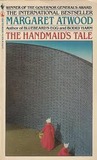
The Handmaid's Tale by Margaret Atwood

The Handmaid's TaleThe Handmaid's Tale by Margaret Atwood

March's read for my book club is themed "Back to School." As in, return to the books you read in (high)school and see how they hold up today.

I don't remember exactly what grade it was that I read The Handmaid's Tale. In fact, I don't remember any related projects or essays. And this is both surprising and disappointing. The themes expressed are ones that ought to have been discussed in a classroom - otherwise, why bother to have students read this book at all? But what I do recall of my highschool English class years, was that not many of my teachers were willing to address more serious issues. Not many of my teachers were willing to go beyond the course curriculum, which itself did not delve too deeply into 'dangerous' topics.

Rereading it now I can appreciate it more and suppose I am happy that the school at least introduced me to it and a few other books that I now also intend to reread. I realize that this was likely my first introduction to feminist literature. It takes place in a not so distance future where the feminist movement of the past has been turned inside out. Women are now subjugated, in body, and worse, in mind. The depth of the subjugation is made clear because the tale is told through the thoughts of Offred, who's life was stolen from her. She is now a handmaiden - a womb on two legs, existing only to provide offspring for a Commander and his Wife. The circumstances of this future are extreme, but not impossible to imagine, considering some of the things happening in our own world now.

Some might have issue with the writing style, but it was an element I really enjoyed. I've recently read a few books told in first person narrative and have found them unbelievable. No one can remember things so clearly in that way! Train of thought though. That I can handle. In this case, the style serves to enhance the character, not just to tell the story. At times, she chooses not to pursue a line of thinking because of how it affects her, she recalls her past and the things she took for granted, she speaks in tangents to avoid dealing with the situation at hand, or reconstructs details of events she was not privy to. These moments I liked most because she isn't just reconstructing to tell us what happened. Her reconstructions, sometimes told in two or three different versions, are her way of coping with not knowing about the people she's lost.

This is not a happy ending story. It's a story that has moments of hope, but for both the character and the reader, you're never quite sure if that hope will turn into something positive. You're forced to cling to the tiny moments and objects, as Offred does. This is, for me, one of the great strengths of this book. The reality of the events through Offred's narration sucked me into her plight.

The only thing I didn't like was the long, drawn out epilogue that takes place further into the future in the form of a lecture that is trying to piece together the events of the past. I felt it takes away from the mystery of the book by adding this clinical element.
4 of 5 stars

Tuesday, March 12, 2013

The Host by Stephenie Meyer

The Host by Stephenie Meyer

Disclaimer: I have never read the Twilight novels. While I do plan on doing so one day, I just so happened to have a copy of The Host lying around, the convenience of which led me to my decision to read it for my first taste of Stephenie Meyer. I'd also heard that it was a little more suitable for adults, and was curious about how she would tackle a book not aimed specifically at the teenage female demographic.

Almost right away, the plot held promise. The Host started off as both an interesting and different kind of alien invasion story to me, in which a race of extraterrestrial silvery worm-like parasites called "Souls" have colonized the planet by inserting their bodies and minds into humans, thereby taking over or erasing the original host's identity and consciousness. The story begins with Melanie Stryder waking up from one of these insertions, though now she is called Wanderer, the name of the Soul which now inhabits her body.

Except Melanie is too strong, her consciousness remaining at least partially in the body, causing Wanderer to become bombarded with thoughts and memories of Melanie's lover Jared as well as her little brother Jamie. Inadvertently, Wanderer begins to form emotional attachments to the two men as well.

At this point, I'm still pretty intrigued, especially when Melanie's knowledge leads Wanderer to a complex of caves and tunnels in the desert, where a group of free humans led by Melanie's uncle Jeb have made their home and secret hideout. Here, Wanderer/Melanie are reunited with Jared, but things get complicated when essentially two minds are in one body, with one of those being an alien entity to boot. Things become even more problematic when a love triangle of convoluted proportions begins to form as Ian, one of the residents at the hideout, develops feelings for Wanderer (the alien consciousness) while Melanie (the human consciousness) remains steadfastly in love with Jared.

And here is where the book started to lose me. I had some idea when I picked up this book that I was signing on for a romance, so I wasn't completely blindsided by the relationship drama. Still, I had not expected the story to devolve so rapidly into a sappy soap opera, and I have to say my opinion of almost everyone in the book plummeted sharply from the resulting bad dialogue and stunted personalities.

In essence, my biggest problem with The Host were its main characters. The only people I could stomach were the supporting ones like Jeb or the doctor, especially when the little brother Jamie's role was downgraded to being a convenient and useful plot tool to keep the story moving along. Because quite honestly, nothing much else was really happening.

Still, I could have enjoyed this more if it weren't for how crudely Jared and Ian were both portrayed -- over-protective, controlling, forceful, aggressive and borderline abusive, prone to petty jealousies. Like I said, I have not read the Twilight series in its entirety, but what I perceived from the two men were not so different from the criticisms I have heard about Edward's character. Even allowing for Wanderer's ignorance on human matters and the inherent meekness of her race, it annoyed me every single time either Jared or Ian told her she wasn't allowed to do something.

Speaking of which, Wanderer's portrayal doesn't fair much better. Her character is a blubbering bag of tears, always either weeping or on the verge of doing so. It's a personal thing, but I can't stand characters who constantly cry, because then they start to get me down. And whether Ms. Meyer realizes this or not, she makes Wanderer wince and flinch so much and so often, you can't help but start to wonder if the poor thing has a tic. I started being grateful for Melanie's consciousness; she was more of the firebrand with the passion and initiative.

Anyway, I guess it's hard to enjoy a book when you can't tolerate its protagonist/narrator, and this was probably the major obstacle holding me back from giving this a higher rating. Otherwise, I truly did enjoy the premise especially its science fiction elements. I also have to admire Stephenie Meyer's efforts to explore deeper and meaningful themes like the value of independence and identity, even if the execution of those ideas could have been better.

Final Verdict:


3 of 5 stars

Monday, March 11, 2013

Armageddon's Children by Terry Brooks

Armageddon's Children (Genesis of Shannara, #1)Armageddon's Children by Terry Brooks

Many years ago, I tried to read The Sword of Shannara but the story and characters failed to capture my attention and I set it aside. I grant that I didn’t get very far into the book, but I had read enough by that time to know when a book just isn’t working for me, even that early on. Fastforward to the present and my brother is on the phone raving about the new Genesis of Shannara series. I trust his judgement, so here I am!

The Genesis of Shannara is, as the series title suggests, the beginnings of the world created by Terry Brooks. Shannara fans are likely to recognize characters, events and artifacts, but someone new to the series like myself, is by no means alienated. This is a clean introduction to this realm, and an introduction to the characters whom we will, presumably, be following through the series. Armageddon’s Children takes place in a post-apocalyptic earth, destroyed by the follies of man. Violence and mutation have reduced the human population to mere thousands. Many of the surviving humans live in compounds, some hide in ruined cities, but all are hunted by the various demonic (formerly human) creatures led by the “Old Man” at the bidding of the Void. We meet Logan Tom first, as he and his family attempt to escape an attack by once men and demons. Logan is orphaned in the process.

Logan’s tragic story is similar to many of the characters that follow, most of them teens or pre-teens or adults who were forced to grow up far too soon. The overwhelming theme is that these characters are survivors of their horrible reality and must stay one step ahead of the evil closing in on them in order to remain alive. My original complaint with the lack of interesting characters in The Sword of Shannara does not apply here. While I feel that the characters fit into various established tropes as – well, children of an Armageddon, they are still unique enough in and of themselves to be appealing and I enjoyed the way their stories and connections are unravelled as the book progresses.

As I said, this is an introductory novel and it very much plays out as one. The story establishes that the humans are being hunted by the Old Man and his minions and, eventually we are introduced to the quest that will bring the main characters together and move them forward. For this book, there is little progression in regard to that journey. This book is about letting us meet the main characters and grow to love or hate them as needed. Every major player, including the Old Man, is allowed moments to reveal their inner thoughts and motivations, as well as the events and people that have made them who they are. Many secondary characters also have back stories, strengthening the reader’s sense of attachment and understanding of just how awful this world is.

The original Shannara series is firmly seated in the fantasy genre, complete with swords and sorcery. Logan and his fellow Knight of the Word Angel Perez carry staves that are definite sources of yet to be fully explained magic, but otherwise, there is very little magic in this world just yet. The idea is that that the future world of Shannara comes from the one we know now, following this cataclysm – a concept that really intrigued me. I really liked the idea of the magic slowly leaking (back) in. Fire from a staff here, telepathy there. And when the elves are introduced, having hidden themselves away from humanity for centuries – even they do not display a significant use of magic.

Overall, I enjoyed this book, in that it does a good job of making you comfortable in its world and with its characters, and provides just enough mystery to entice you to continue on with the series to find out where this is all leading. For those who already know where it is all leading, I imagine it is nice to finally get the full details. For people like me who are new to the world, let’s just say I find myself looking forward to learning more about the genesis of Shannara. if I like this series enough, I’d not be opposed to trying The Sword of Shannara again.
3 of 5 stars

Sunday, October 28, 2012

Parable of the Talents by Octavia E. Butler


Parable of the Talents by Octavia E. Butler

Octavia E. Butler’s books are not for the squeamish and most certainly not for people who want happy, Hollywood endings. Things work out in the end – but never in a nice neat package. There is always a lot of loss in all of its most painful forms. Her works are very realistic in that matter. In fact, her works are realistic in all matters. They are a reflection of life and of the human spirit. They don’t allow you to escape into science fiction and fantasy as easily as other books in the genre might. They are harsh truths.

Butler’s books are considered science fiction, but she stresses that science fiction is not just about the fantastical, requiring a big suspension of disbelief. Even when her stories involve aliens, mutants or vampires, there is still the sense that such things could very well happen in our very near future.

Friday, October 5, 2012

Cloud Atlas by David Mitchell


Cloud Atlas by David Mitchell

I read this book because of the trailer, like many others. The trailer - despite the presence of Tom Hanks AND Halle Berry - fascinated me, though I could not fathom what was going on in what promised to be an excitingly visual journey through the times and lives of oddly connected people.

The first chapter was a difficult start, mainly due to the language. An older, more formal English, the dialogue was filled with words and nuances I didn't understand, but rather than break the mood to look everything up, I just sank in and let Adam Ewing's meanings come to me.

In the second chapter, featuring Robert Forbisher, the language changed dramatically. By the third chapter, about Luisa Rey, I had gotten the concept of the connecting threads, no matter how thin, between the people (though I felt the birthmark was a bit too contrived), but more importantly, I had fallen in love with the language and concluded that it was as much a character in this story as the people themselves. It shaped them as it moved and flowed and changed through each chapter...

Reviewing the trailer now that I have finished the book still leaves me wondering, though now I'm wondering just how they are going to tell this story - these stories - and tell them right. It's not really the "action adventure" that People Magazine describes it as... and the trailer implies that the directors have opted to make the connections much less subtle than the book does... I will have to return to this review once I've seen the film for comparison....
4 of 5 stars

Monday, April 23, 2012

Patternmaster by Octavia E. Butler

Patternmaster (Patternmaster, #4)Patternmaster by Octavia E. Butler

After Clay’s Ark, I had no idea what to expect with The Patternmaster. What I did not expect was that the Clayark evolution would basically turn those people into animals – albeit really smart human-like animals – and that they would have no real purpose to their existence save to
be obstacles for the protagonists. Their humanity was almost completely stripped away, despite them fighting so hard to maintain what they could of it in Clay’s Ark.

This book focused otherwise entirely on the Patternists. Two brothers, in particular. All of the Patternists of the past books are gone, including Mary, who created the Pattern and there is little spoken of them beyond what purpose they served in history. Not even their names are mentioned. I did appreciate the intricacies detailing how the Pattern and the Patternist society worked and the descriptions of the mental processes and battles.

Other than the Patternists and Clayarks, there are still humans about. “Mutes,” to the Patternists, who consider them little more than smart animals that can be easily manipulated to serve any purpose, from domestic, to brutal, to sexual. The evolution of slavery, where those
who have not evolved, can serve no other purpose.

A few interesting themes show up. One being that society has reverted to a sub-technological level. Apparently, the Clay’s Ark spaceship was the pinnacle of human technology, and, also served as the downfall of the species. No real reason is given as to why the Patternists no longer have use for technology. Certainly communications isn’t necessary. But … air conditioning? Cars? Netflix?

The most interesting thing about this book as the conclusion to the Seed to Harvest series, is that it is rather anti-climactic. With all the build up regarding the Clayarks and the Patternists, I assumed there would be more to it, but as I read on, I kept looking at the number of pages left and realized that the book would remain focused on a small pocket of the greater world. These books aren’t to be viewed as an epic series, connected through characters and adventures. Instead, it is four different stages in the human evolution Butler has imagined. Apparently, no matter how far the human race evolves, men will always compete against men and women will always be treated as inferior. I had hoped for greater juxtaposition with the Clayarks regarding this, but ultimately, this story was simply about two men and their battle for succession.

I don’t want to say that the final book, or the series itself, was disappointing. It simply wasn’t what I expected – and that’s not a bad thing. Butler is proving to me that she is a master of telling a story so far outside the box. Science fiction and fantasy so often follow the same tropes, with a few twists here and there, but Butler completely ignores it all and forces you to think on so many different angles, all while forcing you to question the rules and morals that society sets upon us.
2.5 of 5 stars

Thursday, January 26, 2012

Clay's Ark by Octavia E. Butler

Clay's Ark (Patternmaster, #3)Clay's Ark by Octavia E. Butler

This was the most disturbing books by Octavia E. Butler that I have read yet, further inspiring my desire to have a conversation with her to find out just how that brain worked. Her concepts are fascinating, even when as disturbing as this one.

Perhaps it was the violence and rape of young children that has me troubled. The ending, certainly, is not for the faint of heart. However, I did not dislike this book because of this. My dislike comes, perhaps from a bias regarding its place as part of the Seed to Harvest collection.

Clay's Ark carries the similar theme of a community of humans, mutated both physically and psychologically, who must fight against outward and inward forces to maintain their humanity -- a theme that dominates just about every book I've read from this author. Beyond that and the name, there is very little that relates it to the Patternists created by Mary in Mind of My Mind or the superhumans created by Doro, beginning in Wild Seed. In fact, Clay Dana's involvement is not mentioned until more than half way through the book.

I took a quick peek at the first few pages of Patternmaster and I see the results of Clay's Ark may play a part in that story, but for now, it is an odd addition to the series that perhaps was not intended to be part of the series at all (considering it was created several years after Patternmaster.)
2 of 5 stars

Tuesday, January 10, 2012

Ready Player One by Ernest Cline

Ready Player OneReady Player One by Ernest Cline

I recall a complaint somewhere or other claiming this book to be just an excuse to spout off ample '80s trivia. I'm guessing that complaint came from someone who has no appreciation for that incredible decade - no, dare I say ... dynasty!

Movies, television and music are already happily tapping into the '80s and have been for some time, so I don't see an issue with a book doing so. I am certainly not one to argue, considering I am happily indoctrinating my kids with the things that I loved growing up. It warms my heart to hear them fighting for the honor of Greyskull.

This is also a book that any geek can appreciate because it's all about us. No, not true, the major focus is on video gaming, but there is more than enough for any comic book, sci fi and fantasy, D&D nerd to appreciate.

The book mainly takes place in and around the OASIS, which is a virtual world of massive proportions that no one would ever leave -- particularly because reality has become so desolate. It's a world where both the social networker and the gamer have a place. (Literally. You can purchase your own planet.)

Ready Player One fortunately does not simply toss out the '80s nostalgia in random intervals without context. Everything is sewn together coherently, and when it does get carried away with the trivia, it's usually in the form of the main character, a teenaged boy, doing what teenaged boys do best when surrounded by friends: showing off.

While I'm sure this book was conceived well before #Nymwars, there is a strikingly familiar concept at play within the OASIS, where its creative company, GSS, firmly respects users' right to privacy and anonymity, while a rival corporation, bent on taking over GSS and turning OASIS into a massive billboard, would ensure that anonymity be a thing of the past. All the better to market to you, my dear.

Anonimity is a prevailing theme, where OASIS users vehemently hold on to theirs, no matter how close they become. I relate to almost everything in this book save for this. I'm sure it is true of some, but I have made and even lost some wonderful friends online and once those friendships have been solidified, of course we've taken off the pseudonym veil.

***

Thursday, December 8, 2011

Mortal Engines by Philip Reeve

Mortal Engines (The Hungry City Chronicles, #1)Mortal Engines by Philip Reeve

A friend introduced me to this book and its opening line:

It was a dark, blustery afternoon in spring, and the city of London was chasing a small mining town across the dried-out bed of the old North Sea.

I loved the concept of this book - mobile cities hunting each other like animals, trying to survive in a post one-minute war future. London is one of the greater cities, but even it will falter if it does not find better hunting grounds.

The first protagonist we meet is Tom, a friendless orphan, who soon becomes wrapped up in the espionage brought on board London by Hester Shaw - a once pretty girl, hideously scarred by Tom's hero, Valentine, against whom Hester seeks revenge. Valentine is also the father of Katherine, who in turn meets shy engineer, Pod, as she searches for the truth about her dad. The four of them are, typically,very unlikely heroes and, what I appreciated more, unlikely couples. I was pleasantly surprised by their ultimate fates and the fate of those they meet along their journeys. Not everything needs a Hollywood ending.

The book fails slightly on delivery. Some things feel a bit rushed, and I was frustrated by the change of tense that usually came when dealing with an 'evil' character. Initially the change to present tense is bound within the respective chapters, but when everything and everyone comes together in the end, it becomes an annoyance.

This isn't enough of an issue to prevent the book from being enjoyable. It is part of a series based on an interesting concept, so I am curious to learn more about this future.
3 of 5 stars