The BiblioSanctum has moved!

You will be automatically redirected to the new address in 5 seconds. If that does not occur, please visit
http://www.bibliosanctum.com
and update your bookmarks. See you at our new home!

Showing posts with label graphic novel. Show all posts

Friday, April 25, 2014

Comic Review Bites

The People InsideThe People Inside by Ray Fawkes

This is a unique, poetic graphic novel that uses the medium in a seemingly simple way at first glance. The “story” is told through windows into the lives of several different couples of various backgrounds and arrangements as they move through the many different stages and nuances of their relationships. From first kiss, to safe words, to babies, to brutality, to divorce, happiness… the different couples go through all sorts of different moments in their lives as time goes by. The simplicity of image and form does not take away from the depth of the emotion presented and there are moments—both beautiful and painful—that any reader and sympathize or truly identify with.

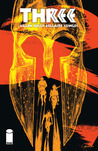
 Three, Vol. 1Three, Vol. 1 by Kieron Gillen

Set after Frank Miller's 300, we are introduced to a Sparta that is not quite as pleasant and honourable as it once was. At the bottom of the scale, treated as less than slaves, are the helots. But three helots manage to escape the wrath of a legion of Spartans, after massacring the group and their esteemed leader. They are hunted for their actions, and in the course of their journey, we learn bits and pieces of actual history, as well as some of the secrets of the main characters, one of whom is more than he seems.

It is an interesting and somewhat informative story, but the amount of detail overwhelms the actual story. I never really understood why the Spartans would spend such time and resources hunting down three slaves, or why they felt the need to massacre the helots in this village in the first place. The character relationships were confusing, and it becomes unbelievable when one the slave with the warrior past takes on all those Spartans.

Star Trek: KhanStar Trek: Khan by Mike Johnson

Ever wondered how Khan Noonian Singh came to be, and, more specifically, how he came to be a white guy? Well this graphic novel sets out to answer the burning question that I actually hadn’t been asking because I was totally fine with just listening to Benedict Cumberbatch say words. Turns out he was actually a young, Indian amputee who, among others around the world, were taken from their lives of destitution and placed in a special (not)eugenics program. Singh showed particular leadership aptitude, among other traits, and eventually took over and led his people to a new world order that the 24th century came to know as the Eugenics War. There is little information available about the event, so Captain Kirk, Spock and the people at the tribunal against Khan after the events of the movie, Into Darkness are just going to have to take Khan’s word for it.

Each issue begins at the tribunal, then falls back in time as Khan unravels a rather uninspired backstory involving superhuman children growing up to literally take over the world. We know they are superior in intelligence and physicality, but what I had really wanted to know, was why Khan considered them his family and went through such pains over the 72 survivors after the Eugenics War. Toward the end of the story, we vaguely touch on this, but having him toss around the word “family” a few times doesn’t really make it so when the story doesn’t really give us moments to reveal how much he supposedly cares for them, one way or the other. At most, they are people who works with and some of them, he fights with and kills. But he otherwise does not develop strong relationships with any of them.

Finally, the revelations about Admiral Marcus’ discovery of Khan and his friends on the Botany Bay and subsequent usery of Khan’s skill is lackluster and filled with as many questionable holes as the movie itself. But, while the movie was entertaining enough for me to overlook these problems, this comic is, unfortunately, rather unfulfilling.

With thanks to NetGalley for the opportunity to read advanced copies of these graphic novels in exchange for an honest review.

Tuesday, April 15, 2014

Graphic Novel Review: Sex Criminals Volume 1: One Weird Trick by Matt Fraction and Chip Zdarsky

Sex Criminals, Volume 1: One Weird TrickSex Criminals, Volume 1: One Weird Trick by Matt Fraction and Chip Zdarsky

Genre: Fantasy, Romance, Sexuality

Collects: Sex Criminals #1-5

Publisher: Image Comics

Publication Date: April 29, 2014

Creator Info: www.mattfraction.com / zdarsky.tumblr.com

Matt Fraction dedicates this series to anyone who’s ever rubbed one out for the first time and the first issue opens with a couple having sex in the washroom, with the narrator, Suzanne, offering to explain and asking you not to judge. By way of explanation, she starts with her past and the death of her father, a seemingly random victim of a gun toting rampage. Her mother sinks into a life of tears and drink and Suzanne finds the only escape is underwater in the bathtub. One day, during her moments of seclusion, she makes an accidental discovery that involves touching herself—you know—down there. The result is not merely the incredible feeling of euphoria, but time actually stands still for her. She comes (lol) to call this phenomenon “The Quiet,” and tries to learn more about it. But there is little information available, and worse, no one seems to want to talk about it and asking the wrong people results in shame.

This might be a common experience for many. My birds and bees discussion was less discussion and more “here read this book,” wherein, This Book, had a blue cover, nice '70s attired young teens smiling sweetly, and a big chapter on why masturbation is evil. In my aged wisdom and experience, I will be working from this book instead when it comes time to get more in depth about sex chats with my kids, however, we still live in a surprisingly prudish society. We love sex, but we’re still too ashamed to admit it. If that’s how you feel about the down and dirty, then this book actually *is* for you. Because you’re not alone in your interest in sex and, while your orgasms might not stop time (or do they?), I love the way Fraction calls us out on our shame and politely and humorously asks why we gotta feel this way.

I’m most familiar with Fraction’s work on the Hawkeye solo series where he takes the Avenger out of his role as a superhero and introduces us to an every day, self-deprecating guy with a penchant for doing nice things for people who could use a break, and getting himself in trouble for the right reasons. That same casual, personable feel exists in Sex Criminals, with characters that you can really empathize with.

So the “criminals” part. Right. That comes in when Suzanne discovers that her ability isn’t as unique as she thought. She meets Jon, whom she actually has a lot in common with and falls for even before she discovers that he can enter The Quiet too, (though he has another name for it). He gets to tell of his discovery of his ability, which a lot of guys can probably identify with. Jon has been using his time stopping abilities to cause a bit more trouble than Suzanne has ever imagined, and he convinces her to try it out for the sake of saving her beloved library. Unfortunately, they discover that they really, really aren’t unique in their abilities, as their antics are halted by the sex police.

Fraction’s sense of humour is light and fun. It’s impossible not to laugh at yourself through the course of the book, as much as you’re laughing at the characters and their situations. I’ve also learned the importance of reading *everything* in comics these days, but most especially comics that Fraction works on. His cheekiness spills into all the pages, cover to cover, and it’s great to see that Zdarsky shares that sense of humour, making for a great team.

Technically speaking, the story telling process is a bit troublesome. It begins with young Suzanne going through her motions, with older Suzanne fourth wall narrating over her shoulder. In present day, Suzanne occasionally breaks the fourth wall as well, looking at the ‘camera’ to deliver some lines. It takes a moment to grasp that, since narrative word boxes are also used to speak to the reader. This is not a deal breaking concern for me, though.

This is yet another winner from Image Comics, which continues to produce great, off the wall comics that push the boundaries of both the medium, and our sensibilities. Sex Criminals even earned itself an Apple ban, which means Fraction and Zdarsky are definitely doing something right.

Still not sold? Check out the first issue for free on Comixology.

With thanks to NetGalley and Image Comics for the opportunity to read an advanced copy of this graphic novel in exchange for an honest review.

Wednesday, March 5, 2014

Graphic Novel Review: Cemetery Girl by Charlaine Harris and Christopher Golden

Cemetery Girl: The Pretenders by Charlaine Harris, Christopher Golden

Genre: Graphic Novel, Paranormal

Series: Volume 1 of The Cemetery Girl Trilogy

Publisher: Jo Fletcher Books (January 2, 2014)

Author Information: Charlaine Harris | Christopher Golden

Mogsy's Rating: 4 of 5 stars 

Despite reading my fair share of comics and graphic novels, I usually leave the reviewing of them to Wendy and Tiara. Theirs are always really good, whereas I wouldn't even have any idea where to begin! So, you're going to have to bear with me here. This will be my first ever comic review for the site, but I'm also really excited because it is for none other than Charlaine Harris and Christopher Golden's Cemetery Girl from Jo Fletcher books. Come to think of it, it's a first for JFB too. This title is the first ever graphic novel published by them, and I was pretty thrilled when they sent me a copy.

The summary of it is as follows: the body of a young nameless woman, presumed dead, is dumped from the trunk of a car into a cemetery. But oh, actually she was still very much alive! In the rough landing, she hits her head and wakes up with no memory of who she was, or anything about her past. All she knows is that someone tried to kill her. Lost and alone, the girl decides to take shelter in a mausoleum, and as the days pass the place eventually becomes home. Combining the names from different tombstones and from the cemetery itself, the girl comes up with a new identity: Calexa Rose Dunhill.

The main plot of Cemetery Girl really gets going when Calexa witnesses a murder but is unable to go to the police, fearing that it would draw attention to herself, especially since her unknown would-be killer is still somewhere out there. But there's a bigger mystery arc here too, invoking questions like, Who is Calexa, really? Who's out to get her and why? On top of that, she seems to have developed a strange ability to see things, ever since waking up not-dead from her brutal attack. Basically, this volume contains a wonderful self-contained story, but you can also tell that the best has yet to come.

Anyway, you might think, oh what's the big deal, Mogsy! Just review a graphic novel like you would a regular novel! But I don't know. Being presented with a story visually, particularly in sequential art form, really changes things for me, especially since I have had experience penciling comic art in the past. In comics, there's of course the added factor of how well the art meshes with the writing. So when it comes to questions I ask myself while writing a review, I have to reference them to the effectiveness of the illustrations as well. You gotta check this out, though:

From: http://www.jofletcherbooks.com/2013/11/cemetery-girl
From this awesome panel alone, you can tell that Kramer's art and Rudoni's colors definitely "click" with the tone of the story. Cemeteries are a tricky setting to pull off in art, since they are places of such emotion. You could say getting the atmosphere just right here is very important, since that's where most of the story takes place. I think the artwork does the setting justice though, and the night time and stormy scenes are especially well done. The art in general is quite easy on the eyes.

As for the story, I felt it fit nicely with the format. With graphic novels, you could arguably get away with rushing the pace a little. Still, even as the days fly by for Calexa (Night one, Night two, Night twenty-six, Night sixty-eight, etc.), the story never loses sight of its goals. Sometimes, just a panel or two and a few lines of dialogue are enough to convey the more complex feelings, not to mention the writing makes use of quite a few silences as well, to good effect. I was most impressed by the way both writers and artists were able to develop the minor characters, like the cemetery caretaker or old Lucinda, and make them stand out for the reader.

Can graphic novels can have a "young adult" feel? If so, then Cemetery Girl definitely has a bit of that. Most likely this is due to the apparent age of the protagonist, not to mention the story also involves a group of trouble-making teens. The plot is relatively straightforward and character development may on the lighter side, but for a first volume this was extremely well done. Quite promising, too. Like I said, there are still many questions that need answering, and I find myself eager for news of the next volume!


A review copy of this book was provided to me by the publisher in exchange for an honest review. My thanks to Jo Fletcher Books!

Wednesday, February 12, 2014

Graphic Novel Review: Viscera: Epic Frail by Nathan Massengill

Viscera: Epic Frail by Nathan Massengill

TRIGGER WARNING: Rape and violence against women.

Genre: Science Fiction, Social Commentary

Publisher: Bad Damsel Media

Publication Date: December 2013

Author Info: nathanmassengill.com

Wendy's Rating: 2.5 of 5 stars

Viscera, or so she calls herself now, having defined this viscous “killer virgin” persona from the previous scared, victim, is of a race of humanoid creatures that live secretly among us. The women – assuming they are even permitted to live at birth – are nothing more than property to males who very violently use and abuse them for the sole purpose of procreation. The females have one small hope of survival: a personal shield.

Viscera is a “wild female” and the men love nothing more than to hunt down such treacherous “gashes,” but Viscera has turned the tables on them by inviting them to her fortress, a club called Ringrunners, where any man who can make it through her shields and remove the ring from the hook on her necklace is permitted a “date” with her. Thus luring her prey, she goes through this invitational vigilantism process of killing the men of her race who try to take her.

My summary makes this story sound as harsh and over the top as the story actually is, drawn in violent lines of stark black ink. It is meant to be a story of female empowerment – Massengill’s attempt at putting the power back into the hands of women, telling us that we can make the choice not to be victims (even as he has Viscera purposely present herself as such, trussed up in chains to greet her next victim.)

Viscera does have one moment that I wish had been explored more deeply. It is during an incongruous scene, two pages of mostly text, where she discusses her plans and her former self with Rictus, the one man she trusts.

The book is peppered with quotes from the likes of Mary Wollstonecraft to make the positive intent clear, but the delivery is going to be hit or miss. This will not be an easy book for some to swallow, if they choose to make it past the introduction at all. Some might be completely offended by the attempt. While I was not offended, I felt it went too over the top with Viscera's defiance. There is no seeking equality or respect. Only vengeance and punishment. Which might be fine for some, but it’s not the lesson I would prefer to see taught. The male victims in this story learn nothing in continually falling to Viscera’s claws, and Viscera gains only an empty victory and the knowledge that she will continue to be hunted until someone finally succeeds in smashing her shields and fucking her to death.

Review copy provided by NetGalley in exchange for an honest review.

Thursday, December 12, 2013

Graphic Novel Review: Fables, Vol. 2: Animal Farm by Bill Willingham

Fables, Vol. 2: Animal Farm by Bill Willingham

Genre: Urban Fantasy, Fairy tales

Publisher: Vertigo

Date of Publication: August 1, 2003

Author Information: Website | Twitter


Tiara's Rating: 3 of 5 stars - This volumes adds another important struggle to the fables' life (conformity versus nonconformity), one that I hope will be touched on continuously throughout the series and not promptly forgotten.

Coming on the heels of the first volume, Jack and Rose Red are serving community service for the stunt they pulled. Snow White takes her sister to The Farm, a place where fables who can't blend with human society because of their looks are sent. Snow says the trip would give them some sister time to resolve their issues and that she thinks it's important that Rose visit The Farm to see how others in their community live. Naturally, Rose is resistant to the idea. When they arrive at the farm, the sisters realize that things are a little off in the idyllic community, and soon find themselves embroiled in bitter politics.

In this volume, we see a naïve side to Snow. She believes that, because they try to make The Farm as comfortable as possible, there's no reason for the fables that live there to be unhappy. She doesn't look beyond the material assistance they provide the fables there. Therefore, she can't see that some things aren't made better by throwing money at it. There are things that are worth far more than things such as freedom, independence, and dignity. It frustrated me a little bit just how far the depth of her naïveté went. It took Snow an extremely long time to grasp that things were more than a little strange there. I could understand her not grasping what was happening at first, but as these troubling things continued to happen, she still didn't get it. I just think Snow is smarter than that.

In a way, it's a little ironic that Snow took Rose there in hopes of making her aware of this part of the community, but she is the one who leaves with a new awareness about The Farm and how the inhabitants feel about it. I hope that this aspect doesn't just stop here because this adds an important struggle to their story. Every book doesn't need to be about this, but this isn't something that should promptly be forgotten. I think this will be something visited again in the future if I'm to judge by some of the panels.

This volume also adds another facet to Snow and Rose's relationship. We learn a little more about how deeply these old hurts run. It was a relief to see that Charming wasn't their main problem. I didn't want this to be yet another story about women falling out because of a man. It's too easy, so while Charming did play a part in their rift, the damage had been done long before him. (I will concede the main reason may be a bit cliché, as well, though.) Also, I appreciated that there's acknowledgement that it's going to take time for the two women to regain their former closeness instead of them hugging it out over ice cream in just one volume. I hope this relationship will truly be explored and restored over the course of the series.

I recently played the first episode of Telltale's The Wolf Among Us (if you like interactive fiction type games, I highly recommend this and The Walking Dead Game by Telltale), which is based on these comics. I loved the direction the game took and decided to jump into the second volume of the series. However, I'm still not quite as taken with this series as I want to be. I think the idea of it and the characters are interesting, and I'm a big fan of imaginative retellings. But there's something about the story that's not quite engaging me as much as I feel it should. And I can't quite put my finger on what it is. Hopefully, my feelings will change to be more positive as I continue to read the story. Wait, did I say that in my last review?

3 of 5 stars

Saturday, October 26, 2013

Graphic Novel Review: The Last of Us: American Dreams by Neil Druckmann

The Last of Us: American DreamsThe Last of Us: American Dreams by Neil Druckmann

Genre: Post-Apocalyptic, Zombies, Survivalist Adventure, Gaming
Series: Last of Us (video game tie-in)
Publisher: DarkHorse Comics
Date of Publication: July 2013

Great art, but a rather straightforward story without enough meat to be as powerful a tie-in to the game as it should be.
3 out of 5 stars

Nineteen years ago, a parasitic fungal outbreak killed or infected almost everyone. Those that remain are sequestered within military-run quarantine zones. Not everyone is pleased with the arrangements, and various groups have arisen with their own plans for survival.

Among them are the rebel group known as the Fireflies, led by Marlene, whom players of the game this graphic novel is based on should recognize. Players will also recognize Ellie, one of the main characters of the game. Here, she is 13 years old and unhappy in the orphanage. She meets fellow inmate Riley, who has dreams of joining the Fireflies. Ellie reluctantly joins her in tracking them down, a process which involves a few misadventures and dangers for the young teens.

When they do meet Marlene and the Fireflies, it is, unsurprisingly, not what they expected. Moreover, Marlene knows much about Ellie from her mother, adding a bit of mystery to an otherwise fairly straightforward story.

I considered whether the fact that I have not yet played the game would negatively impact my appreciation for this, but, as a prequel, I felt it ought to be able to stand on its own and entice me to get off my guns and go buy it. Having read other game tie-in books and comics, I don't feel there was enough meat in this one.

The art was very gritty, despite its childlike appearance. I'm a fan of anime and manga, so I'm not at all opposed to the large-eyed style that lends itself well to younger characters. It still strongly conveys the necessary emotion.


With thanks to NetGalley for the opportunity to read an advanced copy of this graphic novel in exchange for an honest review.

Monday, April 22, 2013

Graphic Novel Review: Irredeemable, Vol. 1 by Mark Waid

Irredeemable, Vol. 1 by Mark Waid
You tell a man he's a god enough times, and he'll start to be believe it. You strip away his humanity by worshipping him, and eventually he'll think it's his right to lord over you. Continuously mention that his powers are the only reason the planet still turns, and one day that virtue that compels him to save you will turn into the vice that causes him to decimate whole cities without remorse.

However, despite that recipe for disaster, there's still one more key ingredient. The inner struggle that a person like this would face. Someone who struggles with difficult decisions everyday in regard to the safety of others. Out of millions of people, who do you save and who do you let die? How do you deal with humanity's capacity for ingratitude when you don't save them in the manner they wish to be saved? How do you deal with people who try to marginalize your feats by calling you a "pervert in underwear?"

The answer is simple in the case of Plutonian. You've ignored that he is human (or humanoid) and has human weaknesses and emotions. You've rejected his attempts to be normal, to give him something that anchors him to his human side. There's no longer any need for him to act like a mere human. You've made him a god, and now, he becomes a god. He has every right to judge anyone--hero, villain, and civilian--because he's your god, a monster of human creation.

I know I'm still in the early stages of this series, but the above is what I gathered from the first volume. These opinions may change as I continue to read this series, and I'll acknowledge that when the time comes. Once Plutonian turns, he doesn't discern between friend and foe--taking some lives, leaving others alive to suffer his carnage. Making a hero, a hero who questioned Plutonian before his heel turn about how it felt to be responsible for so many lives, choose ten people out of millions to save and then killing the rest before that same hero's eyes while telling him: "This is what it felt like."

While Plutonian is inarguably the greatest super-powered being on earth (I know Max Damage from Incorruptible is pretty strong himself and can, at the very least, withstand Plutonian's abuse, but I'm not sure yet if he could actually beat Plutonian at this point), this story for me isn't just about the greatest superhero on earth becoming the greatest supervillain. It's a story about a man who wasn't allowed to be human, so he became a god instead.

Waid has also taken some traditional superhero tropes and turned them on their ear such as what if a hero did confess his identity to someone one close to him, expecting their inexplicable acceptance of who he is and forgiveness for hiding his identity all this time to protect them. Yeah, this ain't Superman, honey. What if a hero didn't get all the acceptance and support he needed from the people around him? What does he do then? Waid is addressing things that I've questioned in comic stories.

And I really love this about the story.

However (you knew a HOWEVER was coming), I'm not as drawn into the story as I'd like to be even though I do like the foundation of it. And maybe this partly by my own design because instead of focusing on this series first I read the first volume of The Boys which I really, really enjoyed. When I love something and I start moving on to other similar media/genres, I expect them to keep my enjoyment buzz going. That isn't this comics fault, and as I said, it's not a bad comic. I probably should've waited a few more days when I wasn't thinking about The Boys anymore. I have a tendency to ponder things long after I've read them.

Another problem I'm having is with Volt who is an African-American superhero with electricity powers. Most of his panels include switching into AAVE (African-American Vernacular English) to prove how racist the white people are and how little they expect of him, which was true in a couple of panels. Other times, it just seems kind of random and unnecessary. He also enjoyed pointing out a black superhero with electricity powers is a cliche when nobody said anything about it, but what can he do about it? The only thing he really said that spoke to me, something that I’ve spoken about with other comic book fans of color, is the need to add BLACK to the beginning of some black or ambiguously brown heroes’ names. He’s Volt, guys. Not Black Bolt. Just Volt. PREACH, Volt!

I’m hoping Waid does better than this with Volt because as it stands he feels silly, forced, and unnatural at times as if Volt is incapable of being a normal person while facing issues that concern his race. It seems he can only be one or the other, but not both at the same time. So far, instead of pointing out why such behavior is problematic, Volt would rather sarcastically respond to their micro-aggression by slipping into jive talk and leave them to their “accidental” racist tendencies. And while I think Waid is an exceptional writer when it comes to showing the moral standings of heroes, I’m not sure if I think he is capable of providing an adequate portrayal of how an African-American superhero deals with racism as a person and as a hero because this can be a tough issue for anyone to grasp.

This was an interesting beginning, though, and I'll move on to the next volume, but only time will tell whether Waid handles the complex issues he's setting up expertly or not.

Final Verdict
3 of 5 stars

Monday, April 8, 2013

Graphic Novel Review: Decimation: Son of M by David Hine

Decimation: Son of M by David Hine

Post-House of M Pietro is depowered, living in a hellhole, thinking about how life used to be for him. His powers defined him in a major way. Pietro powers have always allowed him to be cocky, to be better than the humans he sees as inferior. Now, without his powers, he feels less than inferior—even to humans. He doesn’t understand normalcy. He doesn’t understand why anyone would want to be just human.

Life doesn’t seem much worth living to him, and he spends much of his time staggering about in his old costume living out his former life in his head and feeling guilty for being part of something that left so many mutants powerless. During an encounter with Spider-Man, Pietro tries to end his own life. He critically injures himself during his quest, but his estranged wife, Crystal, takes him to Attilan where he’s healed.

In desperation, Pietro appeals to Black Bolt to allow him to use the Terrigen Mists to restore his powers. Black Bolt refuses and with understandable reasons that he tries to explain to Pietro (through Medusa). Pietro uses it anyway, but his powers return in an abnormal way. Despite this, Pietro decides to return to earth with the Terrigen crystals and uses them to restore the powers of other depowered mutants. Do I even need to tell you how badly this goes?

Pietro, Pietro, Pietro. I’m a huge fan of Quicksilver. Say what you will about him, but I love him. He has a myriad of baggage that he’s toting around. He has all these personal issues, many stemming from the need to impress a father who hates him. He can’t do much right even in the best of intentions. Part of the problem seems to be that he just can’t shake hubris even when he’s not in the best of shape, and another part of the problem seems to also come from some need to prove himself due to Magneto’s repeated rejections. (And there’s also this fact that he’s more like Magneto than either man is willing to admit.)

Pietro finds himself in a place where he feels he has nothing left to lose—especially if it means getting his powers back. Damn those who stand in his way. The only person who can really seem to touch his heart is his daughter, Luna, who he hasn’t seen in quite some time, but she brings out a softness in him. You can also see traces of love there for Crystal still, and she’s obviously still holding love for him. But she doesn’t understand his human emotions such as jealousy. And he harbors some resentment against her.

I pitied Pietro because this made him seem like one of those people who can’t cope with a situation and find some peace with it. Instead of seeking to improve his situation, he seeks to regain his “former glory.” Since he can’t find his sister, he’s mostly resigned to think that those glory days will never come back without her... until he reaches Attilan. I shook my head at MANY of Pietro’s actions during and after Attilan because there was just so much obvious room for error there. And the inhumans are so particular about humans and not in a good way, but not a damn was given.

And then, Pietro also angered me. One thing that just really bothered me? Repeatedly exposing Luna to the Terrigen crystals to the point that she seemed like a drug addict. Just heartbreaking. He finally realizes his actions are harmful to her and tries to do the right thing by sending her back to her mother, but in this, I realize that he’s continuing the odd family dynamics that his family faces. Aside from being the World’s GREATEST Dad (sarcasm), these are the reasons that I like the Pietro and his family. They’re just so damn complicated and fall into a vicious cycle they can't seem to break.

Things I didn’t like? Spider-Man. I think there were better ways to cause Pietro to take that jump rather than having Spider-Man all tangled up in the scene. It just seemed like a waste of panels for a story that could’ve used more panels to tell Pietro’s story. I also didn’t like how restricted this story felt. It was a good story, but it wasn’t a story that could be held by such small constraints. Towards the ends, things started feeling a little rushed like they suddenly realized, “Oh, hell, guys... we’re running out of space!” They lost a little focus and steam, in my opinion. Everything started happening too fast.

I still think that X-Factor probably does his character the most justice, but I did like how this seemed to really try to show Pietro at his worse, that it tried to show readers what desperate men when do when they feel backed into a corner.

Final Verdict:

Sunday, February 24, 2013

Ravine, vol. 1 TPB by Stjepan Sejic and Ron Marz


Ravine, Volume 1 TPB by Stjepan Sejic & Ron Marz

The most striking element of this book at the start is, unsurprisingly, the art work. It seems almost a disservice to put words to Sejic's imagery as they eloquently tell the story all on their own, but of course, more detail is required than that. This is a  creator-owned story about a fantasy world where the lands are divided by a great rift - a ravine - from which dragons and magic spewed forth long ago.

The story begins in epic proportions with a prologue about a battle between a corrupted king, and the general and daughter who now fight against him. Tragedy and darkness begets more tragedy  and darkness in melodramatic proportion that felt a bit too over the top - but this was only the prologue and things settled into a more appropriate pace when the timeline switched to the present.

There are a lot of characters involved and a lot of lore and politics to follow, which can be daunting both to write and read. It's difficult to find the balance between telling too much and not showing enough, but as the story progressed, the pieces came together well enough for the situation to become clear and, more importantly, volume one ended with enough intrigue to make me want to read on. I particularly enjoyed the histories presented at the end of the book which helped fill in a few more details, while strengthening the lore.

Final verdict:
3 of 5 stars

Monday, November 26, 2012

Dragon Age: Those Who Speak by David Gaider

Dragon Age: Those Who Speak by David Gaider


The Silent Grove re-opened a few issues raised in Dragon Age: Origins and the prequel book, The Stolen Throne, and added a few new ingredients. I was worried that Those Who Speak would fail to deliver an appropriate conclusion to all of that in a mere three issues – and I was right. Fortunately, Those Who Speak is not a conclusion, but rather an interlude where King Alistair and his companions, the pirate queen, Isabela, and the dwarven businessman, Varric Tethras, gain a new old ally and, more importantly, we get a further peek inside Isabela.

From book two onward, this is clearly Isabela’s story. Alistair’s hunt for his daddy and his dragon blood issues can wait. This is about the Pirate Queen that some players of Dragon Age II may have dismissed because of her penchant for sex, violence, sex, sex and abandonment. But in truth, despite being paid to accompany Alistair, she is fiercely loyal to those who earn her trust, even at cost to herself. Her devotion to her crew above all is admirable, as is her seemingly unbreakable spirit.

As much as I like the visuals, I wish David Gaider had taken the time to make this another Dragon Age novel, instead of a series of comics. In his novels, he has more room to expand on these characters and is skilled enough in his descriptions of the places, actions and events that he could have brought far more to the story and characters than we see here.


Final verdict:
3 of 5 stars